Teodoro Lechi
Command Ratings
Commands & Units
- Commands the Italian Guard Division of French Army of Italy at Piave (1809, age 31)
- Commands the Italian Guard of French Armée d’Italie at Raab (1809, age 31)
- Commands the Royal Italian Guard of Armée d'Italie at Wagram (1809, age 31)
- Commands the Italian Guard Division of IV Corps at Borodino (1812, age 34)
- Commands the Italian Guard of IV Corps at Maloyaroslavets (1812, age 34)
Teodoro Lechi was born at Brescia into the noble Lechi family, the son of Count Faustino Lechi and Doralice Bielli. In March 1797, during the anti-Venetian rising that established the Repubblica bresciana, he entered military service as a volunteer in the Legione Bresciana and began a career in the forces of the Cisalpine and later Napoleonic Italian state.
In 1803 he was directed to form two grenadier battalions for the Italian presidential guard, and from December 1803 he served in Paris with these units. After Napoleon’s assumption of the Italian crown in 1805, Lechi commanded the Guardia Reale of the Regno d’Italia. In the 1805 campaign he accompanied the Guard into Central Europe, entered Vienna after the French victory at Ulm, and fought with the Guard at Austerlitz.
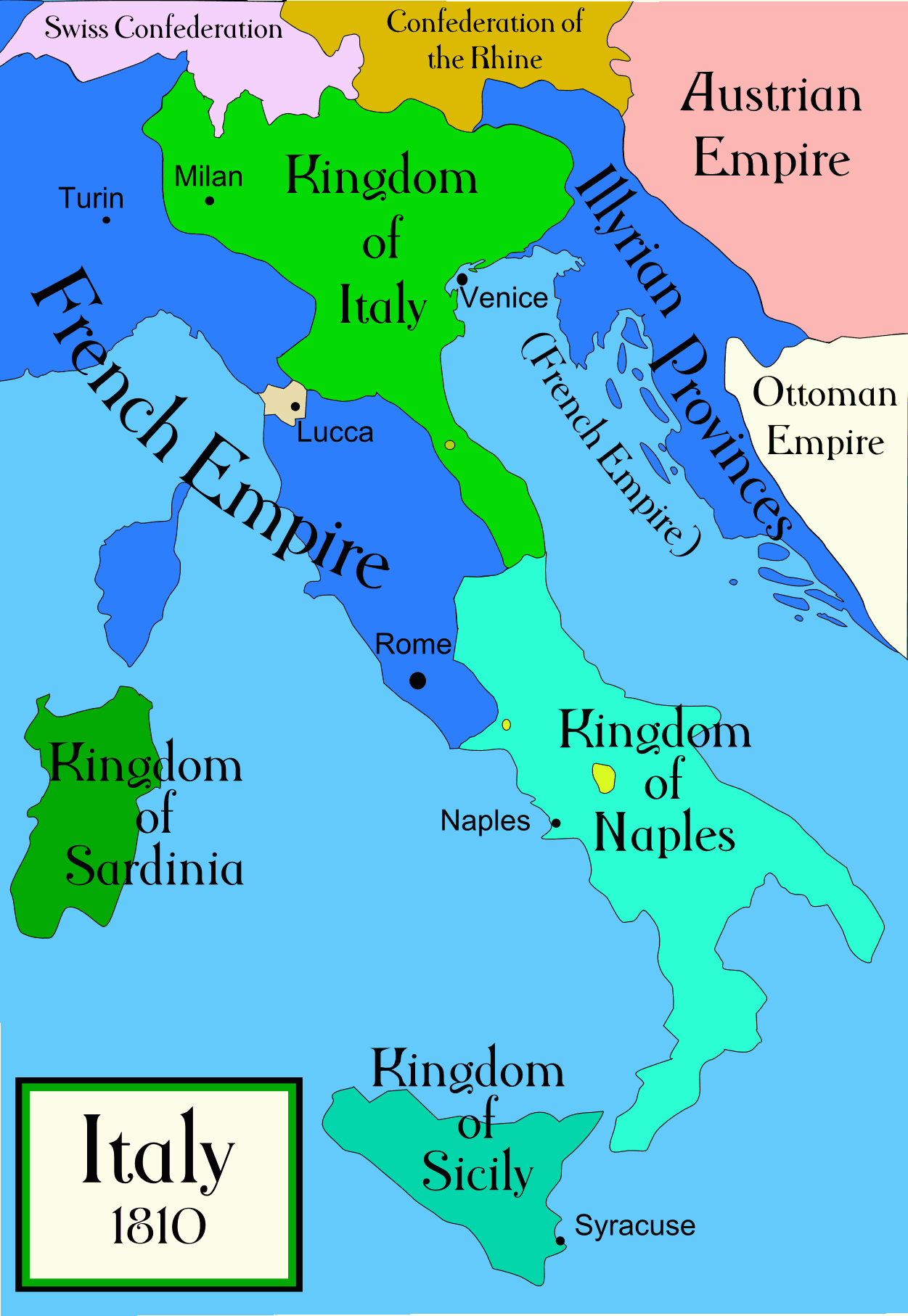
On returning to Italy he received the insignia of commendatore of the Ordine della Corona ferrea and was promoted generale di brigata (1806). He then served in the Adriatic theatre during the campaigns of 1806–1808 in the Illyrian and Dalmatian regions. In 1809 he rejoined the vice-re Eugène de Beauharnais for the renewed war with Austria, taking part in operations in the Veneto and Hungary, and in the concluding phase of the campaign culminating at Wagram. In August 1809 he was created barone dell’Impero. During the operational pause of 1810–1811 he was largely based at Milan, where he was associated with court life and the management of a substantial art collection, parts of which were later dispersed or sold.
On 15 February 1812 Lechi left Milan at the head of the Italian Guardia Reale for the invasion of Russia, serving within Eugène’s IV Corps. He fought in the advance and the Major actions of the campaign, including Ostrovno, Smolensk, Borodino, Maloyaroslavets, and the retreat, and he was involved in the crossings and rearguard fighting that accompanied the withdrawal, including at the Berezina. Returning to Italy in 1813, he took a leading role in rebuilding the Guardia Reale and then commanded senior formations in Eugène’s army during the 1813–1814 operations against Austria in northern Italy. Following the armistice of April 1814 and the collapse of the Regno d’Italia, he oversaw the destruction of the Guard’s flags and insignia rather than surrender them; one imperial eagle was concealed and retained.
After the Austrian occupation of Lombardy, Lechi was implicated in a conspiracy of former Napoleonic officers. Arrested on 14 December 1814, he was imprisoned at Mantua and condemned to death; the sentence was commuted to a term of imprisonment, which he served in part at the Rocchetta of the Castello Sforzesco. Released in December 1818, he settled primarily at Brescia. In 1829 he married Countess Clara Martinengo Cesaresco; the marriage produced children, including a son, Faustino.
In 1848, during the Cinque Giornate di Milano, Lechi was appointed commander of the guardia civica by the Lombard provisional authorities. In the ensuing phase of the First Italian War of Independence he dealt with the organization and supply problems of volunteer and civic forces, then resigned and took refuge at Turin. On 19 September 1848 King Carlo Alberto named him generale d’armata a riposo and conferred the grand cross of the Ordine dei Santi Maurizio e Lazzaro. In the same year Lechi presented Carlo Alberto with the preserved Napoleonic eagle from 1814. Later Austrian measures included financial penalties and sequestration of property after the disturbances of 1853. In the 1850s he received additional honors from Napoleon III, including renewed admission to the Légion d’honneur and the médaille de Sainte-Hélène. After the liberation of Lombardy, he returned to Milan, where he died in 1866.
Sources
- Treccani (Dizionario Biografico degli Italiani): LECHI, Teodoro
- Enciclopedia Bresciana: LECHI Teodoro
- Wikipedia (Italian): Teodoro Lechi
- Wikipedia (English): Teodoro Lechi
- The Napoleon Series: The Italian Military in the Napoleonic Wars, 1792–1815

X (Col. – It. GD) 05 Austerlitz; X (It GD) 09 Raab, Wagram; XX Spain 09 – siege of Gerona (12/09); XX (It GD) 12 Borodino, Malojaroslavetz; XX (It GD) 13 Italy – L; XX 15 (Naples troops) Central Italy (in support of Murat)