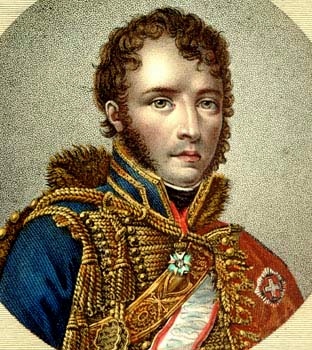
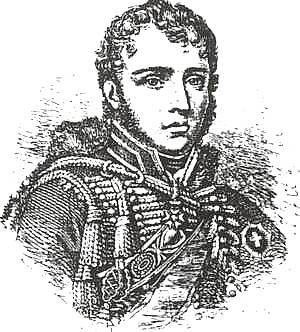
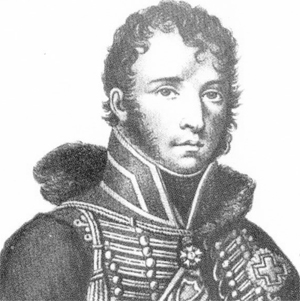
François Antoine Lallemand
Command Ratings
Commands & Units
François Antoine Lallemand, often known in service and later public life as “Charles” Lallemand, was born at Metz on 23 June 1774 and died in Paris on 9 March 1839. He entered military service as a volunteer at Strasbourg on 1 May 1792 in a light artillery company. In the autumn of that year he served with the field army during the campaign that included the battle of Valmy (20 September 1792), after which he was employed against the enemy on the Moselle front in operations directed toward Trier. On 1 March 1793 he transferred to cavalry, joining the 1er Régiment de chasseurs à cheval, and served with the Armée de la Moselle and then with the Armée de Sambre-et-Meuse as the northern armies were reorganized.
During the mid-1790s he was used on staff duties in the interior as a provisional aide de camp and then as an officer attached to senior commanders in the Paris military division. He was present in Paris during the events of 13 Vendémiaire (5 October 1795), when the government was threatened by a royalist rising, and he served under General Bonaparte in the operation that dispersed the insurgents. After these years of early service he continued his career through the subsequent overseas and continental expeditions that employed officers of his generation, including service connected with the Egyptian expedition and later with the Saint-Domingue expedition, before returning to the European theatres.
In the imperial period he continued as a cavalry officer and rose to general officer rank. His name appears in the structure of cavalry employed in the Peninsular War and in the northern German theatre late in the wars. In Extremadura in 1812 he commanded French cavalry attached to the force operating under the higher command of Jean-Baptiste Drouet, comte d’Erlon. On 11 April 1812, near Villagarcía de la Torre in Spain, he fought the cavalry action commonly called the battle of Villagarcia (also known as the battle of Llerena). In this engagement, British cavalry under Sir Stapleton Cotton with a decisive arrival by troops under John Le Marchant attacked and routed the French cavalry force led by Lallemand; his command suffered significant losses and prisoners in the defeat.
Two months later, still in the same broad operational contest in Extremadura, he commanded the French cavalry brigade in the battle of Maguilla on 11 June 1812. There his brigade, composed of dragoon regiments, was attacked by a British cavalry brigade under Major General John Slade. The fight developed as an initial British success which disordered the attackers, after which the French rallied and counterattacked; the engagement ended with a French victory and a pursuit that continued until the exhaustion of the horses brought the combat to a close.
After the Spanish theatre he was employed in the north during the closing campaigns. In 1813 he entered Danish service in the allied Danish–French military cooperation in northern Germany and Holstein. On 10 December 1813 he commanded the Avant Garde Brigade in the battle of Sehested, fought near Sehested in Holstein. In that action, the Danish army under Prince Frederik of Hesse defeated a coalition force under Ludwig von Wallmoden-Gimborn; Lallemand’s advanced guard formed part of the Danish force that fought through the engagements around Holtsee and Haby as the Danish column pushed back the opposing troops and secured the line of march toward Rendsburg.
In 1815 he again served with Napoleon’s forces during the campaign in Belgium and was present at the battle of Waterloo on 18 June 1815. In the political and military aftermath he was treated as a committed Bonapartist; he went into exile in the United States, where he became associated with the attempted settlement known as Champ d’Asile in 1818, formed by Napoleonic refugees in what was then Spanish-claimed Texas. He remained active among émigré Bonapartists and published political appeals while abroad, including an address dated 2 June 1823.
After the July Revolution he was rehabilitated in France in 1830, restored to military standing, and promoted to lieutenant-général. In the later phase of his career he held senior appointments, including service as governor of Corsica. He was also elevated in the restored constitutional monarchy’s peerage as a Pair de France. His name was included among those commemorated on the Arc de Triomphe. He died in Paris in March 1839.
Sources
- IdRef: Lallemand, François Antoine (1774-1839)
- Wikipedia (English): François Antoine Lallemand
- Wikipedia (French): François Antoine Lallemand
- FrenchEmpire.net: Charles Lallemand (1774-1839)
- Wikipedia (English): Battle of Villagarcia
- Wikipedia (English): Battle of Maguilla
- Wikipedia (English): Battle of Sehested
- Napoleon.org: “Un Vrai Chevalier Errant”: A Biographical Sketch of General “Charles” Lallemand
- CCFr/BnF: MS. POR_Boîte 31_Pochette 80. Lallemand, Charles-François-Antoine (Baron)
- British Museum Collections: François Antoine Lallemand (authority record)
- ArchiveGrid (OCLC ResearchWorks): Lallemand, Charles François Antoine, address, 1823
XX 13 Bornhoft
Pictures