La Patrie en Danger - 1814
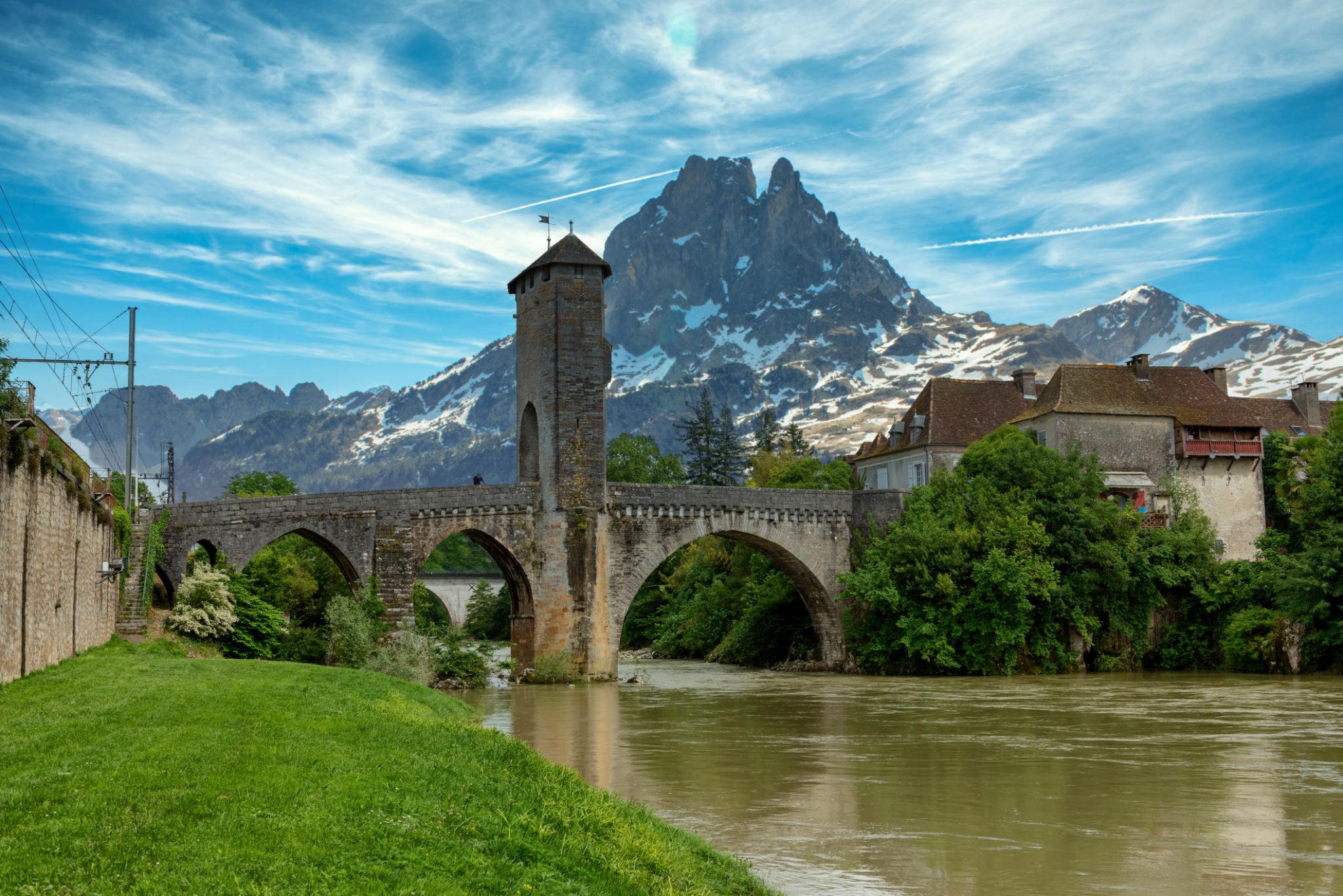
Orthez
February 27, 1814
Background
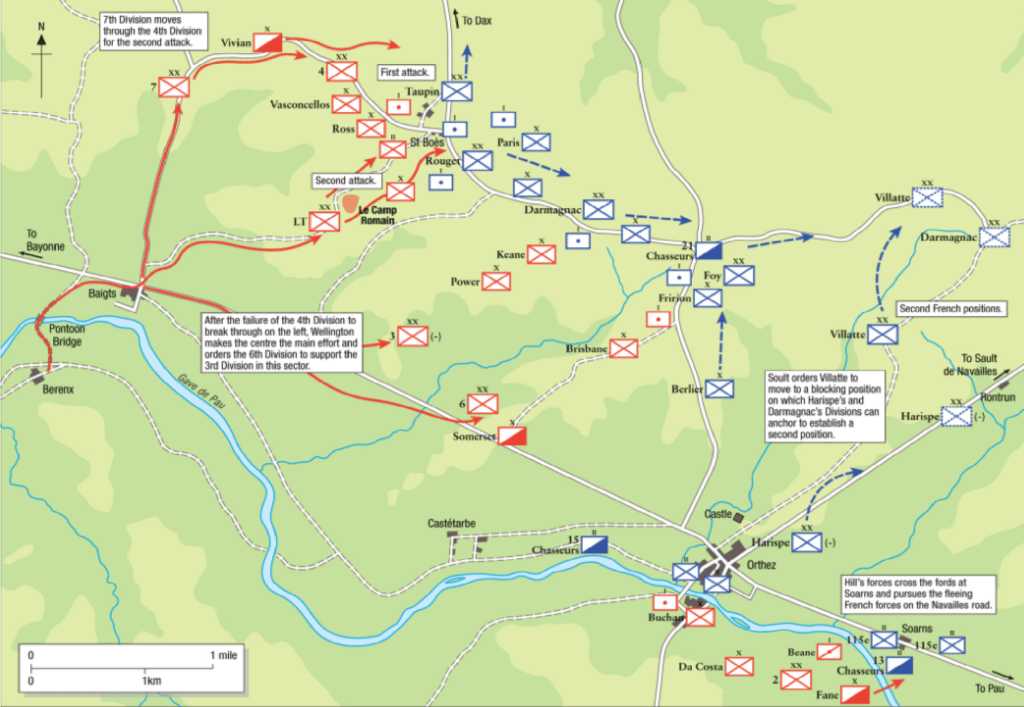
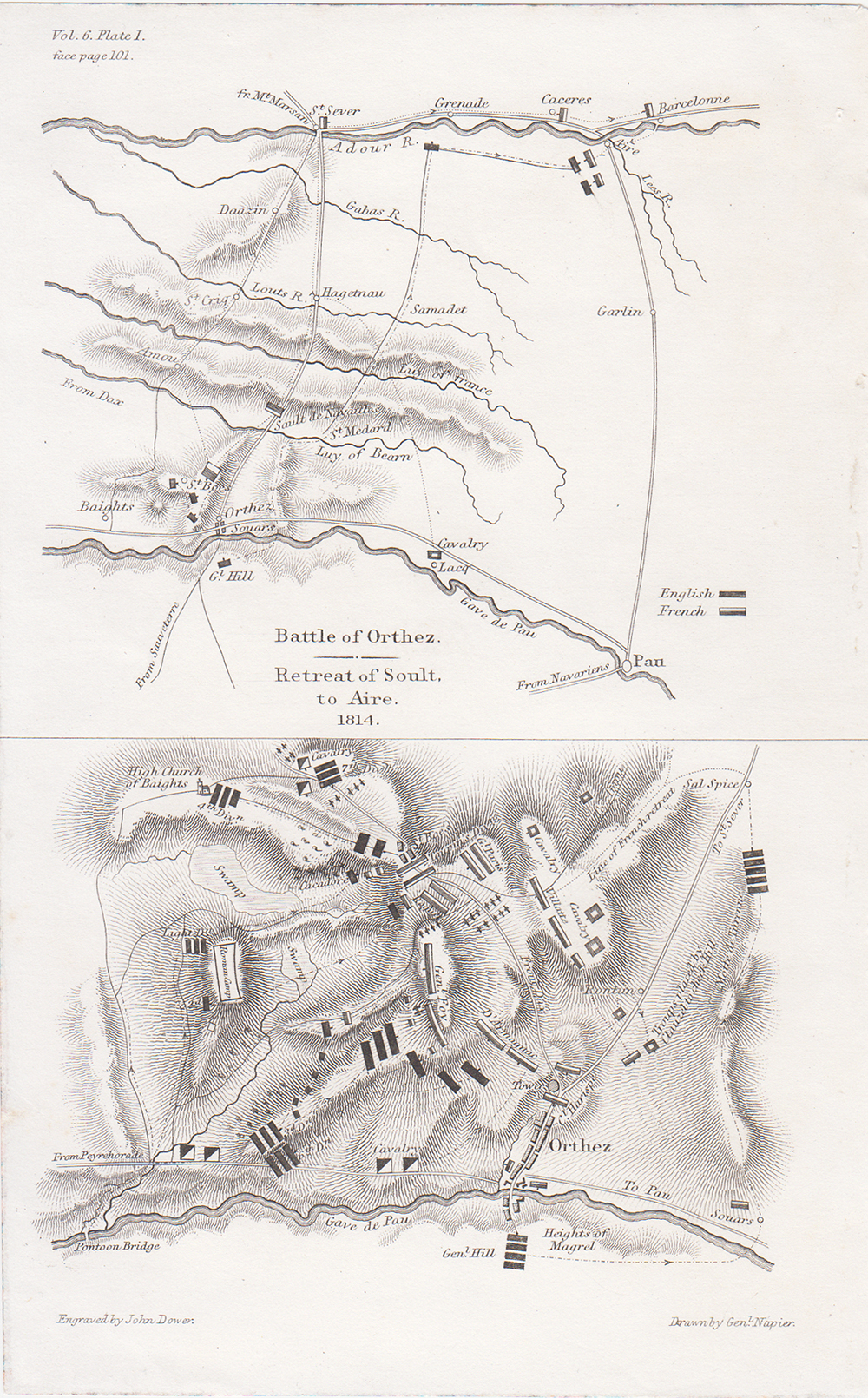
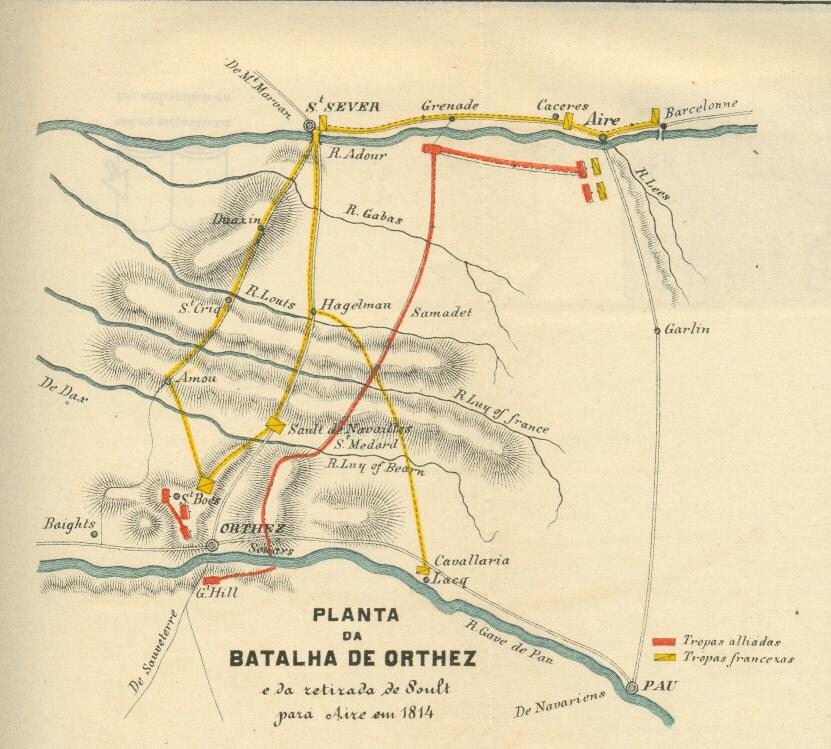
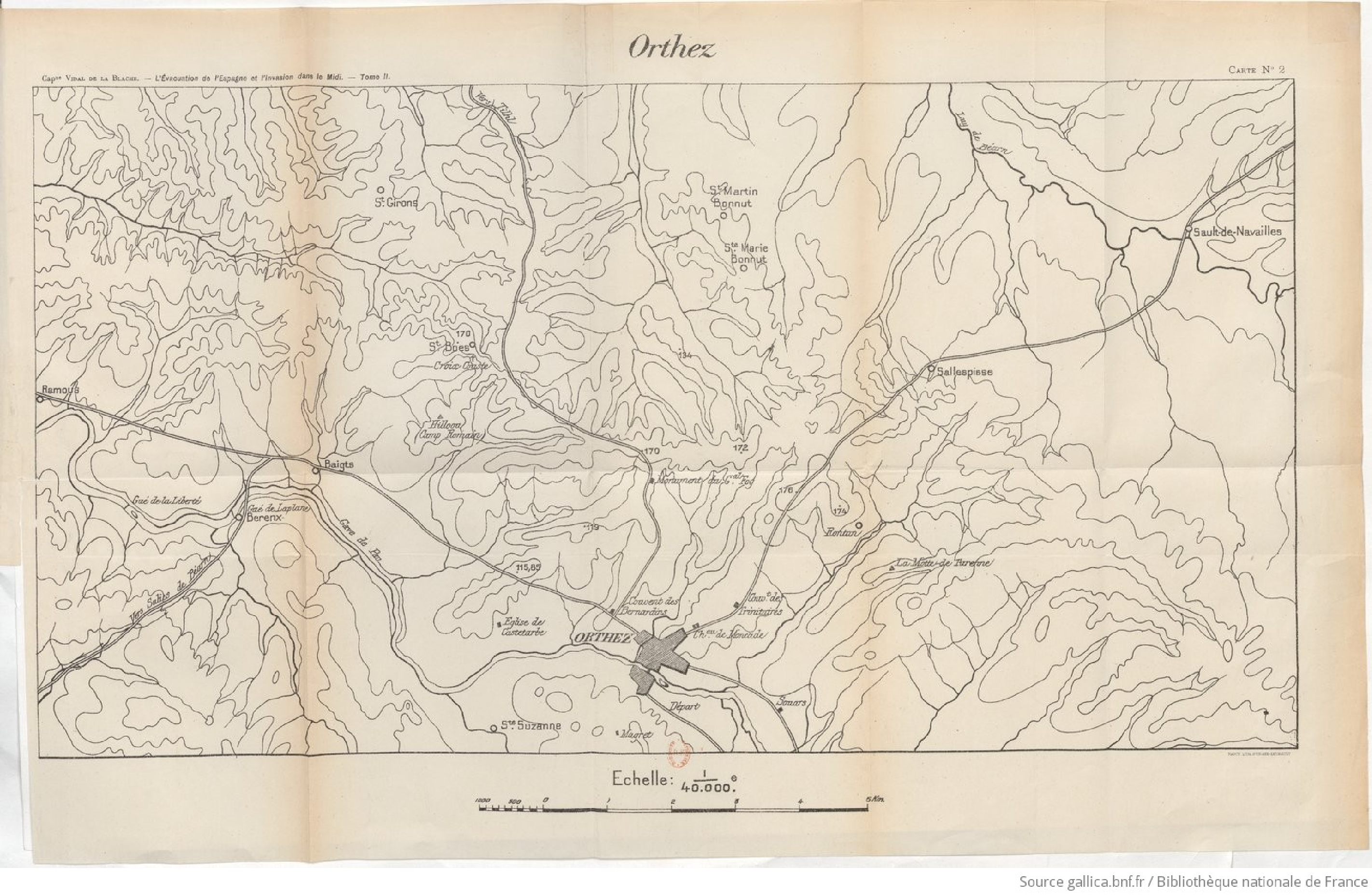
After victory at the Nive, Wellesley pushed Soult further into southern France to secure a path for invasion. Through a series of flanking maneuvers, he forced the French to abandon their defensive lines along the Adour and retreat eastward. Soult eventually chose to make a stand on a steep ridge near Orthez, utilizing the terrain and the Gave de Pau river to check the Allied momentum. This repositioning set the stage for a direct clash as Wellesley sought to break the French line and open the road to Bordeaux.
Location
Map
No map available yet.
Sequence
The Britain starts with the initiative. The Britain is the First Side.
 BritainWinner
Information Chart
| Unit Type | Combat Mods | DRD / RTr No. |
RSP / DSP |
Fire / Mods |
Movement | Move Mods | |||||||
|---|---|---|---|---|---|---|---|---|---|---|---|---|---|
| COL or LIM |
LIN or ULM |
SQ VS CV |
VS OT |
COL or LIM |
LIN or ULM |
MCH COL |
RGH or SQ |
BCK or SID |
CG FM | ||||
| BrLC Light Cavalryh | -1 | +1 | - | +5 | 2/3 | 6/B | -/- | 14" | 13" | 23" | 3/1 | 2/1 | 6" |
| BrLN Line Infantry | -1 | +3 | +8 | -3 | 2/5 | 6/B | 4"/+1 | 12" | 4" | 15" | - | - | - |
| BrLT Light/Rifle Infantrys | 0 | +2 | +8 | -3 | 2/5 | 6/B | 5"/+2 | 12" | 5" | 18" | 3/2 | 4/3 | 1" |
| PtLN Line Infantry | -1 | +2 | +7 | -4 | 2/4 | 5/C | 4"/+1 | 10" | 4" | 16" | - | - | - |
h. May dismount
s. Is skirmish infantry
 France
Information Chart
| Unit Type | Combat Mods | DRD / RTr No. |
RSP / DSP |
Fire / Mods |
Movement | Move Mods | |||||||
|---|---|---|---|---|---|---|---|---|---|---|---|---|---|
| COL or LIM |
LIN or ULM |
SQ VS CV |
VS OT |
COL or LIM |
LIN or ULM |
MCH COL |
RGH or SQ |
BCK or SID |
CG FM | ||||
| FrLC Light Cavalryh | -2 | 0 | - | +4 | 2/3 | 6/D | -/- | 15" | 14" | 22" | 3/1 | 2/1 | 7" |
| FrLN Line Infantry | -2 | +1 | +6 | -5 | 2/3 | 5/D | 4"/0 | 9" | 1" | 16" | 3/1 | 3/1 | 1" |
| FrLT Light Infantry | -2 | +1 | +6 | -5 | 2/3 | 5/D | 4"/0 | 10" | 1" | 18" | - | - | - |
| FrNGI National Guard Infantry | -2 | 0 | +5 | -6 | 2/3 | 5/D | 3"/-1 | 8" | 1" | 15" | 4/1 | 3/1 | 1" |
h. May dismount
Historical Order of Battle
Scenario Rules
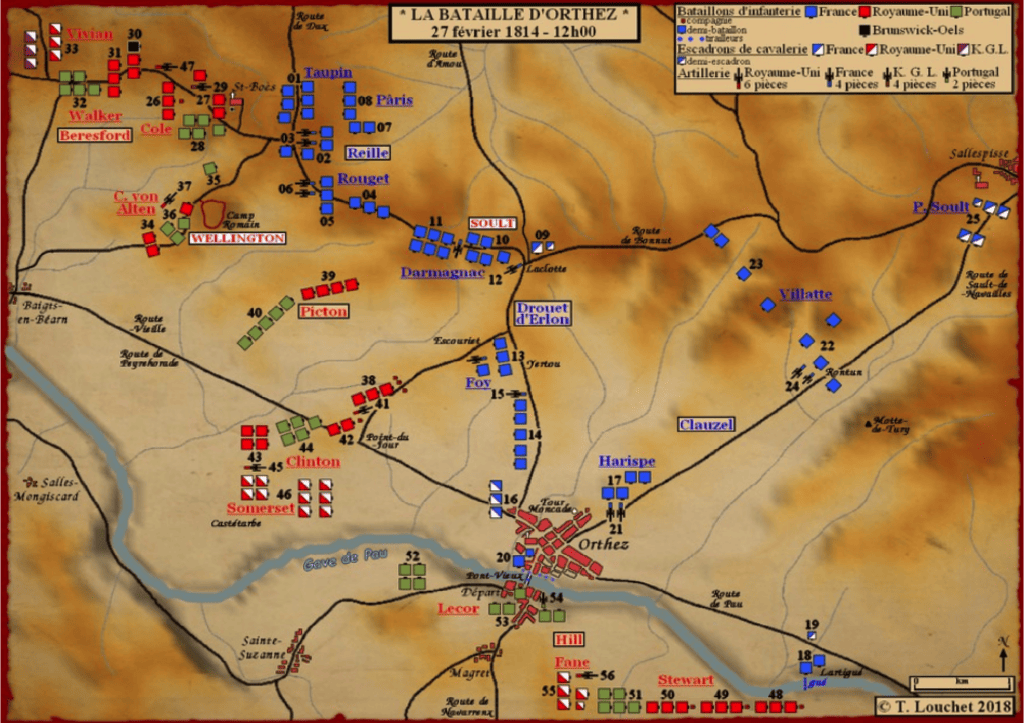
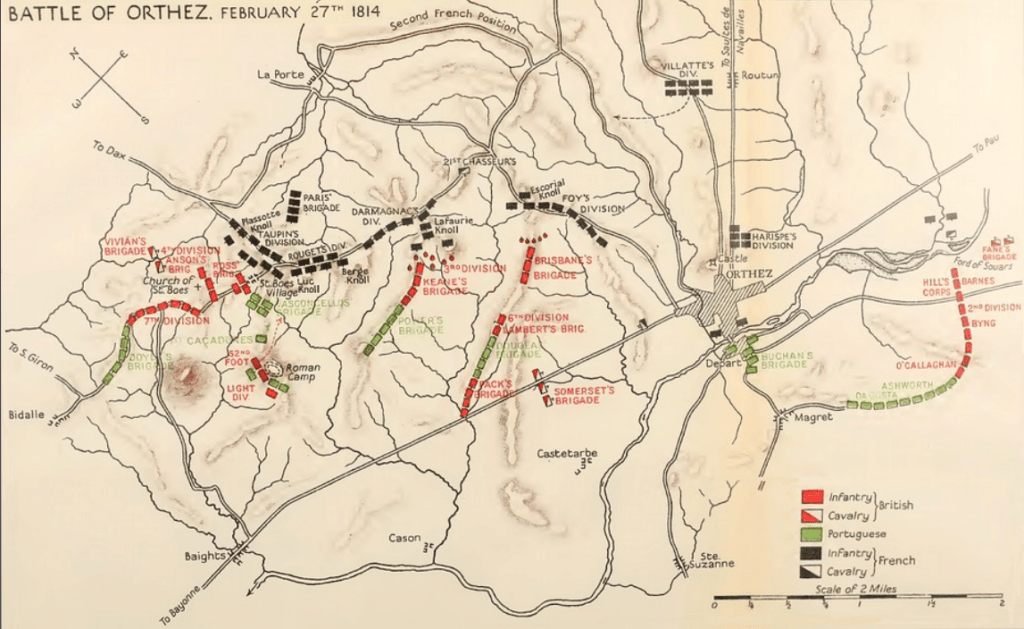
- Hill’s Crossing at the Gué de LartigueOptionalDuring the battle, Hill’s command crossed the Gave de Pau upstream of Orthez at the Gué de Lartigue. The ford was difficult, and Fane’s cavalry helped steady the passage by entering the water and breaking the current while the infantry crossed. The Gué de Lartigue counts as Rough Terrain. Hill’s infantry may only ford the Gave de Pau while an undisordered Allied cavalry unit is at the ford. While supporting the crossing, that cavalry unit may not charge, evade, or voluntarily move away. If the cavalry unit becomes disordered, retreats, or leaves the ford, Hill’s infantry may not continue crossing until an undisordered Allied cavalry unit is again at the ford.
Arrivals
No scenario commands or units are available yet. Add forces first.
Britain
- 12:30A / H - Hill’s Corps Command
- 12:30A / C / 3B - Light Cavalry Unit
Victory Locations
No victory locations recorded.
Historic Results
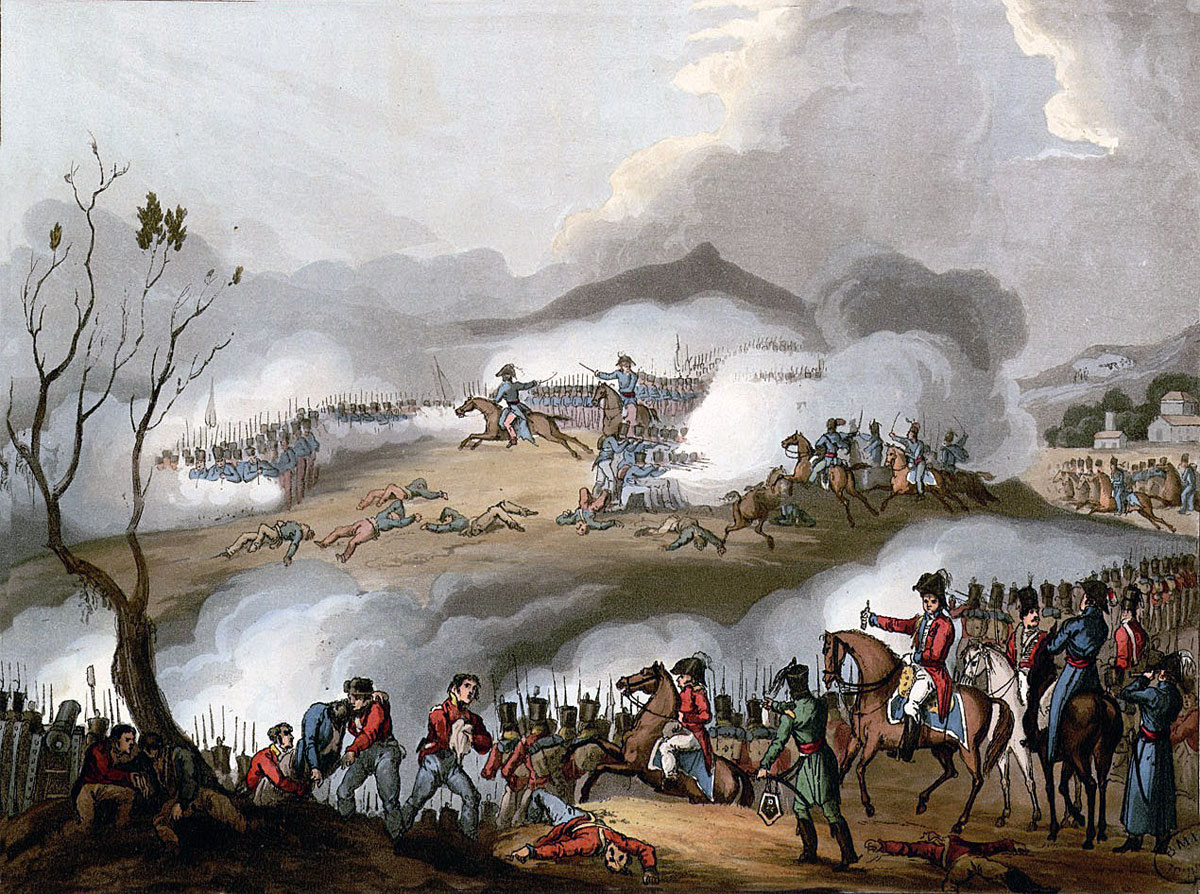
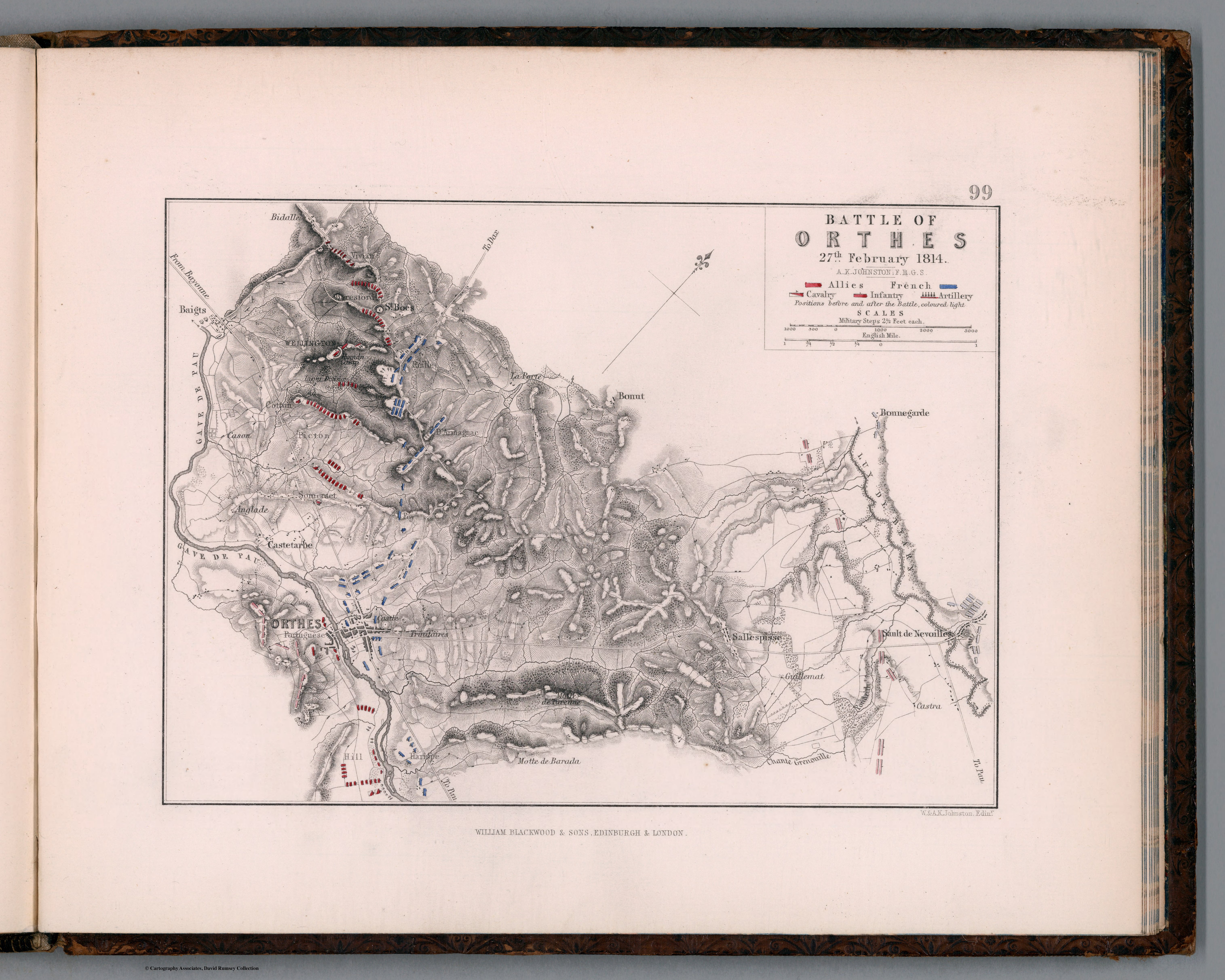
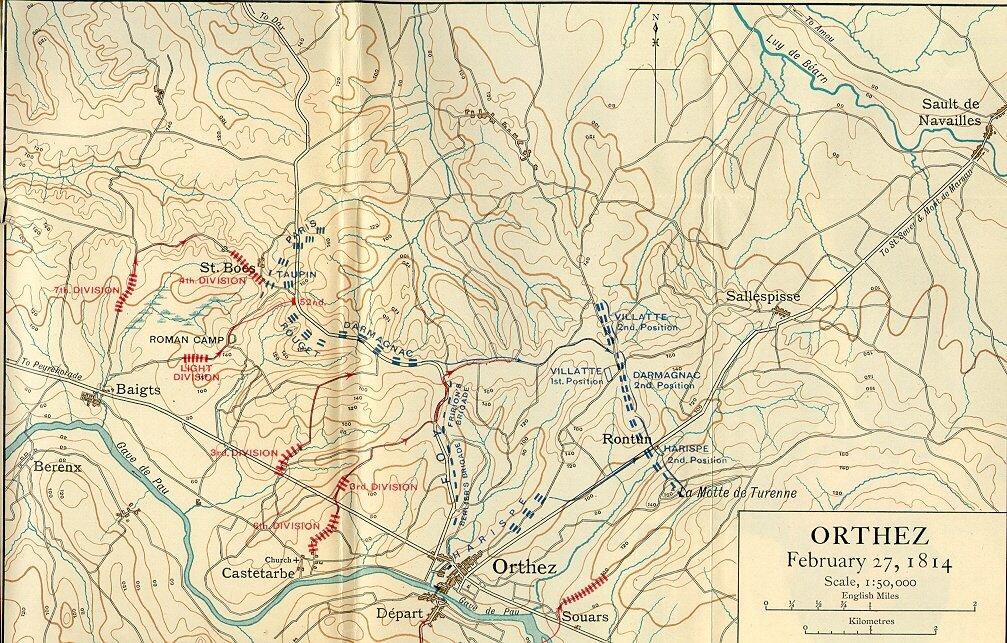
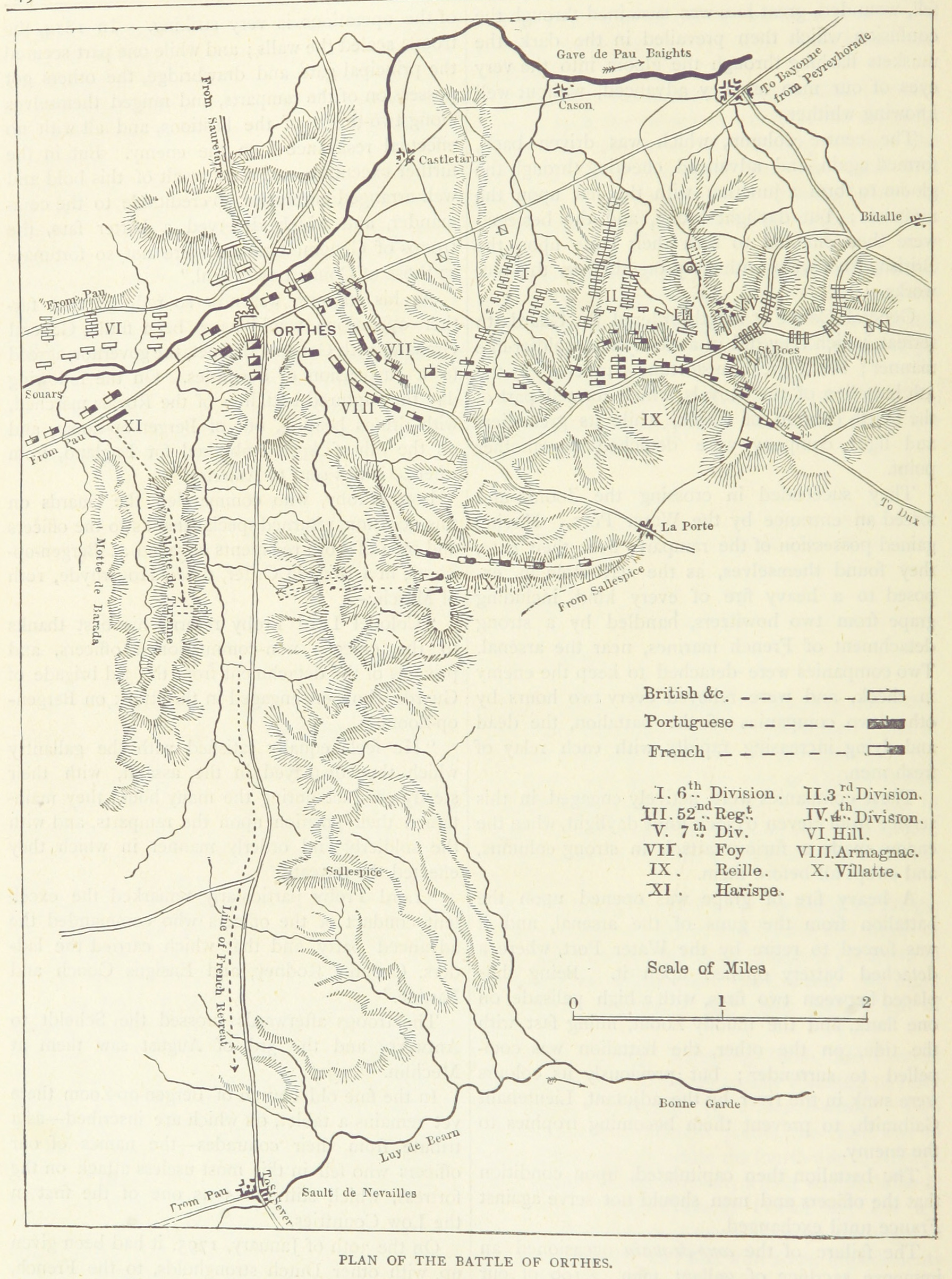
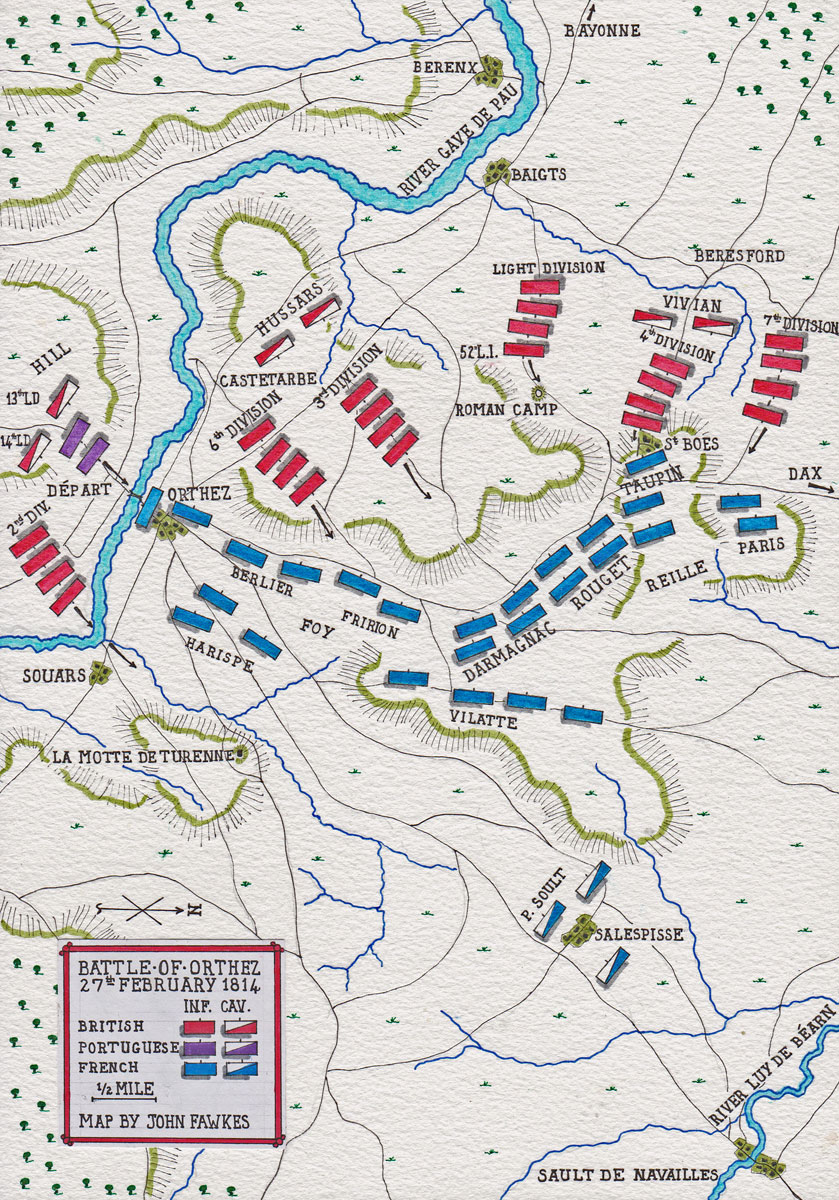
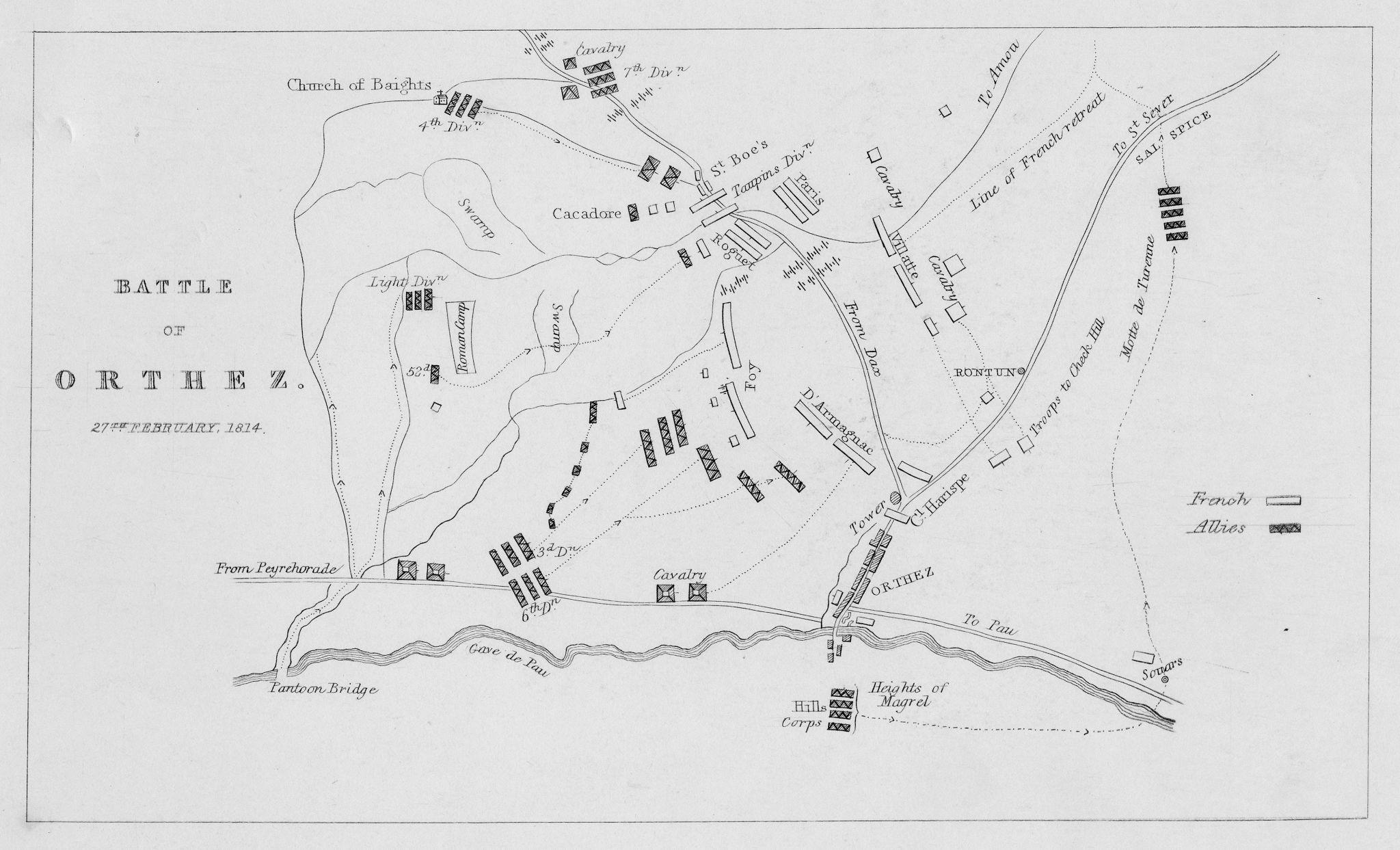
Wellesley initially focused his efforts on the French right at the village of Saint-Boès, but Soult’s defenders held the narrow ridge so effectively that the Allied assaults were bloodily repulsed. Recognizing that a breakthrough there was unlikely, Wellesley pivoted his strategy around midday, ordering a general assault that converted his diversionary movements into a concentrated strike against the rest of the French line. The tide turned when Wellesley exploited a gap between the French right and center, thrusting the Light Division into the opening while Hill’s corps forded the river to threaten the French left, forcing Soult into a hasty retreat.
Though the French initially withdrew in good order, the pressure from Allied pursuit eventually turned the retreat into a disorganized rout, resulting in nearly 4,000 French casualties and mass desertions. Strategically, the victory shattered Soult’s ability to defend the region, directly leading to the capture of the major port of Bordeaux. This collapse of French control in the south accelerated the crumbling of Napoleon's empire, as it allowed Wellesley to establish a firm base for the final push into the heart of France.
Pictures
Links
- https://www.orthez-1814.orgHistoric Background
- https://en.wikipedia.org/wiki/Battle_of_OrthezHistoric Background
- https://arrecaballo.es/guerras-napoleonicas/guerras-napoleonicas-1813-14-campana-en-el-sur-de-francia/batalla-de-orthez-27-de-febrero-de-1814/Historic Background
- https://archive.org/details/cu31924091765663/page/n511/mode/2upHistoric Background
- https://gallica.bnf.fr/ark:/12148/bpt6k65416672/f625.itemHistoric Background
Required Bases
Britain - 50 bases
| # | Code | Type |
|---|---|---|
| 10 | BrLC | Light Cavalry |
| 33 | BrLN | Line Infantry |
| 7 | BrLT | Light/Rifle Infantry |
| 50 | Total | |
France - 77 bases
| # | Code | Type |
|---|---|---|
| 5 | FrLC | Light Cavalry |
| 51 | FrLN | Line Infantry |
| 11 | FrLT | Light Infantry |
| 10 | FrNGI | National Guard Infantry |
| 77 | Total | |
Portugal - 32 bases
| # | Code | Type |
|---|---|---|
| 32 | PtLN | Line Infantry |
| 32 | Total | |