The Hapsburgs Resurgent - 1809
Ebelsberg
May 3, 1809
Background
Following the Archduke Charles' escape across the Danube at Ratisbon, Napoleon chose to take the Army of Germany down the Danube's southern bank to threaten Vienna. In the early part of May, Napoleon encountered Feldmarshall Hiller's army behind the River Traun. Napoleon ordered Massena, supported by Lannes, to "pin” Hiller at the Traun while the rest of the Army of Germany crossed further upstream in an attempt to outflank the Austrian position. On May 3rd, Massena's Advance Guard collided with Hiller at Ebersberg.
Location
Map
No map available yet.
Sequence
The France starts with the initiative. The France is the First Side. The Austria gets 2 free rolls, and the France gets 4 free rolls.
 Austria
Information Chart
 FranceWinner
Information Chart
Historical Order of Battle
Arrivals
No scenario commands or units are available yet. Add forces first.
Austria
- 12:00Any desired formation at A8-A9A / RC - Combined Reserve Corps Command
- 14:00Any desired formation at A8-A9A / 2R - II Reserve Corps Command
France
- 11:00Any desired formation at C1F / AG / F - Ficatier's Brigade Command
- 11:00Any desired formation at E1F / AG / L - Lesuire's Brigade Command
- 11:30Any desired formation at E1F / 3 - Third Division Command
Victory Locations
No victory locations recorded.
Historic Results
Following the Austrian defeat at Eckmiihl, the Archduke Charles escaped across the Danube at Ratisbon. Abandoning his ’ maxim of destroying the enemy's army, Napoleon chose to screen Charles and march for the Austrian capital to force a peace.
Feldmarshall Hiller had been slowly withdrawing on Vienna since defeating Bessières at Neumarkt on April 23d. On 3 May, Marshal Massena stumbled upon Hiller as the latter was crossing the Traun at Ebersberg. He quickly sent word to Napoleon who was marching to outflank Hiller. Massena's Advance Guard lost no time and attacked toward the Traun bridge. With the support of Marulaz's and d'Espagne's cavalry, Massena's infantry sent the Austrians streaming across the 550-yard bridge.
General de Brigade Coehorn pushed his men forward on the heels of the retreating Austrians. Coehorn's men quickly battered down the city gates and entered the town. Hiller's troops fought desperately to maintain their position in the city. The fighting in Ebersberg soon became house-to-house as the Austrians doggedly held their ground. With the street fighting and shelling, the town was quickly set on fire.
Massena soon realized that it was impossible to extract Coehorn's brigade. He ordered the remainder of Claparede's Division to support their comrades. Legrand's Division was also told to prepare for an assault. As Claparede's forces were uniting in the burning Ebersberg, Hiller launched a piecemeal counterattack. The French would have been driven into the Traun but for the timely arrival of Legrand and his Division.
With Legrand's men, Claparede renewed the French assault. This time the French reached the gates of Ebersberg castle. The French suffered tremendously in their repeated attempts to storm the castle. Finally, French sappers succeeded in breaking down the castle gates. After a brief struggle, the castle was firmly in the hands of the French.
Marulaz joined the victorious infantry with his troopers and together they attacked the Austrian lines east of the city. By this time the fires started in Ebersberg had become so intense that reinforcements could no longer move through the city. Claparede and Legrand were now completely cut-off.
Hiller now had a golden opportunity to destroy two-thirds of Massena's IV Corps. The Austrian Reserve Corps were uncommitted and rested along with the majority of Hiller's cavalry. Legrand and Claparede prepared to be decimated.
Around 3:30 pm, a courier arrived alerting Hiller of Napoleon's flanking manoeuvre. With French infantry and heavy cavalry five miles from Hiller's left, at 4 pm, he ordered a general retreat. The French had won the day.
The French had pushed more than twice their number out of an extremely strong defensive position. Claparede's Division had suffered nearly 3,000 casualties (Coehorn's Brigade had nearly ceased to exist). Legrand lost some 700 men. Hiller, with less that one half of his force engaged, had lost 8,600 hors de combat.
Pictures
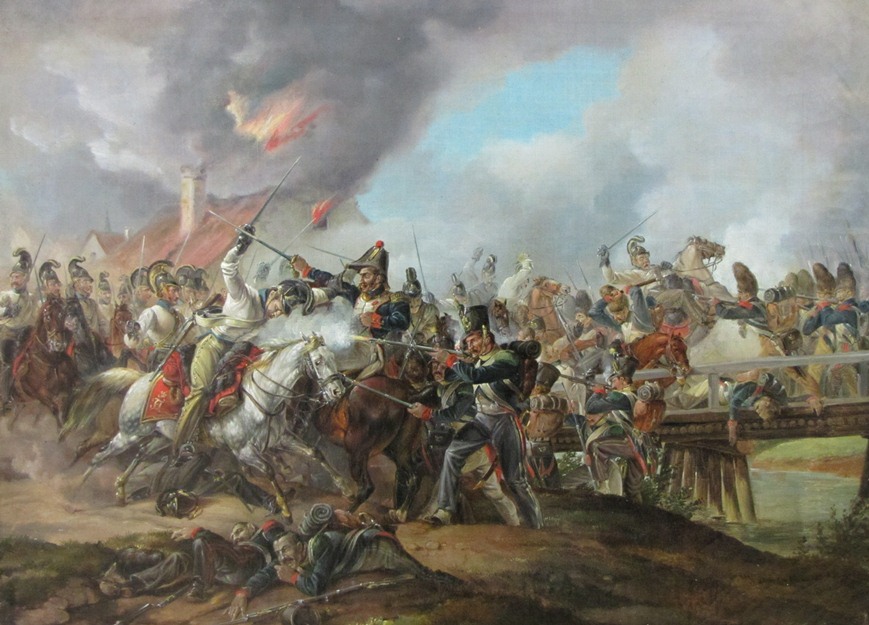
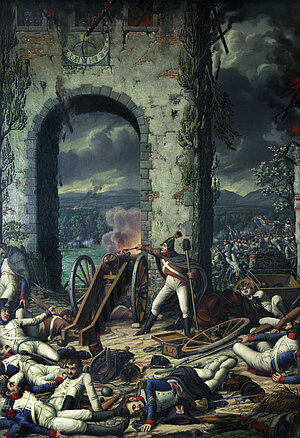
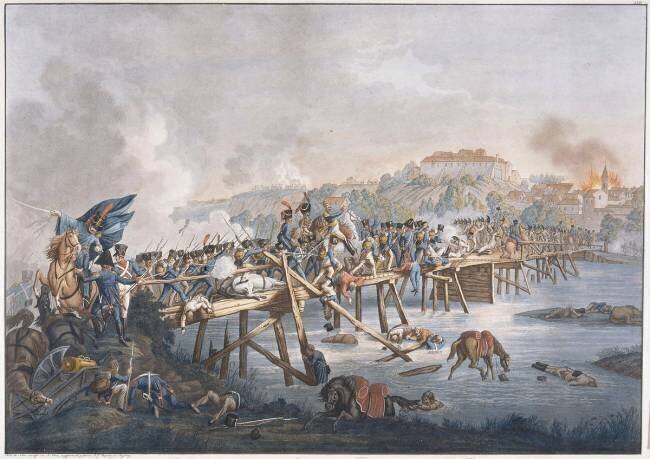
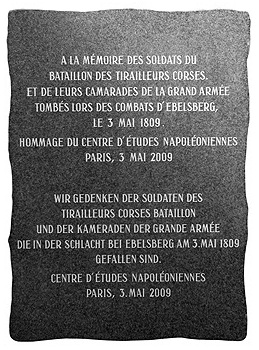
Links
- https://www.napoleon-series.org/nafzigger/809EBB.pdfAfter Action Report
- https://jhp29.blogspot.com/2018/02/la-fuite-debelsberg.htmlAfter Action Report
- https://historyin172.blogspot.com/2013/11/another-flat-figure-diorama-this-time.htmlHistoric Background
- https://www.linz-sued.at/geschichte/publikationen/der-sueden-von-linz-1-1Historic Background
- https://www.napoleon-series.org/nafzigger/809EBA.pdfHistoric Background
Required Bases
Austria - 70 bases
| # | Code | Type |
|---|---|---|
| 1 | As12# | 12# Heavy Artillery |
| 4 | As3# | 3# Horse Artillery |
| 8 | AsGN | Grenadier Infantry |
| 4 | AsGRZ | Grenz Infantry |
| 7 | AsLC | Light Cavalry |
| 32 | AsLN | Line Infantry |
| 14 | AsLW | Landwehr Infantry |
| 70 | Total | |
France - 72 bases
| # | Code | Type |
|---|---|---|
| 2 | Fr12# | 12# Heavy Artillery |
| 1 | Fr6# | 6# Horse Artillery |
| 7 | FrHC | Heavy Cavalry |
| 5 | FrLC | Light Cavalry |
| 31 | FrLN | Line Infantry |
| 12 | FrLT | Light Infantry |
| 14 | FrVLN | Veteran Line Infantry |
| 72 | Total | |
Hesse - 6 bases
| # | Code | Type |
|---|---|---|
| 6 | HsGD | Guard Infantry |
| 6 | Total | |
Württemberg - 4 bases
| # | Code | Type |
|---|---|---|
| 4 | WtLC | Light Cavalry |
| 4 | Total | |