Józef Poniatowski
Command Ratings
Commands & Units
Prince Józef Antoni Poniatowski was a Polish military commander and statesman, a nephew of King Stanisław II August Poniatowski, who rose from early service in the Habsburg army to become commander in chief of the Duchy of Warsaw’s forces and, in 1813, a maréchal de l’Empire in Napoleonic service. Born in Vienna and raised largely within the Habsburg sphere, he entered the Austrian army in 1780 and advanced quickly, serving as an aide-de-camp to Emperor Joseph II. During the Austro-Turkish War he took part in operations including the action at Šabac (1788), where he was wounded.
At his uncle’s request, Poniatowski transferred to the reorganized Polish army in 1789 with the rank of Major general. In the Polish–Russian War of 1792, fought in defense of the May Constitution and the Commonwealth’s reform program, he commanded Polish forces in Ukraine. He distinguished himself at Zieleńce (18 June 1792), a battle later associated with the founding of the Virtuti Militari decoration, conceived in this context and established by the king shortly thereafter. When the king accepted a capitulation under Russian pressure, Poniatowski resigned his command and left the country. He returned during the Kościuszko insurrection of 1794, and after the Third Partition (1795) withdrew from public military life for a period, moving between Habsburg territories and Polish lands; in 1798 he traveled to St. Petersburg for his uncle’s funeral.
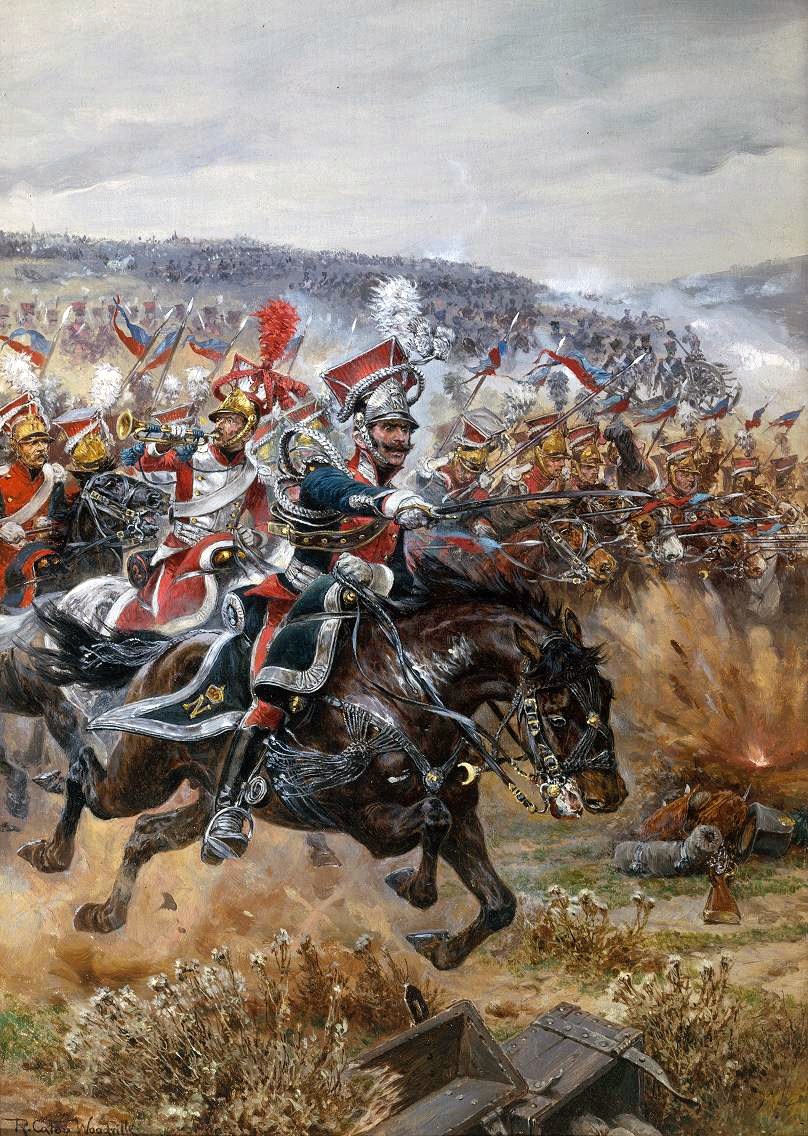
In the crisis of 1806, as French forces entered Polish territories, Poniatowski briefly held responsibility for Warsaw’s security as the Prussian-appointed military governor, then aligned himself with the Napoleonic-sponsored political reorganization. He presented Napoleon with arguments for restoring a Polish state and accepted office in the new administration. In 1807 he became Minister of War and commander in chief of the Duchy of Warsaw’s army, overseeing force expansion, fortifications, training, and the provision of Polish contingents for French operations. Under his ministerial tenure, Polish troops also served abroad under French command, including the well-known participation of Polish cavalry in the Peninsula and, in 1808, at Somosierra.
The war of 1809 brought the Duchy under direct Austrian attack. Facing Archduke Ferdinand’s invasion, Poniatowski fought at Raszyn (19 April 1809) and conducted a withdrawal that preserved the core of his army. He then shifted operations into Galicia, organizing a counteroffensive and supporting uprisings that compelled Austrian evacuation of Warsaw. His campaign culminated in the recovery and occupation of key territories, including Kraków, and the subsequent peace enlarged the Duchy of Warsaw with significant gains. Napoleon recognized his role with high distinction in the Légion d’honneur.
In 1811 Poniatowski traveled to Paris in a diplomatic capacity connected to the Duchy’s ruler, Frederick Augustus of Saxony, during ceremonies for Napoleon’s heir, and he participated in the strategic discussions preceding the invasion of Russia. In 1812 he commanded the Polish troops of the Grande Armée’s V Corps, initially under Jérôme Bonaparte and later within the wider right wing of the army. He fought at Smolensk and Borodino, entered Moscow with the main army, and during the retreat suffered serious losses; an injury sustained in the withdrawal forced him to relinquish direct field command temporarily. The remnants of his corps reached Warsaw late in 1812, and in early 1813 he conducted a further withdrawal toward Kraków as Russian forces advanced.
During the 1813 campaign he declined Russian overtures to change sides, assembled a reduced but organized Polish force, and marched into Saxony to rejoin Napoleon. His troops were integrated into the French order of battle, and he fought in the Battle of Leipzig (16–19 October 1813). On 16 October Napoleon promoted him to maréchal de l’Empire. During the withdrawal, after the premature destruction of key bridges over the White Elster, Poniatowski—wounded multiple times—attempted to cross the river on horseback and drowned on 19 October 1813.
His remains were recovered and eventually returned to Polish lands. A national funeral was held at Wawel Cathedral in Kraków in 1817, where he was interred among other figures of Polish state and military history. Commemoration of Poniatowski in the nineteenth century included Major public monuments, notably the equestrian statue designed by Bertel Thorvaldsen in Warsaw.
Sources
- Britannica: Józef Antoni Poniatowski
- Fondation Napoléon: Poniatowski, Józef
- Royal Łazienki Museum: “Virtuti Militari” Exhibition
- Wawel Royal Cathedral: The Cathedral of National Poets and Heroes
- Polish History: Józef Poniatowski: “Greater than the king, this prince”


He was "Prince of Poland" in Napoleon's nobility and the only foreign marshal. ADC to Joseph II of Austria in early 1790s in the Austrian Army; XX 92 Zielence (6/18/92 win over Russians); banished in 1793 but returned for the next year's revolt; XX (4000) 94 Poland – L; exile until 1798 in Austria and retired through 1806; took command of Polish Army 10/07; XXX 09 Raszyn (L), W, capture of Krakow (W); XXX (V) 12 Smolensk, Borodino, Winkovo, Berezina (wounded); XXX (V) 13 Leipzig (KIA). The effective ruler of the Grand Duchy of Warsaw (1807 – 1813). (1763-1813)