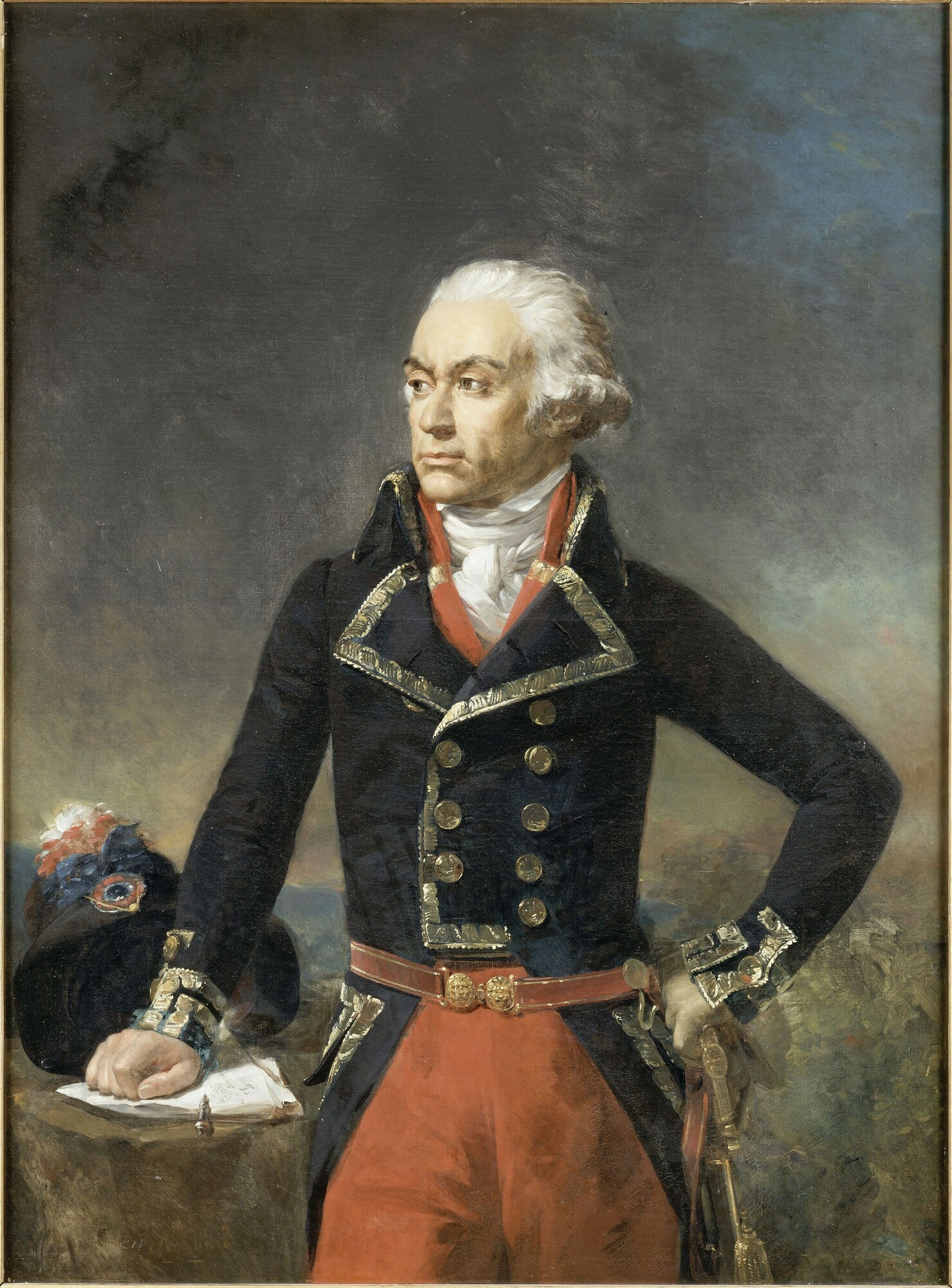
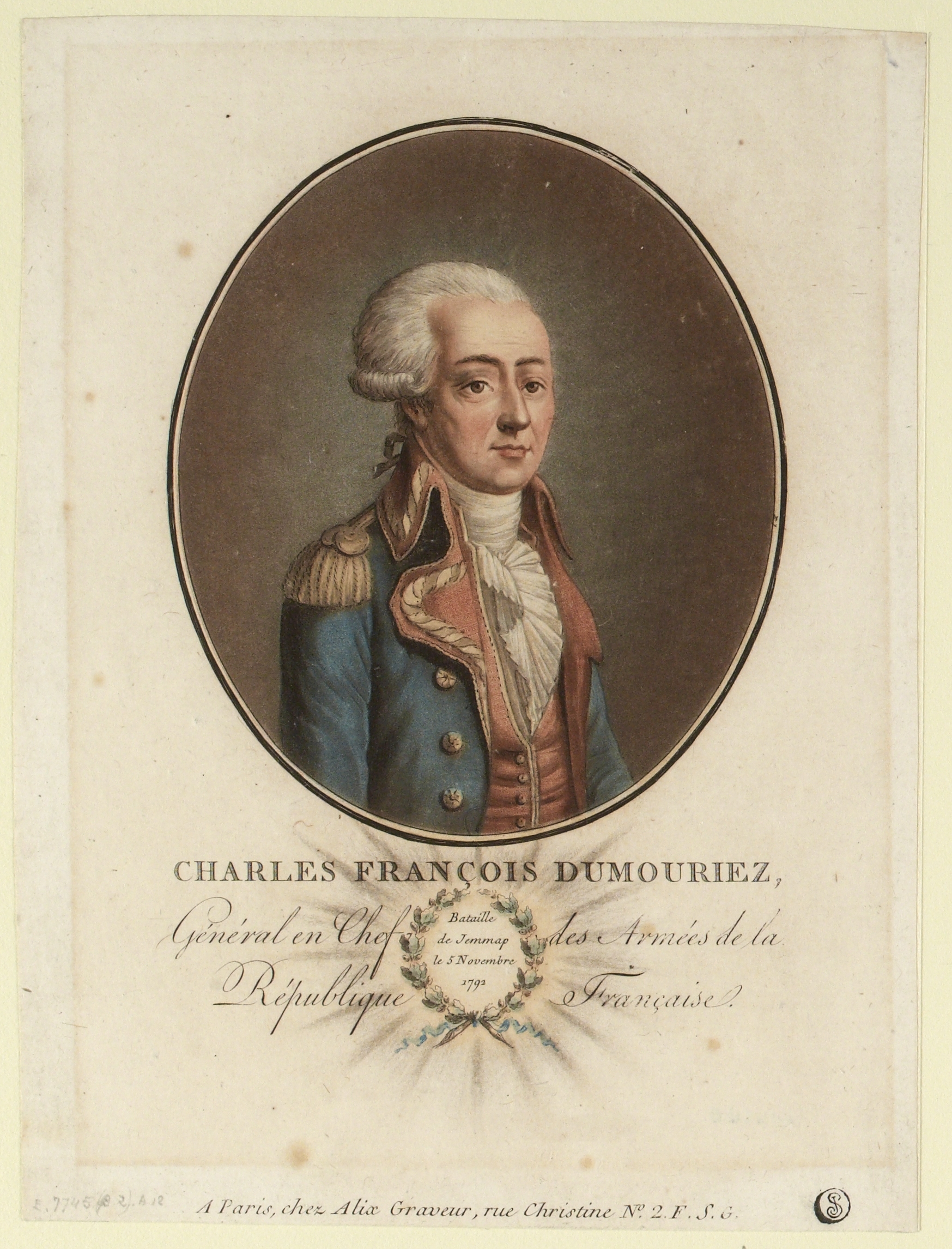
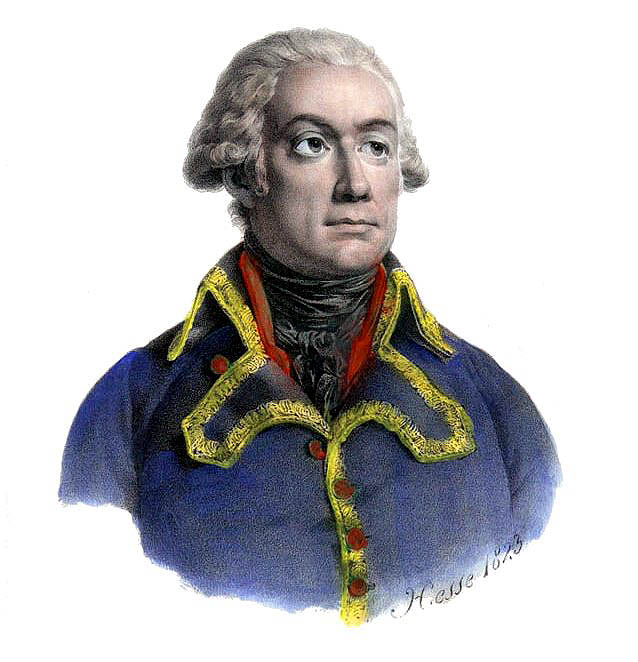
Charles Dumouriez
Command Ratings
Commands & Units
- Commands the French Army at Valmy (1792, age 53)
Charles-François du Périer Dumouriez was born at Cambrai in January 1739 and entered the French army during the Seven Years’ War. He began active service in 1758 and served in multiple campaigns in Germany against Prussian and allied forces. In the years after the war he remained in royal service and was employed both in uniform and in assignments connected with the crown’s political and military interests. During the later reign of Louis XV he was used on secret diplomatic and intelligence missions abroad; among the best known were his journeys to Madrid, Poland during the Bar Confederation crisis, and Sweden. These activities placed him within the network of unofficial royal diplomacy, and they alternated with periods of disfavour. In the early 1770s his involvement in intrigues contributed to his recall and imprisonment; he was held for a time and then released, returning to service.
In 1778 Dumouriez received an important provincial appointment as commander at Cherbourg. He remained connected with Cherbourg for more than a decade and oversaw work related to the port and its defences through the closing years of the Ancien Régime. The outbreak and early course of the French Revolution in 1789–1791 reopened political and military opportunities for officers who could present themselves as supportive of the new order. Dumouriez moved into revolutionary political circles in Paris and associated himself with the Jacobin Club while also cultivating ties with figures who would become aligned with the Girondin movement. By 1791 he had attained senior rank and was involved in the reorganized military administration and command structure created by the Revolution.
On 15 March 1792 Dumouriez entered the ministry as minister of foreign affairs under Louis XVI, at the head of a cabinet strongly influenced by Girondin leaders. In this position he was centrally involved in the diplomatic crisis that ended with the declaration of war on Austria on 20 April 1792. His tenure as foreign minister coincided with the opening of the War of the First Coalition and the first French operations on the northeastern frontier. As the initial French attempts to carry the war into the Austrian Netherlands met reverses and political pressures intensified, Dumouriez was shifted to the war ministry. He was appointed minister of war on 13 June 1792, but his term was brief; after only a few days he resigned and returned to field command.
By mid-1792 Dumouriez was assigned to command in the northern theatre. The coalition threat quickly increased after Prussia entered the conflict alongside Austria, and the allied advance toward Paris in late summer 1792 created a strategic emergency. In this campaign Dumouriez’s army operated in concert with the army under François-Christophe Kellermann. On 20 September 1792 the French forces resisted the Prussian army at the Battle of Valmy. Dumouriez was one of the principal French commanders present, sharing responsibility with Kellermann in the actions that stopped the allied offensive and contributed to the subsequent withdrawal of the invaders from French territory.
After Valmy Dumouriez turned to offensive operations in the Austrian Netherlands. On 27 October 1792 he began the invasion, and on 6 November 1792 he fought the Battle of Jemappes, commanding the French army that attacked and defeated the Austrian force under the Duke of Saxe-Teschen near Mons. Jemappes became one of the earliest large-scale French victories of the Revolutionary Wars and opened the way to the rapid occupation of much of Belgium. In the weeks after the battle Dumouriez advanced into the Austrian Netherlands, entering Brussels in mid-November and continuing operations aimed at consolidating French control of the region. The occupation phase involved the extension of French authority into major towns and the management of relations with local political currents that included both annexationist and autonomist tendencies.
At the beginning of 1793 Dumouriez’s relationship with the increasingly radical political authorities in Paris deteriorated as military and political aims diverged. He returned to Paris on 1 January 1793 and then went back to the army as new directives were issued in the widening war. The Convention’s decisions to prosecute the conflict more aggressively, combined with the declarations of war against Great Britain and the Dutch Republic in early February 1793, affected the operational plans in the Low Countries. Dumouriez undertook an invasion northward toward the Dutch Republic, beginning the movement in February 1793. The campaign soon encountered logistical and political difficulties and unfolded at the same time as Austrian forces prepared a counteroffensive against French positions in Belgium.
The Austrian counterstroke forced Dumouriez to abandon the most ambitious elements of the Dutch operation and concentrate on defending Belgium. On 18 March 1793 he fought the Battle of Neerwinden against the coalition army under Prince Josias of Saxe-Coburg-Saalfeld. Dumouriez led the French assaults but was repulsed; the defeat compelled a retreat and contributed to widespread desertion and disorganization among parts of the French forces. In the days following Neerwinden the French army suffered additional pressure during the retreat and rear-guard fighting. On 21 March 1793 Dumouriez was checked again near Leuven as Austrian forces continued to press forward, further weakening his standing with the Convention and intensifying political suspicion.
In the immediate aftermath of the defeats Dumouriez entered into an armistice arrangement with the enemy while his conflict with the Convention deepened. The government in Paris moved to remove him. On 2 April 1793, when emissaries were sent to relieve him of command, Dumouriez seized them and handed them over to the Austrians. As the army’s cohesion collapsed and many of his troops refused to support a political march on Paris, Dumouriez’s position became untenable. On 5 April 1793 he defected to the Austrian side, leaving French service. His defection had major political repercussions inside France and contributed to the accelerating crisis between Girondins and Jacobins.
After crossing to the coalition, Dumouriez remained briefly in Brussels and then travelled through several parts of Europe seeking employment and political support, but he did not resume command of French forces. During the later 1790s and early 1800s he lived as an émigré, engaged in political writing and contacts with foreign governments. By 1804 he settled in England, where he received a pension and became associated with British planning and advisory activity during the period of expected French invasion threats. He continued to reside in Britain through the Napoleonic period, and the Bourbon restoration in 1814 did not result in a return to France; Louis XVIII refused to permit him to come back. Dumouriez died in March 1823 at Turville Park in Buckinghamshire.
Sources
A SYW veteran, he was the first important and successful French general of the French Revolution. His heavy involvement in politics proved his undoing and he finally turned coat and left France in a hurry. XX rank in 1788; XXX rank in 1792; XXXX 92-93 Valmy (W), Jemappes (W), Neerwinden (L); defected when accused of treason in spring, 1793 (retired to England). (1739-1823)
Military Career
- 1792 Général de Division
Pictures