Jean Rapp
Command Ratings
Commands & Units
- Commands the French V Corps at La Souffel (1815, age 44)
- Commands the French Fifth Corps at La Suffel (1815, age 44)
Jean Rapp (27 April 1771 – 8 November 1821), created comte de l’Empire, was a French cavalry officer whose rise from regimental service to general rank was closely bound to long service as an aide-de-camp—first to General Louis Desaix and, from June 1800 until 1814, to Napoleon Bonaparte. His active career combined repeated employment on confidential missions and battlefield liaison with conspicuous personal combat, including leading the Guard cavalry charge at Austerlitz and, later, the prolonged fortress command of Danzig during the Sixth Coalition.
Rapp was born at Colmar (Haut-Rhin) on 27 April 1771. His early military service began in March 1788 in the cavalry regiment known as the Chasseurs des Cévennes. In the Revolutionary armies he served in the Armée du Rhin, where he gained a reputation for forward fighting and early wounding; Napoleon.org’s biographical account records severe sabre wounds at “Ligenfield” on 28 May 1795. By 1794 he had reached the grade of sous-lieutenant. His progress into the higher orbit of the army followed attachment to senior commanders: on 19 December 1796 he became a provisional aide-de-camp to Desaix, and in that capacity served in the Rhine theatre, including at the defence of the fort of Kehl, where he was wounded by a gunshot to the right knee. On 18 May 1797, with support from General Moreau, he was confirmed as aide-de-camp and promoted captain.
Rapp’s service with Desaix carried him into the Egyptian expeditionary sphere. After meeting Bonaparte at Passariano near Campo Formio during Desaix’s Italian movement in 1797, he embarked with Desaix in 1798 and thereafter served through the Egyptian campaign, where accounts credit him with marked initiative in mounted combat and the capture of artillery at actions such as Sediman. Napoleon.org’s French biography emphasizes that these years formed his professional identity as a hard-riding staff officer who combined escort duties and reconnaissance with direct combat leadership when opportunities arose.
In the spring and early summer of 1800, Rapp returned to France and rejoined the field forces of the First Consul. Desaix was killed at Marengo on 14 June 1800; Napoleon took Rapp as aide-de-camp immediately afterward, and he served in that role without interruption until 1814. Within the Consular and early imperial household system, Rapp was repeatedly tasked with missions that required a trusted officer: Napoleon.org records assignments in the Vendée (July–August 1800), Switzerland (including a political-military mission in September 1802), and inspection tours in Belgium and along threatened coasts and waterways in 1803. In the same period, Rapp was given a distinctive organizational command that tied him to the Guard: by decree of 13 October 1801 Bonaparte ordered him to organize the Mameluk squadron at Marseille, assembling and disciplining the Egyptian refugees and other oriental horsemen intended for escort service.
Rapp entered general rank early in the Empire. Napoleon.org’s English biography places his promotion to général de brigade in 1803. During the 1805 campaign he operated both as a battlefield officer of the imperial household and as an emissary. At Ulm Napoleon used his German fluency for contacts with Austrian leadership, sending him to sound General Mack. At Austerlitz on 2 December 1805, he received one of his most celebrated combat employments: on Napoleon’s order he led the cavalry of the Guard, including squadrons of the chasseurs à cheval and grenadiers à cheval of the Guard and the Guard Mamelukes, against the Russian Imperial Guard cavalry. Napoleon.org’s accounts (French and English) emphasize that Rapp’s mounted charge broke the Russian Guard cavalry’s momentum in the crucial mêlée around the center-right, and that Rapp was wounded in the action. His advancement followed immediately; Napoleon.org’s English biography gives 24 December 1805 as the date he became général de division, while the Alsatian biographical notice states he was named général de division and aide de camp de l’empereur on the evening of 2 December 1805.
After Austerlitz he was employed in high-tempo inspection and liaison duties characteristic of Napoleon’s immediate entourage: Napoleon.org notes assignments inspecting Marmont’s troops at Graz and observing formations under Masséna, and then repeated inspections in Strasbourg and northern Germany (Hanover, Hamburg, Hameln). In 1806 he served in the Prussian campaign and is recorded as present at Jena (14 October 1806), entering Weimar with Murat after the battle. He then moved with the advance into Poland; both Napoleon.org and Wikipedia record that he was wounded at Golymin (26 December 1806), during the winter operations that followed the pursuit into Masovia. Napoleon.org’s English biography also names actions at Schleiz (9 October 1806) and at Borkowo (24 December 1806), reflecting his frequent use as a mounted officer in the forward screen and liaison between leading elements.
His career thereafter became strongly associated with the Vistula fortresses. The Alsace-Histoire biographical entry states that he was appointed governor of Thorn on 28 February 1807 and then governor-general of Danzig on 26 July 1807, titles he retained officially until 1814 even while still serving personally as Napoleon’s aide-de-camp. This dual status made him a senior territorial commander responsible for both the garrison’s internal administration and the fortress’ integration into French operational plans in the Baltic theatre. Danzig’s role as a base, arsenal, and supply node required constant attention to provisioning, storage, hospital arrangements, and the management of mixed-nationality garrison contingents.
Rapp’s noble and honorific advancement under the Empire accompanied this strategic posting. Napoleon.org’s French biography specifies that Napoleon conferred the Order of the Iron Crown on 23 December 1807 and made him comte de l’Empire on 19 March 1808, with letters patent dated 28 January 1809. These grants were paired with substantial financial dotations recorded in the same account. Such formalization of rank and status coincided with his continued command responsibilities in the Baltic.
In 1809, Rapp temporarily left Danzig to rejoin the main army against Austria. Napoleon.org’s French biography places him at Essling on 22 May 1809, where he led the fusiliers of the Guard in fighting that checked Austrian pressure during the crisis of the battle; Wikipedia similarly credits him with leading fusiliers of the Garde impériale at Essling. In October 1809, while Napoleon was at Schönbrunn, Rapp played a direct security role during the interrogation of Friedrich Staps, and is credited with preventing an assassination attempt against Napoleon on 12 October 1809. After this campaign interval he resumed his Danzig responsibilities.
During the Russian campaign of 1812, Rapp again served close to Napoleon as aide-de-camp while remaining tied to Danzig. Napoleon.org’s French biography places him at Smolensk and at the affair of Valutina (19 August 1812), and describes his reconnaissance of Russian lines before Borodino. At Borodino (7 September 1812) that account records that he was wounded multiple times in a short period; Wikipedia likewise states he was wounded by four bullets during the battle. In the retreat he continued in forward and rear-guard combat; Wikipedia notes an episode near Maloyaroslavets where he repelled Cossack attacks and another wound at the Berezina, where he fought alongside Marshal Ney in the rear guard.
The culminating command of his imperial military life was the defence of Danzig in 1813. Napoleon.org’s French biography states that on 12 January 1813 he was named commander-in-chief of the X Corps at Danzig, taking over from Marshal Macdonald, and that he defended the fortress for nearly a year. A primary narrative of the capitulation text preserved in the 1823/1828 family-published memoirs reproduced by Project Gutenberg records that the capitulation documents were concluded at Langfuhr on 29 November 1813, with “Seen and approved, Count Rapp.” The same memoir text records that the Russian emperor approved the capitulation except for the clause permitting the garrison’s return to France, a breach that led to Rapp’s captivity. Wikipedia’s French article likewise describes an “honourable convention” providing for return to France that was then not ratified by Alexander, with the garrison conducted into Russia. Rapp himself, in the memoir account, summarized the scale of attrition—combat losses, epidemic disease, and dispersal—within a garrison that had included large remnants of the retreating Grande Armée.
After release and return to France in 1814, Rapp aligned with the restored Bourbon government, receiving honors that included high rank in the légion d'honneur as recorded in Alsatian and other compiled biographies. During the Hundred Days in 1815 he rallied to Napoleon, receiving command in Alsace: the Alsace-Histoire notice states that he took command of the 5th Corps, which became the Armée du Rhin on 16 April 1815, and also held the military governorship of Strasbourg in the same period. The Battle of La Suffel, fought on 28 June 1815 near Strasbourg, is identified as being commanded on the French side by Rapp, and is often cited as the last pitched-battle victory won by French forces in the Napoleonic Wars. After the second Bourbon restoration he was placed in non-activity (Alsace-Histoire gives 16 September 1815), later returned to political and court standing, and died at Rheinweiler (Baden) on 8 November 1821.
Sources
- Napoleon.org (English): Rapp, Jean
- Napoleon.org (French): RAPP (1771-1821) Jean, comte – Lieutenant-général français
- Fédération des Sociétés d'Histoire et d'Archéologie d'Alsace (NDBA): RAPP Jean
- Project Gutenberg: Memoirs of General Count Rapp, First Aide-de-Camp to Napoleon
- Wikipedia (English): Jean Rapp
- Wikipedia (French): Jean Rapp
- Wikipedia (English): Battle of La Suffel
- Wikipedia (French): Mamelouks de la Garde impériale
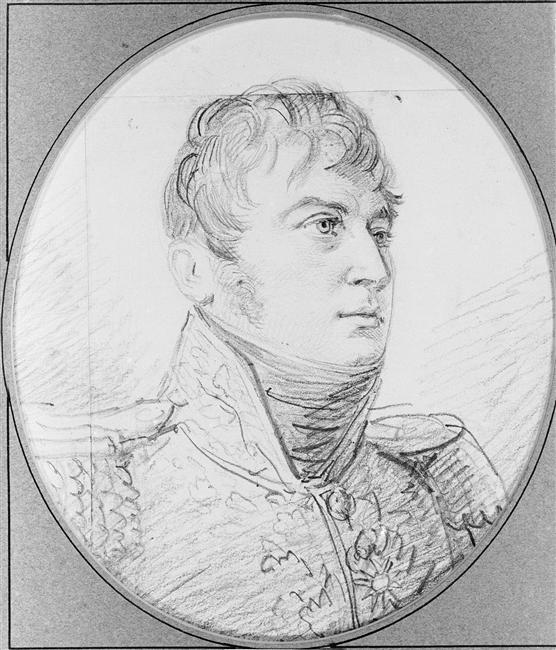


Com. in 1794 after service under Hoche; ADC to Desaix and, after Marengo, a very high profile ADC to Napoleon; X rank in 1803; XX rank right after Austerlitz (wounded – very distinguished there leading the Guard Cavalry); wounded @ Golymin clash; XX 09 Aspern-Essling; XXX 13 siege of Danzig (1/16/13 - surrendered 11/29/13); XXXX 15 (along the Rhine) - LLW – usually a staff officer. Liked by his troops. "A much wounded aide-de-camp." (1771-1821)