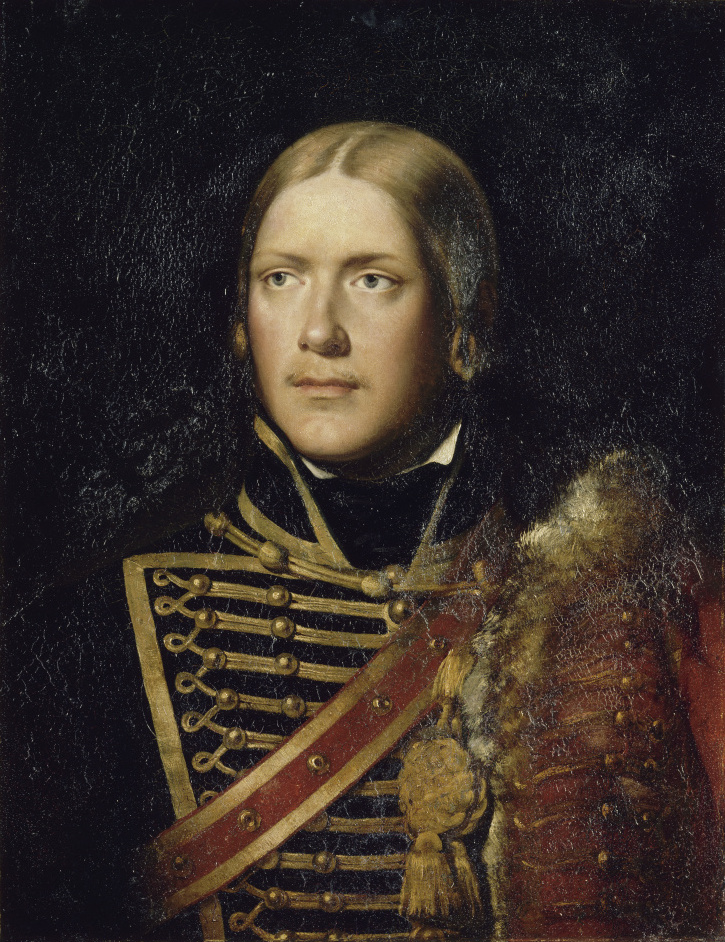
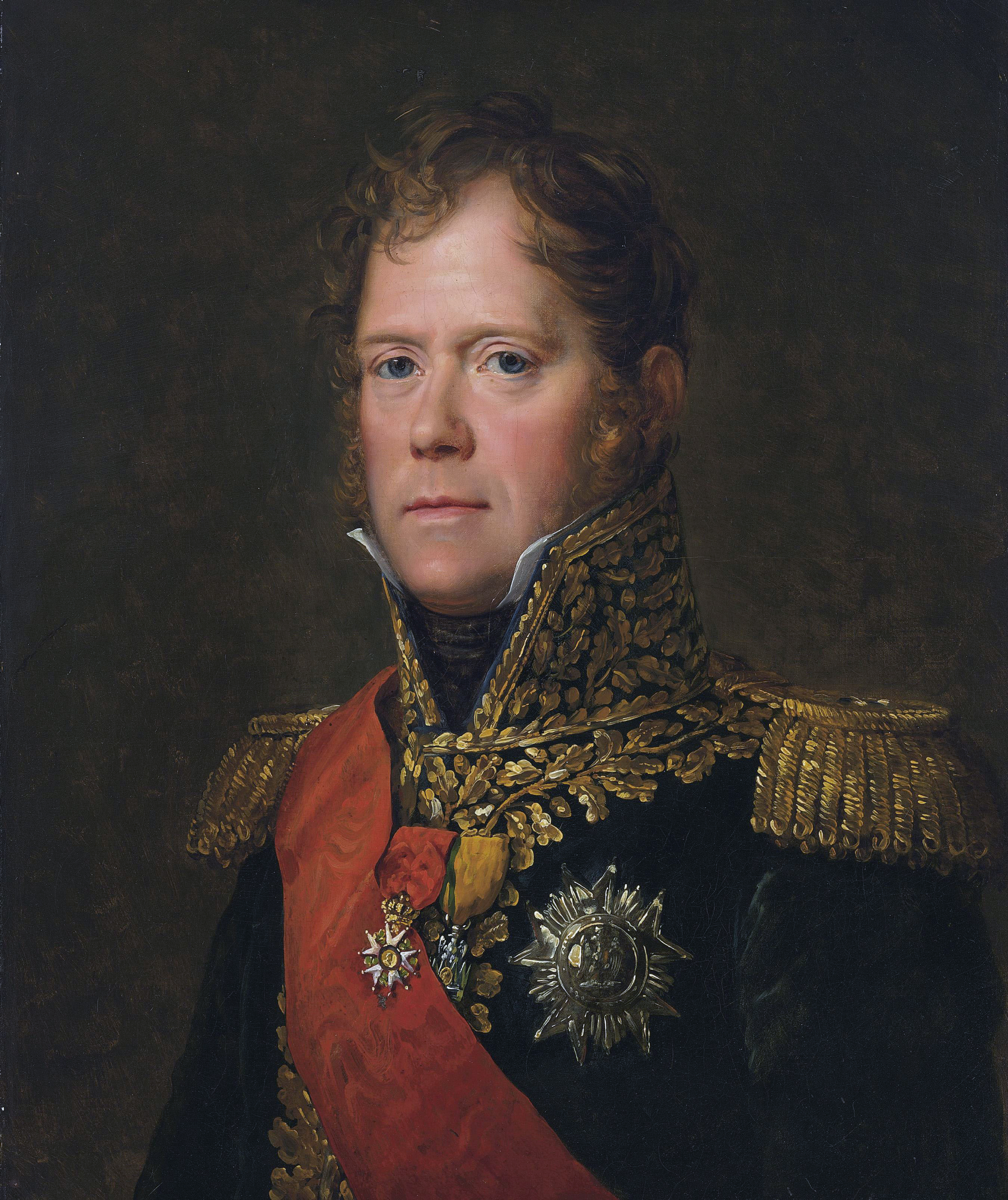
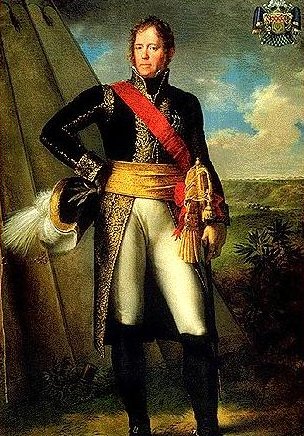
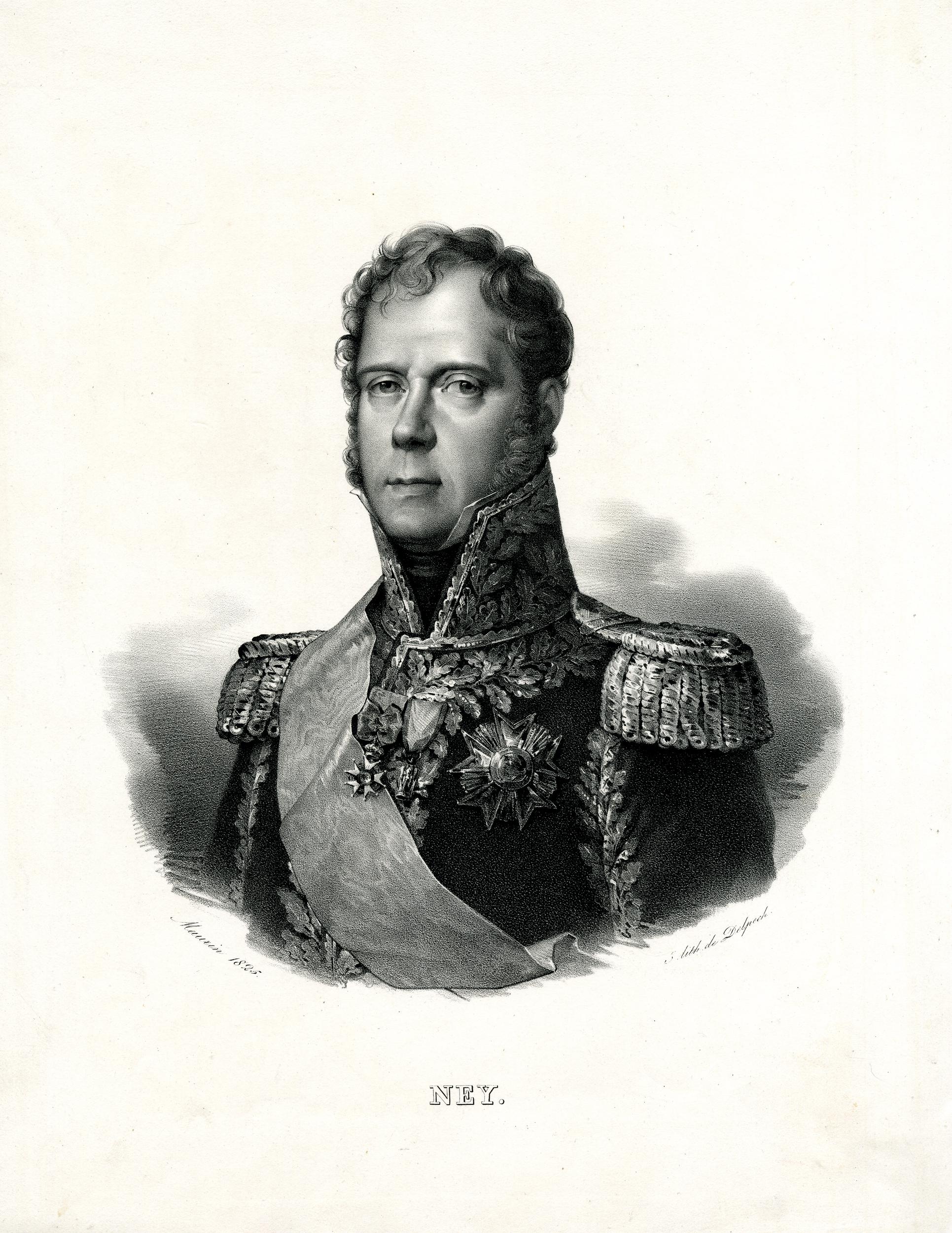
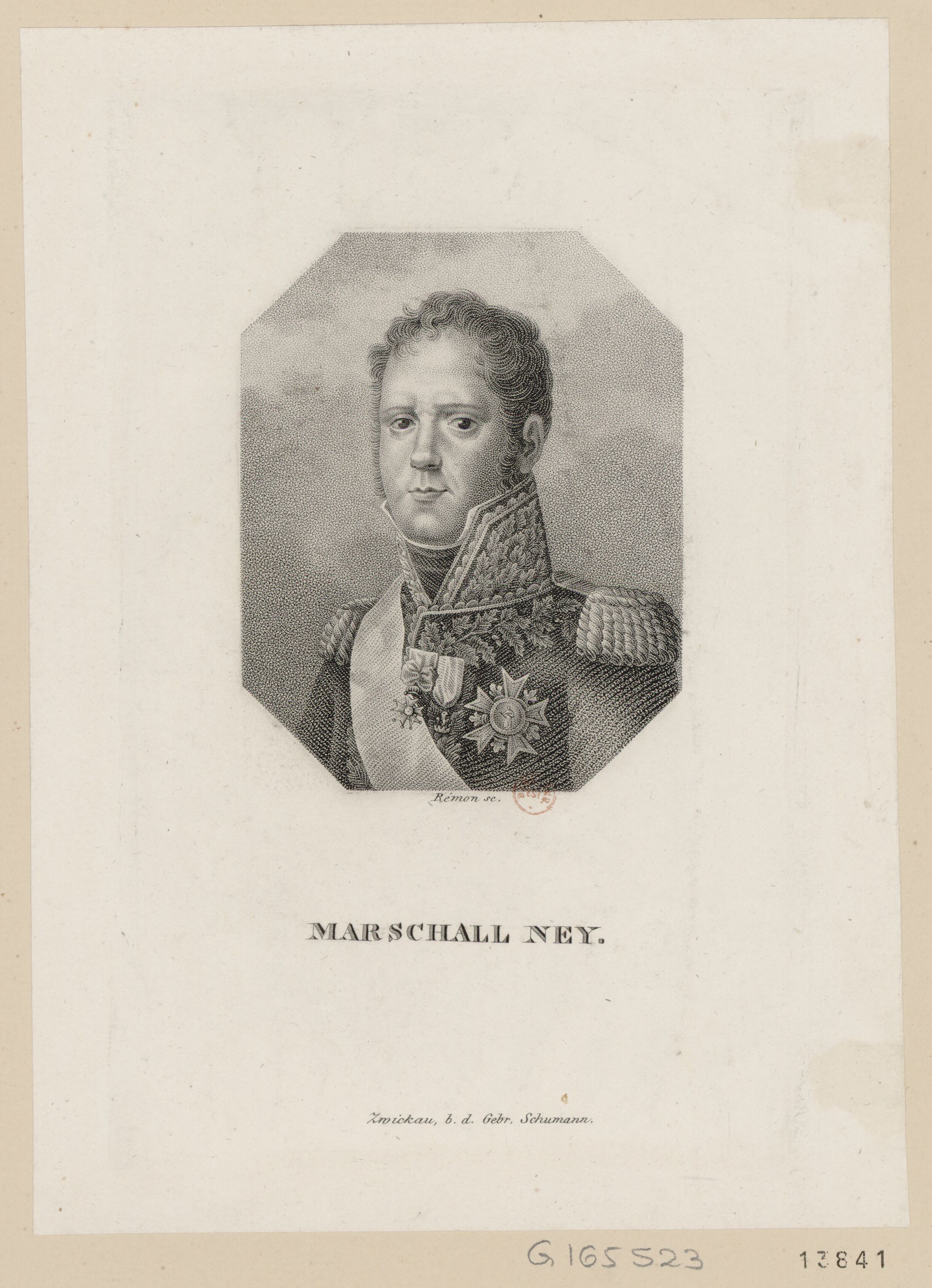
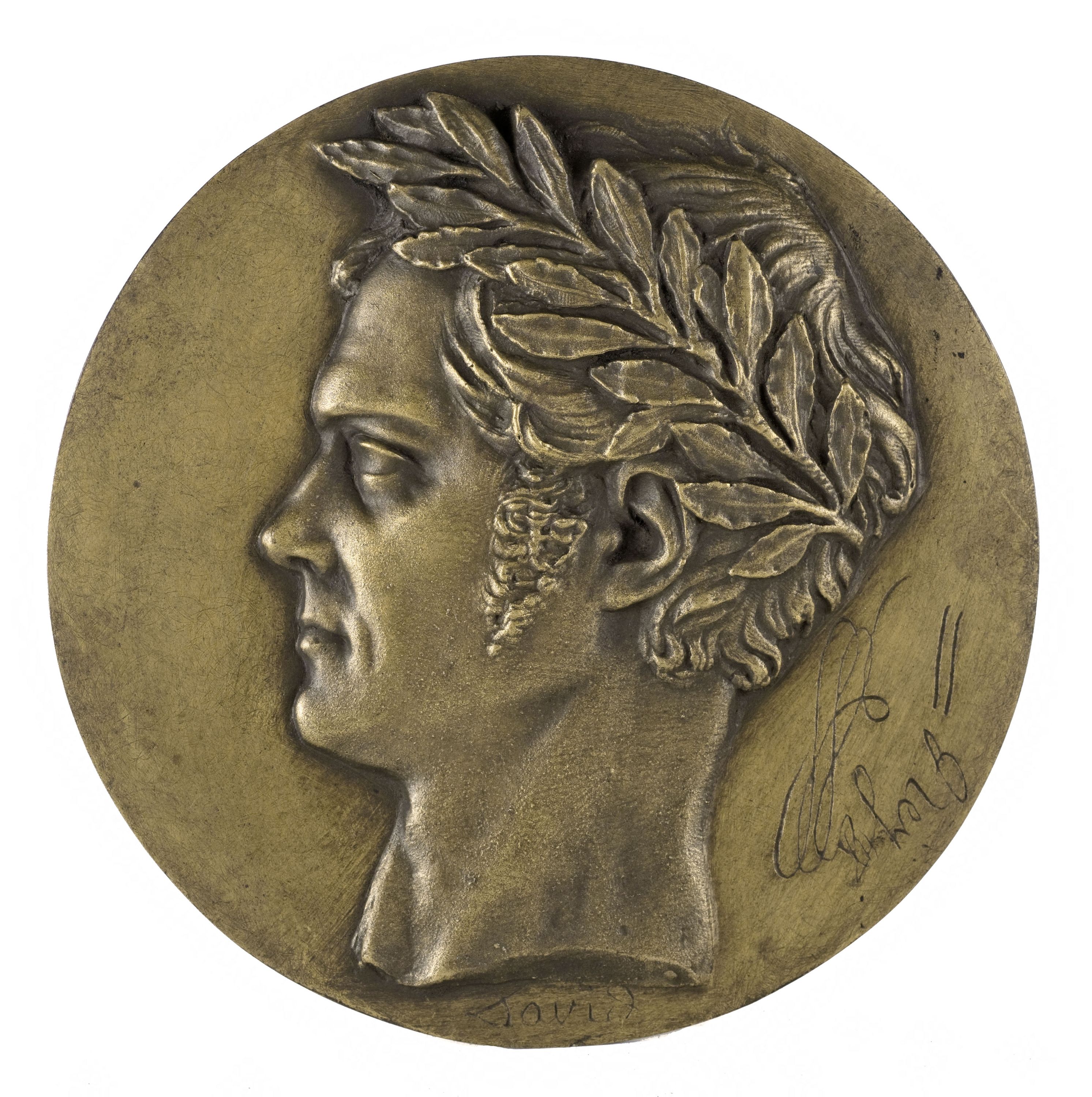
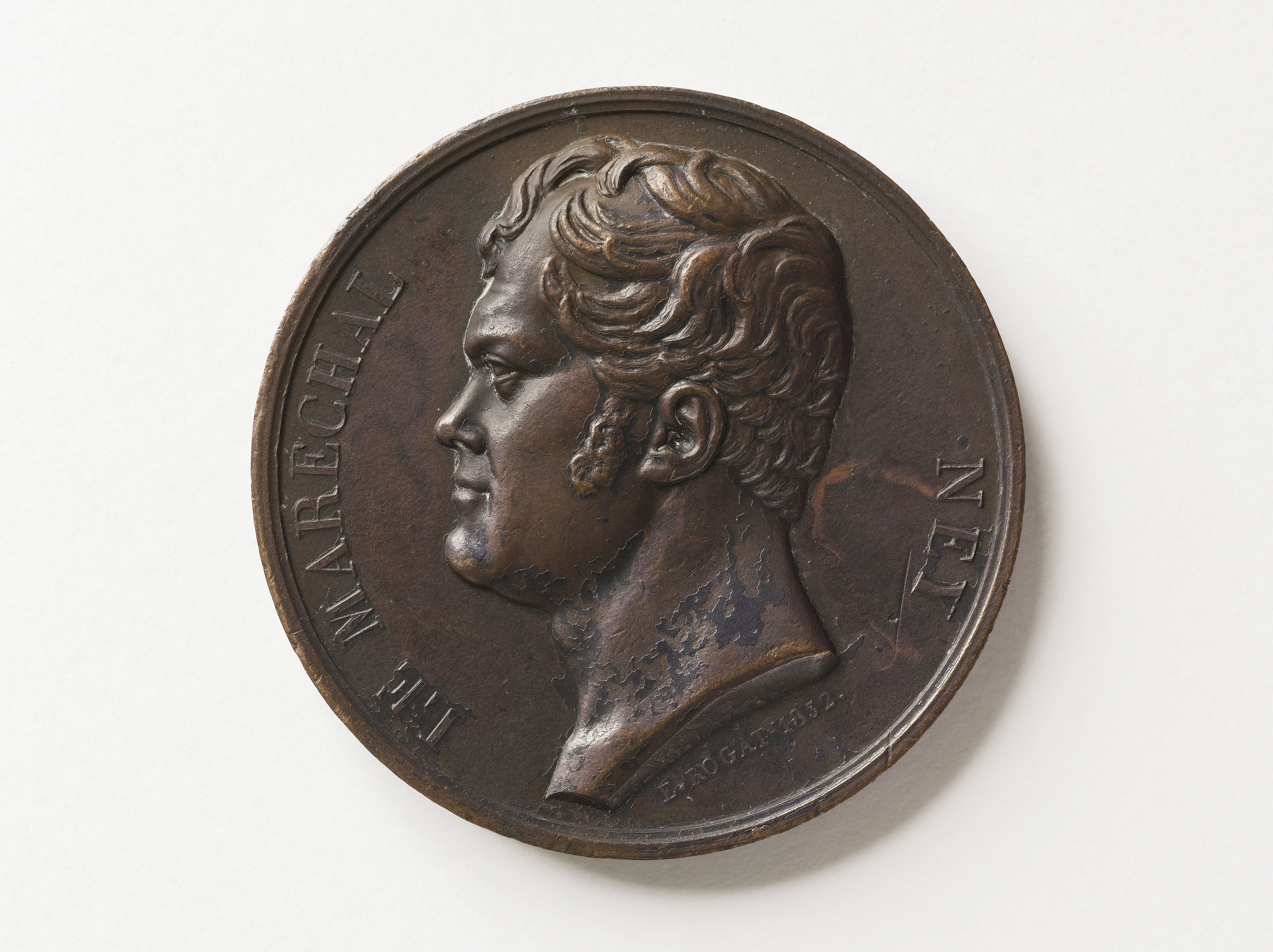
Michel Ney
Command Ratings
Commands & Units
- Commands the VI Corps at Elchingen (1805, age 36)
- Commands the VI Corps of French Grande Armée at Eylau (1807, age 38)
- Commands the VI Corps of Grande Armee at Friedland (1807, age 38)
- Commands the VI Corps of Army of Portugal at Bussaco (1810, age 41)
- Commands the III Corps of Grande Armée at Borodino (1812, age 43)
- Commands the III Corps of Grande Armée at Lützen (1813, age 44)
- Commands the Army of Berlin at Dennewitz (1813, age 44)
- Commands the I Young Guard Corps of French Army at Craonne (1814, age 45)
- Commands the Wing of Armée du Nord at Waterloo (1815, age 46)
Michel Ney was born on 10 January 1769 at Saarlouis. He left an apprenticeship and enlisted in the cavalry in 1787, joining a hussar regiment as a trooper and rising to non-commissioned rank in the Flanders theatre during the opening operations of 1792. He received a commission in October 1792 and served with the frontier armies in the early campaigns; his name appears in accounts of the armies present at Valmy and Jemappes in 1792. Transferred to the Rhine front in 1794, he first attracted wider notice in 1796 during the Army of Sambre-et-Meuse operations, fighting at Altenkirchen and winning promotion after the action at Forcheim in August 1796; he conducted an exemplary rear-guard at Amberg that same campaign. Briefly taken prisoner by the Austrians in 1797, he resumed service on the Rhine against the Second Coalition, campaigning under Bernadotte, and by March 1800 had risen to the rank of général de division.
In the spring and summer of 1800 Ney was sent to the Swiss theatre under André Masséna. He was seriously wounded at Frauenfeld in May 1800 and, after recovery, returned to the Rhine to take part in the operations that culminated at Hohenlinden on 3 December 1800. After Hohenlinden he held peacetime commands in Switzerland and was assigned to the Boulogne camp preparing the invasion of England; on 19 May 1804 he was one of the officers named maréchal on the proclamation of the Empire. He received the command of the VIe corps of the Grande Armée for the Ulm–Austerlitz campaign of 1805. In that campaign he was involved in the fighting around Ulm and, after a setback at Albeck in October, won a conspicuous victory at Elchingen on 14 October 1805. Following Elchingen he marched into the Tyrol to block Archduke John’s forces but did not take part in the central action at Austerlitz.
During the 1806–1807 war against Prussia and Russia Ney’s VIe corps fought at Jena on 14 October 1806, where he was rebuked for a premature attack; he subsequently led the siege and rapid capitulation of Magdeburg. In the Polish campaign he was present at Eylau (February 1807) and at Guttstadt, and attacked on the left at Friedland on 14 June 1807. Napoleon rewarded his services with titles and distinction: he was created duc d'Elchingen in June 1808.
Ney was transferred to the Iberian theatre in 1808. He arrived in Spain in the autumn and took part in the operations of the Army of Spain, including the action at Tudela in November 1808, where he received criticism for the conduct of his command. He joined the pursuit of Sir John Moore’s British force during the retreat to Corunna in the winter of 1808–1809 and later served under Masséna in the 1810–1811 campaign in Portugal. As Masséna’s quarrelsome subordinate he conducted rear-guard and holding actions during the retreat from Portugal and saw service in the lines of Torres Vedras; he was dismissed from his Portuguese command in the autumn of 1811 and sent back to France to prepare a corps for the coming operations in eastern Europe.
Ney’s appointment to the Russian campaign of 1812 restored his reputation as a fighting commander and left him physically marked by the campaign. He was wounded at Smolensk in August 1812, commanded heavy assaults at Borodino on 7 September 1812, and was created prince de la Moskowa in March 1813. During the retreat from Moscow he repeatedly commanded rearguard detachments: he held the first actions at Krasnoe, was cut off after the second action at Krasnoe but led remnants across the Dnieper at Gusinoe, and for several days in November carried out the protection of the withdrawing Grande Armée at the Beresina crossing, bringing survivors through the devastated country to rejoin the Emperor. Contemporaries recorded that Ney was among the last of the main body to leave Russian soil.
In 1813 Ney returned to front-line command in Germany. He commanded at Lützen (2 May 1813) and Bautzen (20–21 May 1813), was defeated at Dennewitz on 6 September 1813, and was present and wounded during the battle of Leipzig (16–19 October 1813). After Leipzig he carried the retreat through Germany into France and received an appointment commanding forces for the defence of eastern France; at this time he was given command of elements of the garde jeune charged with the defence of the frontiers.
In 1814 Ney continued to command in eastern France as allied armies pressed inward. He fought in the defensive operations of the campaign for French soil, including the actions on the Aisne and Marne approaches. On 7 March 1814 Ney led troops at Craonne; in the subsequent operations he conducted a rearguard and partisan-style defence culminating in the action at Laon on 9–10 March 1814 where he effected an important holding action. As the political and military crisis deepened he joined the deputation of senior officers that offered Napoleon the terms of abdication in early April 1814. After Napoleon’s first abdication Ney declared his allegiance to the restored Bourbon régime and accepted royal appointments, taking an oath of fidelity and receiving commands under Louis XVIII, including an appointment in the royal cavalry and the status of pair de France.
When Napoleon escaped from Elba and returned to France in March 1815, Ney at first announced his duty to bring the former Emperor back to Paris in an iron cage; ordered to arrest Napoleon he rode to meet the Emperor but, amid mass demonstrations and the evident support of troops and population, Ney and his men defected to Napoleon at Auxerre on 14 March 1815. During the Hundred Days campaign he was given high command, most notably the left wing in the campaign of 1815. He arrived at Quatre-Bras on 16 June 1815 and led French attacks during that battle; on 18 June 1815 he commanded principal French attacks at Mont-Saint-Jean (Waterloo). Accounts of the fighting record his repeated personal leadership of cavalry and infantry charges, his being wounded and having several horses killed beneath him, and his final efforts during the evening retreat from the battlefield.
After the defeat and the second Bourbon restoration Ney attempted to leave France but was recognized, arrested at the château de Bessonies and brought under guard to Paris on 19 August 1815. The question of jurisdiction produced a contested legal proceeding: a court-martial composed of marshals declared itself incompetent and Ney insisted on his right as a pair de France to be tried by the Chamber of Peers. The Chamber of Peers tried him; he was arraigned in early December 1815, tried from 4 to 6 December, and condemned. He was shot by firing squad on 7 December 1815 in Paris. The papers and family fonds of Ney, together with trial documentation, are preserved in French institutional collections and archives.
Throughout his career he held successive operational commands — from command at regimental and brigade level in the Revolutionary armies, to appointment as général de division and later maréchal; he commanded the VIe corps of the Grande Armée in 1805–1807, corps and corps-sized commands in Spain and Portugal, rearguard and corps commands in Russia (including formal charge of the rear-guard during the retreat), and senior command roles in 1813–1814 and during the Hundred Days of 1815. He received the Empire’s highest military dignities and titles: appointment as maréchal (19 May 1804), the dukedom of Elchingen (1808), and the principality de la Moskowa (March 1813); under the restored monarchy he held peerage status and royal commands before his final arrest. He was wounded on multiple occasions (notably at Frauenfeld in May 1800, at Smolensk in 1812 and later in 1813), was briefly an Austrian prisoner in 1797, and was the subject of judicial proceedings that ended with his execution on 7 December 1815.
Sources
- Napoleon.org (Fondation Napoléon): NEY, Michel
- Britannica: Michel Ney
- BnF Catalogue: Ney, Michel (1769-1815)
- The Napoleon Series: Michel Ney, Duc d'Elchingen, Prince de Moskowa, Marshal (1804)
- Service historique de la Défense: Le procès du Maréchal Ney
- Fondation Napoléon: History Prizes 1993 (Eric Perrin, Le maréchal Ney)
The "bravest of the brave," according to Napoleon, he escaped death on the battlefield only to be executed after the Battle of Waterloo. He was "Duke of Elchingen" and "Prince of Moscow" in Napoleon's nobility. Enlisted in 1787; commissioned. in 10/92; X rank 8/1/96; XX rank 3/99; XX (7000) 99 Danube – W, Hohenlinden; Marshal rank 04; XX 05-07 – WW, Jena, W, Eylau, L, Friedland; XXX 09-10 Spain – WW, siege of Ciudad Rodrigo (4/26 – 7/9/10 - W), L, Bussaco; XXX 12 Russia – Lubino (D), Borodino; XXX 13 Lutzen, Bautzen (Wing), Dennewitz (L); XXX (YGD) 14 Brienne, Montmirail; Wing 15 Quatre Bras (L),Waterloo. (1769-1815)
Pictures