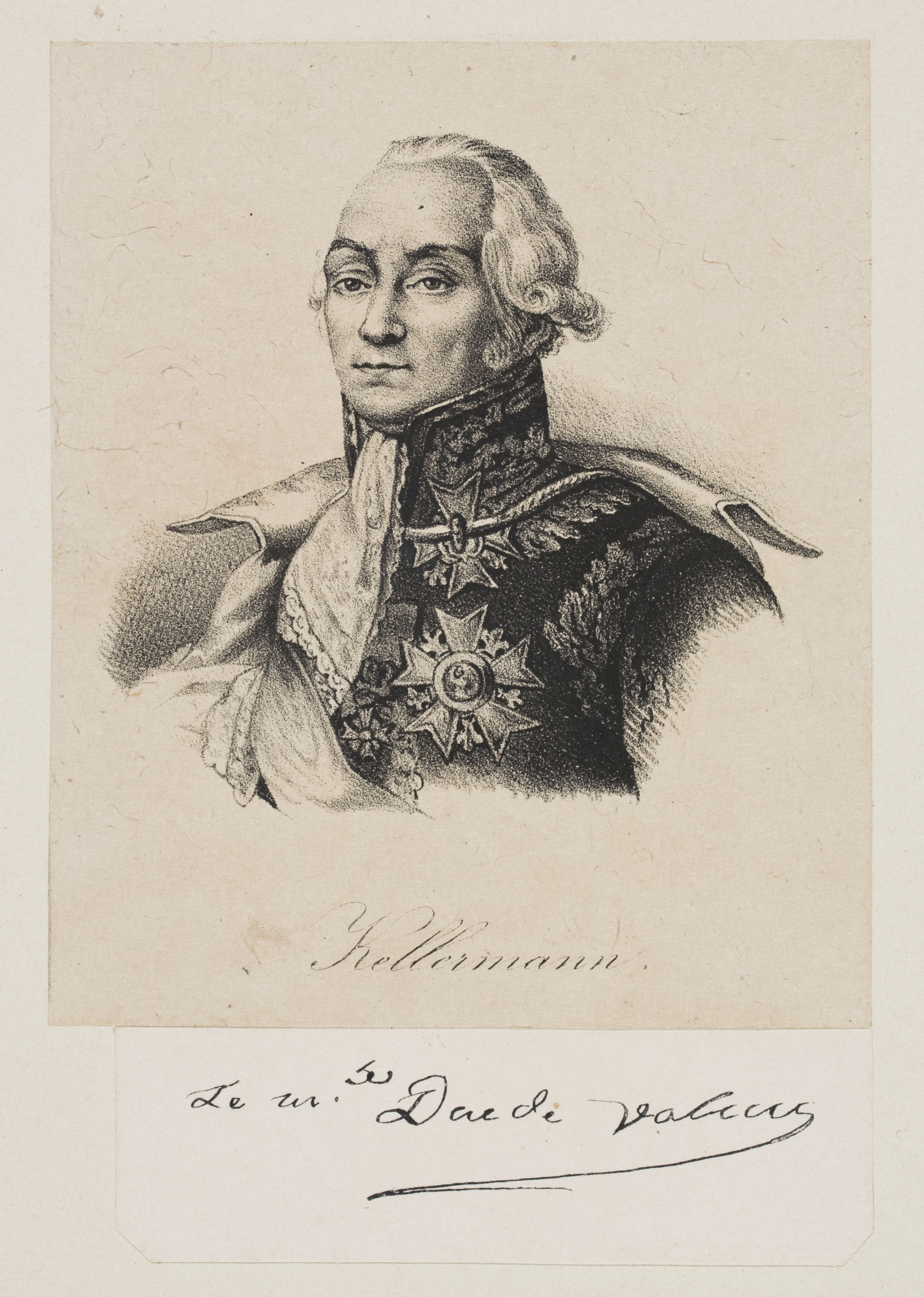
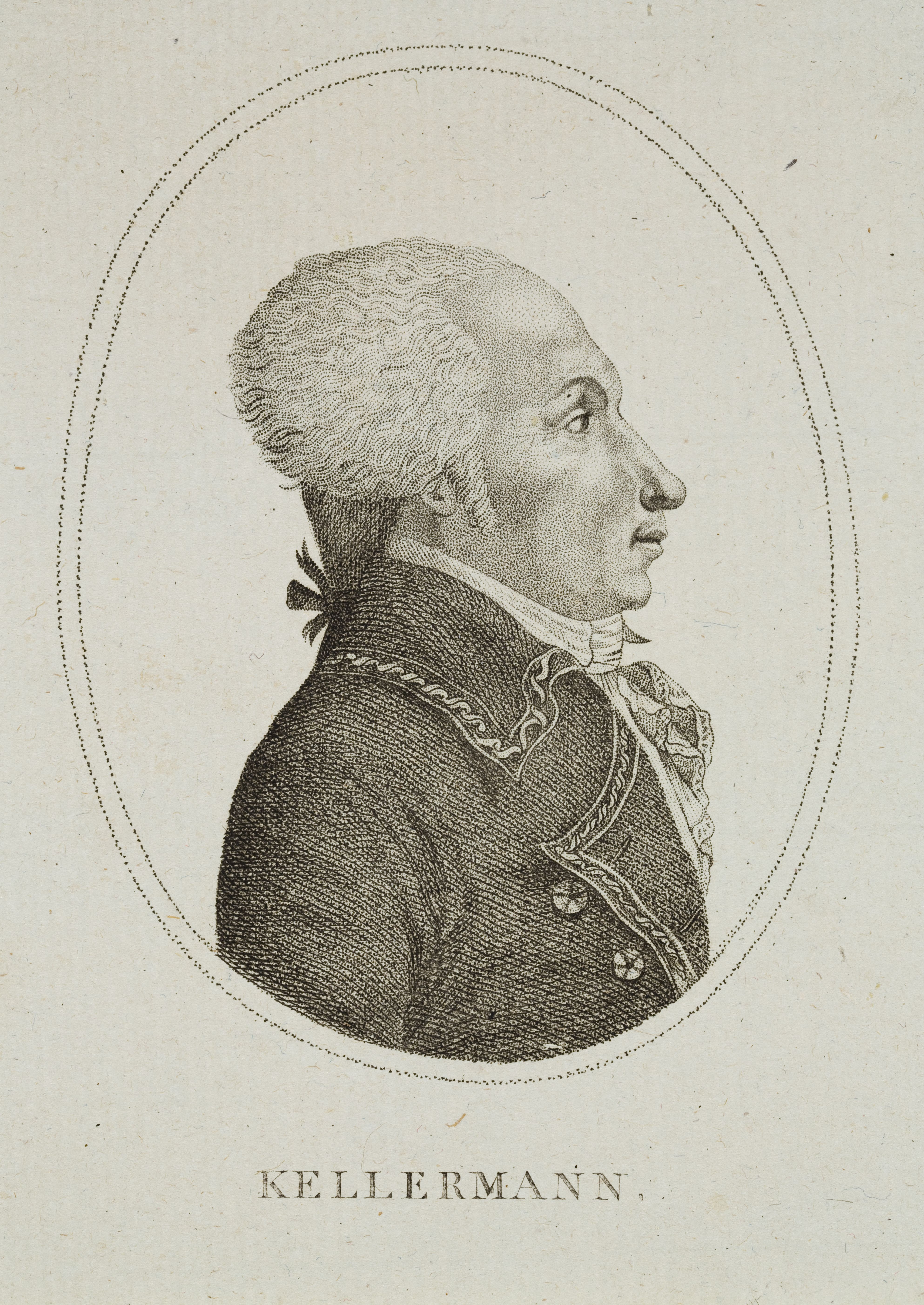
François-Christophe Kellermann
Command Ratings
Commands & Units
- Commands the Armée du Centre of French Army at Valmy (1792, age 57)
François-Étienne-Christophe Kellermann, later 1er duc de Valmy, was born at Strasbourg on 28 May 1735 and entered the French Army as a teenager, beginning a long royal-service career that carried him through the Seven Years’ War and the senior ranks of the pre-Revolutionary army before he became one of the first maréchaux d’Empire under Napoleon. By the late 1780s he had reached general officer rank under the ancien régime (maréchal de camp, 9 March 1788). In the first years of the French Revolution he remained in service and in 1791 held territorial commands on the Rhine frontier, notably in the Haut-Rhin and Bas-Rhin. As tensions with Austria and Prussia escalated into open war in 1792, he was promoted to lieutenant général on 20 March 1792 and took part in organizing and directing forces on the northeastern frontier, including responsibility for major camps established in the spring and summer. On 20 August 1792 he was appointed commander-in-chief of the Armée du Centre (also identified in contemporary administrative practice with the Armée de la Moselle), placing him in a central position during the Coalition invasion of France that followed the fall of the monarchy.
Kellermann’s decisive Revolutionary combat service began with the campaign that culminated in the Battle of Valmy. In September 1792, as the Prussian-led army advanced and French forces under Charles-François du Périer Dumouriez maneuvered to block the invasion, Kellermann brought the Armée du Centre forward to join Dumouriez. The armies made contact on 19 September 1792, and on 20 September 1792 Kellermann commanded the French position at Valmy. The engagement was dominated by an artillery duel and limited infantry movements, but it halted the Coalition’s immediate push toward Paris and ended with the Prussian army withdrawing from the area. Kellermann’s headquarters on the ridge near the famous windmill and his direction of the French artillery line became central elements of the contemporary and later accounts of the day. The practical result of the battle was the stabilization of the front in Champagne and, in the weeks that followed, the retreat of the invading forces from French soil.
After Valmy, Kellermann remained in high command as the Revolution expanded the war to multiple theaters. On 11 November 1792 he was appointed commander of the Armée des Alpes, responsible for the southeastern frontier against the Kingdom of Sardinia-Piedmont and its Austrian allies and for the security of Savoy and the Alpine passes. In 1793 his authority broadened further when he was named commander-in-chief of the Armée des Alpes et d’Italie on 20 May 1793, reflecting the close administrative and operational linkage between the Alpine frontier and the Ligurian coast. That year the strategic demands of border defense collided with the internal crisis of the Lyon revolt. The National Convention ordered military action against Lyon in the summer of 1793, and Kellermann moved substantial forces toward the city while maintaining the Alpine line. His forces were involved in the wider operations connected to the Siege of Lyon, an episode that placed commanders under intense scrutiny from representatives on mission and the Committee of Public Safety.
While the Lyon operations were unfolding, the Sardinian army attempted to recover Savoy. In this Savoy campaign of late summer and autumn 1793, Kellermann’s troops fought a notable engagement at Épierre in the Maurienne valley on 15 September 1793, where the French repulsed the Sardinian-Piedmontese advance and secured a local victory. The campaign continued as French forces drove the invading columns back toward the Alpine passes in early October, reversing the Sardinian gains made during the offensive and restoring the French defensive posture in Savoy. These operations occurred under the political pressures of the Terror, and despite the border successes, the Convention judged his progress against Lyon too slow. In October 1793 he was ordered arrested; he was imprisoned in Paris for roughly thirteen months. His detention removed him from active field command during the critical winter of 1793–1794 and the following campaigning season’s opening.
Kellermann survived the political crisis that destroyed many senior officers. After the fall of the Jacobin leadership in July 1794, he was released and subsequently honorably acquitted, returning to service in the mid-1790s. He was reinstated and again held high responsibility on the southeastern frontier; from 1795 he resumed command responsibilities associated with the Armée des Alpes and the linked administrative sphere with the Armée d’Italie. A surviving administrative letter of 9 August 1795 (22 thermidor an III) reflects his continuing role as général d’armée des Alpes et d’Italie in correspondence with the Commission de l’Organisation et du Mouvement des armées. In these years his principal task was the maintenance of the frontier and the organization and supply of forces facing the Austrian and Sardinian armies. He continued in this theater command structure through the later phases of the War of the First Coalition until the reorganization of forces and the rise of younger commanders shifted operational leadership in Italy. By 1797, when French strategic priorities and army groupings were reshaped and the Army of the Alps was merged into the Army of Italy, his direct field career was effectively brought to a close.
After the coup of 18 Brumaire and Napoleon Bonaparte’s establishment of the Consulate, Kellermann entered the new regime’s political-military elite. In January 1800 he was named a sénateur, beginning a long period in which his service was concentrated in high administration and institutional leadership rather than battlefield command. He served as president of the Sénat conservateur from 2 August 1801 to 18 January 1802, an office that placed him at the head of the Senate during a key period of constitutional consolidation under the Consulate. In 1802 he became associated with the early structures of the Légion d’honneur, and during the years that followed he was repeatedly employed in duties connected to organization, inspection, and the administration of troops and communications.
When the Empire was proclaimed, Kellermann was included among the first group of marshals created by Napoleon. He was appointed maréchal d’Empire on 19 May 1804. His marshalate, however, was not that of an operational commander of a Grande Armée corps in the major continental campaigns; instead it was characterized by senior administrative responsibilities and the prestige attached to his Revolutionary reputation, above all Valmy. In 1808 Napoleon conferred on him the hereditary title duc de Valmy (3 June 1808), formally associating his name and rank with the 1792 victory. During the Napoleonic Wars he continued to be used for rear-area and organizational tasks. During the Walcheren crisis in 1809, when British forces landed in the Scheldt estuary, he was tasked with responsibilities connected to assembling and organizing forces intended to respond to the threat, a further example of his employment in mobilization and reserve functions rather than front-line command.
In the final years of the Empire, Kellermann aligned with the political transition of 1814. In April 1814 he voted in the Senate for Napoleon’s deposition and under the Bourbon Restoration became a pair de France (7 June 1814). He received Restoration-era honors including the grand cross of the Order of Saint Louis (23 August 1814). During the Hundred Days in 1815 he did not take a public office that would jeopardize his Restoration standing and thereafter sat again in the Chamber of Peers. In the peerage chamber convened to judge Marshal Ney, he voted for the death sentence. His later life was thus marked by institutional roles within successive regimes—Revolution, Consulate, Empire, and Restoration—after his effective withdrawal from campaigning.
Kellermann died in Paris on 13 September 1820. He was buried at Père Lachaise Cemetery. In accordance with arrangements associated with his memorialization, his heart was deposited near the Valmy battlefield, a site that continued to symbolize his Revolutionary command. His name was later inscribed on the Arc de Triomphe among the officers commemorated by the state. Throughout the years 1792–1815, the principal major engagement in which he is verifiably present as operational commander was Valmy (20 September 1792), followed by his Alpine theater actions in 1793 including Épierre (15 September 1793) and the associated Savoy operations; after his imprisonment and return, his service shifted to theater administration and later to high political and military institutions rather than battlefield presence in the great set-piece battles of the Empire.
Sources
- Britannica: François-Christophe Kellermann, duke de Valmy
- Britannica: Battle of Valmy
- BnF Catalogue général (authority record): Kellermann, François-Étienne-Christophe (1735-1820)
- CCFr/BnF portal: L.A.S. de [François Christophe] Kellermann, 22 thermidor an 3 (9 août 1795)
- Wikipedia (English): François Christophe de Kellermann
- Wikipedia (English): Battle of Epierre
- Wikipedia (English): Sénat conservateur (presidents list)
- Napoleon-series.org: François Christophe Kellermann, Duc de Valmy, Marshal (1804)
- Wikisource: 1911 Encyclopædia Britannica/Kellermann, François Christophe de
Military Career
- 1758 Capitaine
- 1780 Colonel en second
- 1788 Général de Brigade
- 1792 Général d'Armée
- 1792 lieutenant-général
- 1804 Maréchal
Pictures