Wenzel Karl von Brigido
Command Ratings
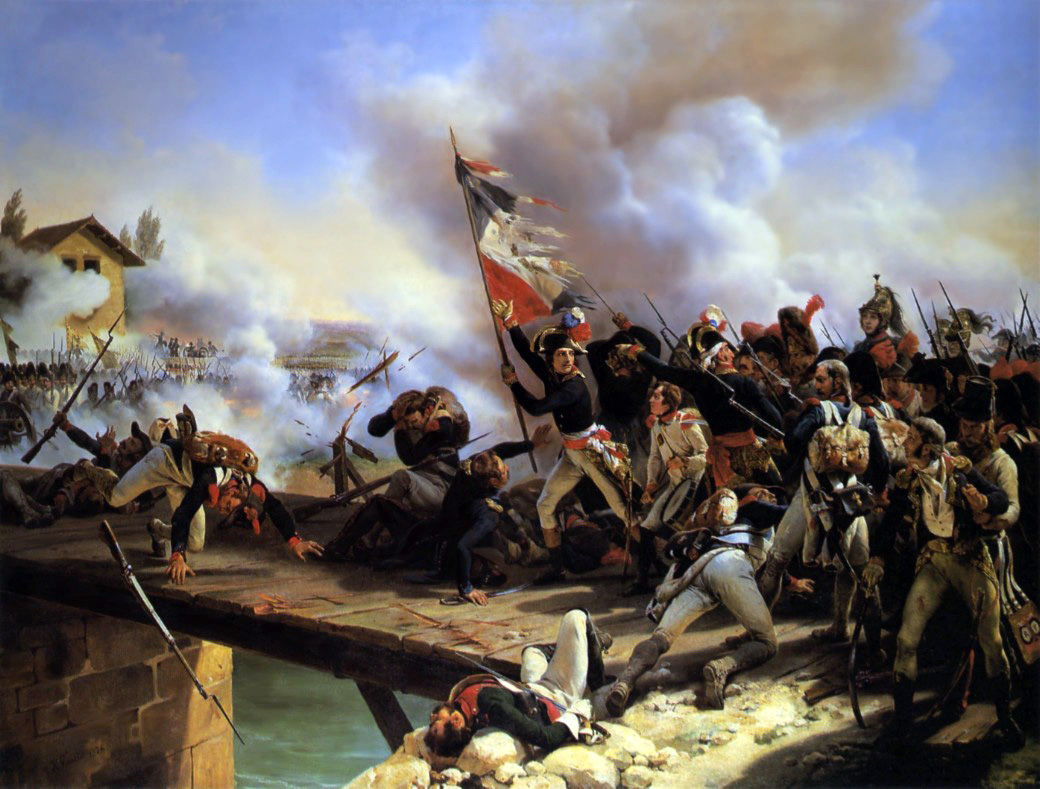
Wenzel Karl Freiherr von Brigido (also recorded simply as Wenzel Brigido) was an Austrian officer of the Habsburg Monarchy whose name is chiefly preserved through his command on the Adige–Alpone line in the Italian theatre during the War of the First Coalition. Born at Trieste on 29 August 1737 (a conflicting baptismal date appears in some registers), he served in the Habsburg army through the later eighteenth century and remained on active duty into the campaigns against Revolutionary France. In November 1796, then holding field command as an Oberst in the Austrian army operating to relieve Mantua, he directed the forward defense at Arcole during the decisive three-day fighting of 15–17 November 1796, when the French Army of Italy under Napoleon Bonaparte attempted to turn the Austrian position by crossing the Adige at Ronco and forcing the narrow causeways through the marshes to Arcole and toward San Bonifacio.
By 1796 Brigido was entrusted with a tactically sensitive mission at the outer edge of the Austrian deployment. During Alvinczi’s third relief attempt of Mantua, the Austrian plan depended on maintaining cohesion along a difficult front of rivers, embankments, and wetlands, with separated columns converging toward Verona and the Adige crossings. On the opening day at Arcole (15 November 1796), Brigido’s detachment—reported as four battalions posted in the sector—was placed to block the French advance along the raised dike leading to Arcole. Contemporary operational summaries identify Brigido’s force as including Croatian battalions (often described in Italian accounts as croati and in some narratives as “Croats” defending Arcole), supported by a small artillery allocation; at the point of decision, two battalions with two guns are repeatedly specified as directly covering Arcole and the bridge over the Alpone.
The engagement developed as a contest for control of the causeway and bridge approaches. After French engineers established the pontoon bridge at Ronco, Pierre Augereau’s division crossed first and drove toward Arcole, while French formations crowded onto the narrow embankment under direct small-arms and artillery fire. Brigido’s troops met the initial French columns at close range, and the defensive geometry—firm ground limited to the dike and the village edges—favored a determined infantry stand. Accounts describing the first day’s fighting repeatedly note that Brigido concentrated every available man into the immediate combat as French brigade and demi-brigade attacks accumulated at the front. In the same phase, the French committed successive attacks led by brigade commanders including Louis André Bon, Jean-Antoine Verdier, and Pierre François Verne, and Napoleon himself attempted to animate the assault at the bridge; these repeated efforts failed to break Brigido’s line early in the day.
As the battle expanded, Brigido’s position became the hinge between a local defense and the arrival of larger Austrian forces. In the afternoon of 15 November, Generalmajor Anton Ferdinand Mittrowsky’s formations began to reinforce the Arcole sector, and—by virtue of seniority—Mittrowsky assumed overall direction of the combined defense around the village while Brigido’s battalions continued to anchor the immediate frontage. The reinforcement altered the balance of forces at the choke point, allowing the Austrians to extend their hold on the village and blunt the French momentum along the causeway. The next day (16 November) saw renewed fighting around Arcole, with Austrian command seeking to press the French back toward the Adige crossings; the defense remained centered on maintaining disciplined infantry fire and preventing French units from widening the bridgehead beyond the embankments.
Although Brigido’s best-documented service is concentrated in the 1796 Italian campaign, he remained in Austrian service thereafter. In 1799 he held a senior regimental command as an Oberst—listed in contemporary regimental rosters and later organizational compilations among the colonels of Austrian line infantry—reflecting that his career combined field command with the administrative and disciplinary responsibilities of regimental leadership. In the same year, he also held a significant fixed appointment as Fortress Commandant of Palmanuova (Palmanova), a post that placed him at the center of a key fortified point in northeastern Italy at a time when the Habsburg–French struggle repeatedly turned on fortress control, lines of communication, and the security of magazines and artillery parks. Such a command implied responsibility for garrison readiness, fortress artillery serviceability, controlled issues of powder and shot, management of labor for works maintenance, and coordination with higher authorities for reinforcement and supply.
Brigido’s formal advancement to general officer rank came late. He was promoted Generalmajor on 2 October 1799 (with rank dating from 17 October 1799 in the Austrian system of seniority adjustments). This promotion indicates official recognition at the level of the imperial military administration, but it also coincided with the period in which senior officers frequently shifted between field employment and fortress or territorial commands in response to the rapidly changing fronts of 1799–1800. No reliable, detailed sequence of additional field commands in 1800 can be stated here beyond his recorded status and death.
He died at Ferrara in August 1800, in territory then associated with the Cisalpine Republic. His death in northern Italy, rather than in the hereditary Austrian lands, was consistent with an officer whose final years were spent in the Italian theatre and its fortified places.
Sources
- Napoleon Series: Austrian Generals 1792–1815 (B2): Brigido, Wenzel Karl Freiherr von
- Wikipedia (English): Battle of Arcole
- Wikipedia (German): Schlacht bei Arcole
- Museo di Arcole: La battaglia (15 novembre 1796, “col. Brigido”)

XX (3000) 96 Arcola