Franz Seraph von Orsini-Rosenberg
Command Ratings
Commands & Units
- Commands the Rosenberg's Division of IV Corps at Ebelsberg (1809, age 48)
- Commands the IV Corps of Austrian Army at Aspern-Essling (1809, age 48)
- Commands the IV Corps of Austrian Army at Wagram (1809, age 48)
Franz Seraph Fürst von Orsini-Rosenberg (also written Franz Seraph von Rosenberg-Orsini; in some German listings as Franz Seraphicus Fürst von Orsini und Rosenberg) was an Austrian cavalry officer who reached senior general rank after a long sequence of field commands against Revolutionary and Napoleonic France, notably in the Rhine theatre in 1796, in Italy in 1799–1800 and 1805, and as commander of the Austrian IV. Armeekorps in the Danube campaign of 1809. He was born at Graz on 18 October 1761 and died at Vienna on 4 August 1832.
He entered Habsburg service after education in Vienna associated with the Theresian military establishment. After an early court appointment as k.k. Kämmerer (1778), he transferred to active military service and joined the cavalry in 1780 as an Unterleutnant in the Karabinier-Regiment of the Erbgroßherzog Ferdinand of Tuscany. He advanced to Oberleutnant (1783) and Rittmeister (1785). With the outbreak of the Ottoman war, he moved into the light cavalry arm and served in the Kinsky Chevauxlégers, where experimental lancer employment was being introduced. On 22 July 1788, near Belgrade on the Sava, he led a mounted intervention intended to relieve hard-pressed infantry, an action repeatedly treated in Austrian biographical summaries as the decisive exploit of his Turkish-war record. In 1789 he became Major in the Lobkowitz Chevauxlégers and in 1790 was promoted Oberstleutnant. In the same year he received the Military Maria Theresa Order, Knight’s Cross (Militär-Maria-Theresien-Orden – KC, 19 December 1790), and this award was thereafter consistently listed among his principal distinctions.
During the War of the First Coalition he served on the Rhine front and in 1794 became Oberst with regimental command in heavy cavalry (assigned in German accounts successively to Kürassier-establishments, including the Mack Kürassiere). In 1795 he operated with the Upper Rhine Army in the sieges and maneuvers around Mannheim and Frankenthal, and by the summer of 1796 he was again in the main field army facing the French armies of Jourdan and Moreau. The disambiguation marker “Würzburg 1796” corresponds to his documented presence in Archduke Charles’s operations culminating in the Battle of Würzburg (1–3 September 1796). He took part in the Archduke’s pursuit and counterstroke after Amberg (24 August 1796) and is specifically credited with notable cavalry action at Würzburg in early September. Austria-Forum’s generals list gives his promotion to Generalmajor as 18 September 1796 (with seniority dated 28 September 1796), placing him among the younger Austrian general officers produced by the 1796 campaigning.
In the War of the Second Coalition he served in the German theatre in 1799 as part of Archduke Charles’s army in Swabia and Switzerland. He fought at Ostrach (21 March 1799) and Stockach (25 March 1799), and later in the Swiss operations he was wounded in the head by a sabre cut at Frauenfeld on 25 May 1799. In June 1799 he commanded an advance element in the First Battle of Zürich (4 June 1799), operating under Feldmarschalleutnant Friedrich von Hotze, and later that year he is recorded as leading the vanguard during the capture of positions at Neckarau (18 September 1799) associated with the entry into Mannheim. These vanguard and pursuit duties were consistent with his arm of service and his employment as a cavalry general officer in the forward line of march, where rapid seizure of crossings, villages, and fieldworks decided the tempo of the army’s advance.
The note “Novi 1799” aligns with his presence in Suvorov’s Italian theatre and the fighting around Novi Ligure on 15 August 1799. While some English-language summaries of the Battle of Novi refer to a “General Rosenberg” in the coalition order of battle, that designation can denote Russian command figures as well; for the Austrian officer here, the securely documented Italian service is best traced through his subsequent recorded higher appointments and promotions rather than through ambiguous coalition naming conventions in the Novi narratives. What is firm in the Austrian general-officer record is that his Italian field employment continued into 1800 and led to further advancement.
He reached Feldmarschalleutnant on 3 January 1801 (with seniority dated 7 January 1801). His decorations expanded accordingly: he received the Commander’s Cross of the Military Maria Theresa Order (CC, 1801) and later the Order of the Golden Fleece (Orden vom Goldenen Vlies, 1808). He was also linked to the cavalry establishment through Inhaber status: references consistently list him as Inhaber of a light cavalry regiment (commonly identified as a Chevauxlégers regiment) from 1801 until his death, in line with Habsburg practice of attaching senior patrons to regiments for identity and administrative continuity.
In the War of the Third Coalition (1805) he served in northern Italy under Archduke Charles. In operational narratives of the Italian front, he is treated as commanding a separate corps covering the Austrian right, positioned to prevent French enveloping movements while the main army fought in the Adige sector. The Battle of Caldiero (29–31 October 1805) is repeatedly summarized as a contest in which Archduke Charles engaged the main Austrian body while leaving Davidovich and Rosenberg detached on the flanks; in German descriptions of the preliminary fighting on 29 October, French central attacks are described as pushing back formations identified as Rosenberg’s corps toward the heights, even as he retained a role in covering the right wing. The disambiguation note “XX 05 Italy” matches this period of corps- and division-level command in the Italian theatre rather than the Danube campaign.
By 1809 he was one of the Austrian generals selected to command a corps when the Habsburg army reorganized into corps formations for the War of the Fifth Coalition. He was appointed commander of the IV. Armeekorps of the Kaiserlich-königliche Hauptarmee under Archduke Charles. This appointment is explicitly associated in several order-of-battle compilations with his name as “IV Corps (von Rosenberg),” and the disambiguation note “XXX (IV) 09” matches this command. Under Rosenberg, the corps fielded three infantry divisions during the campaign; in widely reproduced 1809 listings for Wagram, these are given as divisions under Feldmarschalleutnant Prince zu Hohenlohe-Bartenstein (1st Division), Feldmarschalleutnant de Rohan (2nd Division), and Feldmarschalleutnant Radetzky (3rd Division), with a vanguard brigade also enumerated under Generalmajor de Provèncheres. Detailed Austrian artillery listings also specify an organic corps artillery command and the distribution of Brigade- and position batteries within Rosenberg’s divisions before Aspern and at Wagram.
In the opening days of the campaign, IV. Armeekorps operated in the Bavaria–Danube approach battles that include Abensberg (20 April 1809) and Eckmühl (22 April 1809). Unit-service summaries for Austrian regiments repeatedly note assignments “under IV Corps Rosenberg” in the combat chain leading from the Inn crossing to Teugen-Hausen, Abensberg, and Eckmühl. Rosenberg’s corps was repeatedly engaged against Davout’s forces on the Austrian left and was required to fight delaying or holding actions while Archduke Charles attempted to manage the deployment of the main body under heavy pressure. In these April battles, corps-level control depended on maintaining the integrity of divisions and brigades along rolling, wooded ground and village lines, while coordinating artillery positions and the protection of the army’s lateral communications; the corps’ documented artillery organization shows that Rosenberg had assigned batteries down to brigade level, with additional position batteries in the divisional groupings.
At Aspern–Essling (21–22 May 1809), Rosenberg’s corps was committed on the Austrian side against the French bridgehead on the Marchfeld. Contemporary-based narratives describe him assaulting Essling, with repeated attacks failing to secure the village until the French retreat from the north bank made the position untenable. The pressure on Essling was a central tactical task in the Austrian plan, since success there threatened the French communications through the Lobau crossings. His corps’ divisional structure and batteries are again documented in Austrian artillery listings for Aspern, associating corps elements—divisions and brigades—with specific batteries in the same period of fighting.
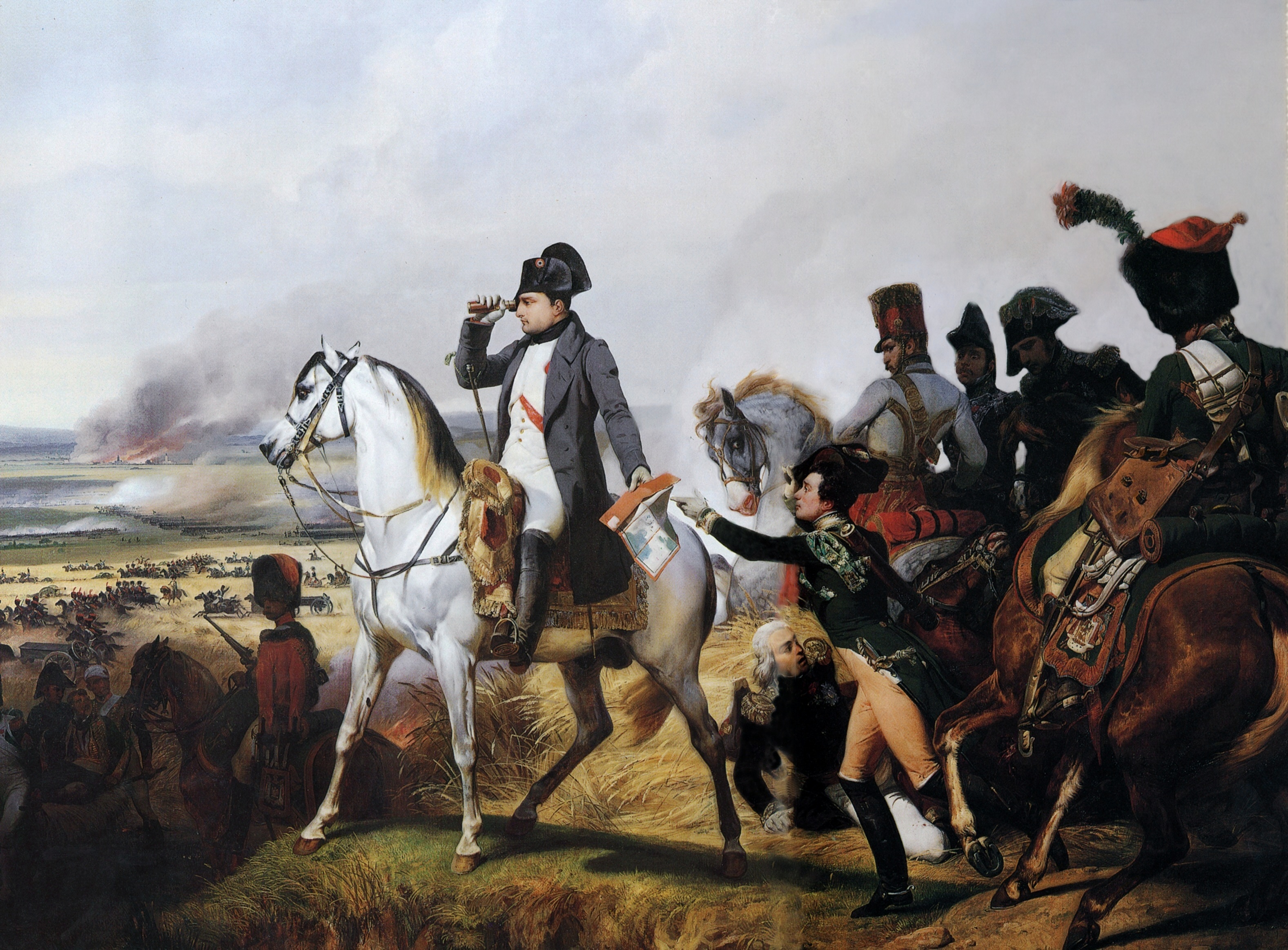
At Wagram (5–6 July 1809), Rosenberg commanded IV. Armeekorps on the extreme Austrian left, with its initial deployment behind the Russbach and around Markgrafneusiedl. In the dawn offensive ordered by Archduke Charles on 6 July, Rosenberg advanced to attack French positions in the Glinzendorf–Grosshofen sector. French resistance, associated in narrative treatments with Davout’s counterstrokes, checked and then pressed back the Austrian left; Rosenberg’s corps fought a prolonged action in and around Markgrafneusiedl before withdrawing in good order when its attacks could no longer be supported. The standard Wagram orders of battle place Rosenberg’s IV. Armeekorps at roughly 18,000 men, with its three divisions and a vanguard brigade enumerated under him, providing a fixed framework for describing how his corps was expected to function in the left-wing attack.
After the 1809 campaign he transitioned into higher administrative and court-military roles. He became a member of the Hofkriegsrat in 1811, moving into the central apparatus that supervised appointments, organization, and strategic administration. He continued to hold senior rank and honors, and on 29 April 1814 he received promotion to General der Kavallerie. He remained in service until 1830, when he was placed in retirement (30 August 1830 in the Austria-Forum general list). He died in Vienna on 4 August 1832.
Sources
- Wikipedia (English): Franz Seraph of Orsini-Rosenberg
- Wikipedia (German): Franz Seraph von Orsini-Rosenberg
- Wikipedia (Italian): Franz Seraph von Orsini-Rosenberg
- Austria-Forum (AustriaWiki): Liste der kaiserlichen Generale der Frühen Neuzeit/R (entry for Franz Seraphicus Fürst von Orsini und Rosenberg)
- Napoleon-Online: Rosenberg (Franz Seraphim Fürst von Rosenberg-Orsini)
- Napoleon Series: Austrian Army Study 1805–1809 (artillery; IV Corps Rosenberg batteries)
- Wikipedia (English): Battle of Wagram order of battle (IV Corps von Rosenberg)
- Wikipedia (English): Battle of Caldiero (1805)
- Wikipedia (English): Battle of Würzburg


X 96 Wurzburg; XX 99 Novi, XX 05 Italy; XXX (IV) 09 – L, Abensberg-Eckmuhl, Aspern-Essling, Wagram