Louis-Chrétien Carrière, Baron de Beaumont
Command Ratings
Commands & Units
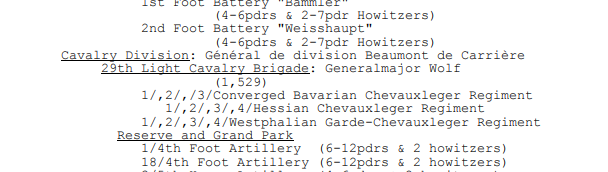
- Commands the Twelfth Corps Cavalry of Twelfth Corps at Dennewitz (1813, age 42)
Louis Chrétien Carrière de Beaumont was born on 14 April 1771 at Malplacey near Brouchy in the Somme. He enlisted on 1 April 1788 as a trooper in the Queen’s Dragoons, which later became the 6th Dragoons. On 23 November 1792 he was promoted to sous‑lieutenant in the 6th Hussards for his actions at the attack on the Austrian camp at Maulde, and on 20 April 1793 he was promoted to lieutenant. On 23 September 1793 he became aide‑de‑camp to general Alexandre Dumas and served with the Army of the North in the Vendée. In year V he became adjoint to the état‑major of the Army of Italy and was promoted to captain on 14 Vendémiaire. He took part in the expedition to Ireland and that to Egypt; in Egypt he served in the province of Giza and distinguished himself at Abukir. On 14 August 1799 he was appointed chef d’escadron and aide‑de‑camp to Joachim Murat; in 1800 he followed Murat with the Reserve Army, distinguishing himself at Verceil on 27 May and at Marengo on 14 June. He was promoted to chef de brigade on 17 April 1801 and made officier de la Légion d’honneur on 25 Prairial year XII.
On 1 February 1805 he took command of the 10th Hussards in V Corps under Jean Lannes. He fought at Wertingen (8 October 1805), where during a cavalry charge he captured an Austrian captain and killed several cuirassiers; he also took part in Ulm, Amstetten and Austerlitz. He was promoted to général de brigade on 24 December 1805. On 9 March 1806 as premier aide‑de‑camp to Murat he was charged with the seizure of Wesel. He served at Jena (14 October 1806), at Prenzlau (28 October), at Eylau, and before Danzig (14 May 1807), where he commanded light cavalry of I Corps, attacked and dispersed an enemy corps of 10,000, capturing artillery and many prisoners; on the same day he was made commandant of the Légion d’honneur and chevalier of the Order of the Iron Crown. He also served at Friedland (14 June 1807).
In September 1808 he was given command of four regiments of light cavalry attached to the Army of Spain under Marshal Victor, briefly detached to Bessières’ II Corps, created baron de l’Empire on 26 October 1808. Returning to Victor’s corps, he served at Uclés (15 January 1809), at Medellín (28 March) where he broke the enemy right and captured several thousand prisoners, at Alcabón (26 July) against the dragons of Villa‑Viciosa, at Talavera (28 July) where he was wounded, at Ocaña (19 November) where he took 4,000 prisoners, at the siege of Cádiz, and at Santi‑Pétri (5 March 1811) where with 150 dragoons he halted two English squadrons.
He returned to France at end of 1811 and commanded provisionally the brigade of Saint‑Sulpice’s cuirassier division before being sent to Russia as brigade commander in Sébastiani’s division of Watier’s 2nd Cuirassier Division in II Cavalry Corps. He fought at Smolensk (17 August 1812), at Borodino (7 September), in two actions near Moscow in October, and was given command of a brigade of dismounted cavalry on 18 October. He was promoted to général de division on 4 December 1812.
During the 1813 German campaign he commanded light cavalry of III Corps under Ney from 22 March, led a brigade of lancers at Lützen in VI Corps under Marmont, commanded German light cavalry of XII Corps under Oudinot in August, briefly attached to IV Corps and fought at Wartenburg (3 October), then under Marmont again at Leipzig and at Hanau. He died of wounds at Metz on 16 December 1813. His name is inscribed on the east side of the Arc de Triomphe.
Sources
XX 13 (in XII Corps). Seems to be a different guy from the French "Beaumont."
Pictures