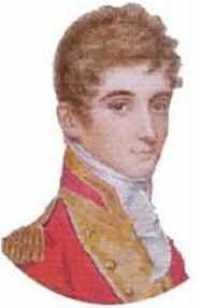
José de la Cueva, Duque de Alburquerque
Command Ratings
Commands & Units
José Miguel de la Cueva y de la Cerda (also recorded in some contemporary and later usages as José María de la Cueva y de la Cerda), XIV duque de Alburquerque, was a Spanish aristocrat and senior cavalry officer who rose to teniente general of the Reales Ejércitos and became a prominent public figure during the Guerra de la Independencia. His military reputation rests chiefly on a rapid, politically charged rise through the pre-war cavalry establishment, active command during the difficult campaigning of 1809, and—above all—his forced march with the Ejército de Extremadura to Cádiz in early 1810, which helped secure the city as the principal Spanish base of resistance and seat of government.
Born in Madrid on 26 December 1775, he belonged to a grande family whose titles and court connections shaped both his early opportunities and his later role in politics and diplomacy. He entered military service as a cadet in the Regimiento de Dragones de la Reina. Spain was then approaching renewed conflict with Revolutionary France, and the Army’s wartime expansion and the Crown’s need for officers combined with noble patronage to accelerate promotions for well-connected young men. In 1792 he was promoted to captain. Over the next three years his advancement was unusually swift: he became teniente coronel in 1793, coronel in 1794, and in 1795—still a teenager—was promoted to brigadier de Caballería and given command of the Regimiento de Dragones de Lusitania. This sequence placed him among the youngest general officers (in the Spanish sense of the period) in the mounted arm, and it also anchored him in the institutional culture of Bourbon cavalry command, where personal honor, court standing, and regimental identity were tightly linked.
For the following years his career unfolded within the rhythms of garrison duty, court life, and the gradual professionalization pressures brought by Spain’s shifting alliances during the Revolutionary and Napoleonic era. His family position increasingly pulled him toward non-regimental responsibilities and ceremonial obligations. In 1803 he succeeded to his father’s principal dignities, becoming XIV duque de Alburquerque. In that same year he resigned from his regiment, a decision consistent with the responsibilities expected of a grande and with the common pattern of senior nobles moving between military rank, court appointment, and political influence.
When the crisis of 1808 erupted—abdications at Bayonne, French occupation, and the formation of juntas—Alburquerque returned to active service. In the confused early mobilization, Spanish forces were reorganized repeatedly into regional armies and ad hoc corps. Alburquerque received command responsibilities within the Ejército de Castilla under Pignatelli; after that force was dissolved, he was transferred to the corps of Castaños. These early months were defined less by set-piece battles than by hurried assemblies, marches, and the attempt to create coherent field forces in the face of French operational superiority. Alburquerque’s role during 1808 was thus principally that of a senior cavalry leader and organizer within shifting higher commands rather than an independent commander in a single decisive engagement.
In late 1808 and early 1809 the Spanish high command again reorganized. After the defeat at Uclés on 13 January 1809, the Duke del Infantado appointed Alburquerque to command the vanguardia of the Ejército del Centro, replacing Venegas. The vanguardia was an operationally exposed command, expected to screen movements, gather intelligence, and exploit opportunities while preventing French cavalry and light forces from tearing apart the Spanish marching columns. Its effectiveness depended heavily on cavalry handling, rapid decision-making, and cooperation with the main body—conditions often absent amid Spanish political interference and contested authority.
During February 1809, with General Cartaojal commanding, Alburquerque operated at the head of the vanguardia with a mixed force that contemporary accounts describe as including about 2,000 cavalry and 9,000 infantry. He attempted an offensive stroke by trying to surprise Digeon’s brigade of dragoons at Mora, illustrating a willingness to take risks against French mounted troops. Shortly afterward, he was compelled to retreat at Consuegra under pressure from Sebastiani’s 1st division of the French IV Corps and the arrival of additional French cavalry under Latour-Maubourg. These actions highlight both the persistent Spanish intent to contest the central plains and the recurring problem that French cavalry and combined-arms columns could quickly mass and dislodge Spanish advanced formations.
A dispute with Cartaojal over operational intentions followed. Alburquerque favored advancing toward Toledo with the full force, while Cartaojal proposed that he continue forward with a single infantry division. At the same time, the Supreme Junta ordered detachments from Cartaojal’s army to reinforce Cuesta’s Ejército de Extremadura. Cartaojal used this directive to detach Alburquerque with a reduced force—reported as seven infantry battalions (about 4,500 men) and a small cavalry regiment (about 264 sabres)—toward Extremadura. This transfer placed Alburquerque on the path to the major disaster that overtook Cuesta’s army at Medellín.
At the battle of Medellín (28 March 1809), a catastrophic defeat for Spain, Alburquerque’s detachment arrived in time to be engaged in the general action. The battle was characterized by French superiority in maneuver and cavalry exploitation, and the Spanish army suffered enormous losses. While detailed unit-level accounts vary, Alburquerque’s presence is significant because it connected his earlier service in the Ejército del Centro to the reconstruction efforts that followed in Extremadura. In April 1809 he was promoted to teniente general, confirming him as one of the senior cavalrymen and field commanders available to the Spanish armies during the critical middle phase of the war.
In July 1809 the Anglo-Spanish campaign that culminated at Talavera brought Alburquerque into one of the best-known set-piece battles of the Peninsular War. Serving with the Ejército del Centro, he commanded six regiments of the 2nd Cavalry Division during the Battle of Talavera (27–28 July 1809). The battle unfolded as Wellesley’s British army and Cuesta’s Spanish forces faced the French under Victor and other commanders, with King Joseph present. Spanish cavalry played an important supporting role on the flanks and in the overall allied deployment. Alburquerque’s command during Talavera is most often noted as part of the Spanish mounted forces that helped secure the allied position at key moments, even though the battle’s tactical narrative is dominated by British infantry defense on ground such as the Cerro de Medellín and by repeated French attacks.
The campaign’s momentum soon faltered. On 8 August 1809, at the Battle (or combat) of the Puente del Arzobispo / Arzobispo, Alburquerque suffered a severe defeat. Contemporary and later narratives depict the action as a sharp French blow that routed his force and inflicted disproportionate losses. The reported results were stark: over 800 killed or wounded, about 600 men and 400 horses captured, and the loss of his divisional battery of 16 guns. Despite personal bravery—commentators have sometimes emphasized that his courage did not translate into operational success—the engagement damaged his immediate military standing. Yet it did not end his prospects; the Spanish command system, strained for capable senior officers, continued to assign him major responsibilities.
By 1810 Alburquerque held command of the Ejército de Extremadura. This appointment placed him at the center of a strategic dilemma: the French offensive into Andalusia threatened Seville and Cádiz, while Spanish political authorities struggled to decide whether to defend forward positions or preserve forces to maintain a government-in-being. In early 1810 the danger to Cádiz became acute. Cádiz was geographically defensible but depended on timely reinforcement; if it fell, the Spanish resistance would lose its principal secure port, its connection to British naval power, and the likely seat for a national government.
Alburquerque’s most consequential operational decision was to march his army to Cádiz. On 4 February 1810 he entered the city with approximately 11,000 men. The arrival of this force strengthened Cádiz at a moment when French forces under Marshal Victor were pressing toward the environs and when Spanish defenses needed disciplined troops to hold the approaches across the caños and causeways. His entry effectively helped ensure that Cádiz remained a Spanish base and, in time, the political heart of resistance where the Cortes would meet.
Soon after, he was appointed governor of Cádiz. His position, however, lay at the intersection of military necessity and political friction. The Spanish wartime governing bodies—juntas, regencies, and military committees—often interfered with commanders, while commanders criticized the authorities for indecision, favoritism, and administrative failings. Alburquerque’s tenure in Cádiz became marked by disputes with senior figures, including Gregorio García de la Cuesta, and he resigned his governorship. The conflict did not erase his public profile; instead it helped propel him into a more overtly political role.
On 2 March 1810 he replaced Venegas as capitán general of Andalusia and was appointed president of the Junta of Cádiz. These were powerful posts in a region that was simultaneously a military theatre and the refuge of Spanish sovereignty. Yet the same tensions that had undermined coherent command in earlier campaigns reappeared. Disagreements with the Regency led to his dismissal. Rather than leave him idle within Spain—where his name, rank, and alliances could become a focal point for opposition—the authorities reassigned him abroad.
At the end of March 1810 he was appointed Spanish ambassador to the Court of St James’s in London. The posting reflected both the centrality of Britain to Spain’s war effort and the political utility of placing a prominent, potentially contentious figure at a key diplomatic court. In London he was reportedly well received, and his position brought him into contact with the British political world and with leading military figures associated with the Iberian war.
Alburquerque also participated in the public contest over reputations that accompanied the war. In 1810, in London, he issued his Manifiesto del Duque de Alburquerque acerca de su conducta con la Junta de Cádiz y arribo del exército de su cargo a aquella plaza, defending his conduct and his role in bringing his army to Cádiz. Such manifestos were a characteristic genre of the Peninsular War, used by commanders and politicians alike to shape opinion across Spain and among allied audiences.
He died in London on 18 February 1811. His funeral became a notable event within the Anglo-Spanish wartime relationship: after a service connected with the Spanish Chapel-Royal, a procession proceeded to Westminster Abbey for another service attended by high-ranking British officials and numerous dignitaries. His death at thirty-five ended a career that, while not crowned by a major independent battlefield victory, had significant strategic consequence through the reinforcement of Cádiz and lasting political resonance through his disputes with wartime authorities and his subsequent diplomatic role.
Sources
- José Miguel de la Cueva, 14th Duke of Alburquerque (Wikipedia, English)
- José Miguel de la Cueva y de la Cerda (Wikipedia, Español)
- PARES | Persona - Cueva de la Cerda, José Miguel de la (1775-1811)
- datos.bne.es | Alburquerque, José Miguel de la Cueva y de la Cerda, Duque de (1775-1811)
- Manifiesto del Duque de Alburquerque acerca de su conducta con la Junta de Cádiz y arribo del ejército de su cargo a aquella plaza (Biblioteca Virtual Miguel de Cervantes)
- Batalla del Portazgo (Wikipedia, Español)
- Ejército del Centro (1808) (Wikipedia, Español)
XX (Adv Gd) 09 Ucles, Medellin; XX (Cav.) 09 Talavera, L
Pictures