Alexandre de Sénarmont
Command Ratings
Commands & Units
Alexandre-Antoine Hureau de Sénarmont was born in Strasbourg on 21 April 1769 and received his early military education at the École militaire de Vendôme and at the École d'application de l'artillerie et du génie at Metz, where he entered as an aspirant on 1 August 1784 and left as a lieutenant on 1 September 1785. He joined the 3e régiment d'artillerie as a young officer and served as aide-de-camp to his father in the armies of the Centre and of the North during the opening years of the Revolution. In 1792 he was promoted to captain of artillery and was sent to the armée des Ardennes. During 1794 he served at the siege of Charleroi and at the battle of Fleurus (26 June 1794), where his service with the artillery was recorded in contemporary returns and later regimental histories. On 13 November 1794 he was appointed capitaine commandant and placed at the sous-direction of Douai; later that year he received provisional rank as chef d'escadron, confirmation following on 23 November 1794.
On 18 April 1797 he was present at the action of Neuwied, and in April 1799 he was attached to the armée du Rhin as chef d'état-major of the artillery of the Army of Reserve. He was promoted chef de brigade on 6 September 1799. During the campaign of 1800 he distinguished himself in the operations of the Army of Reserve: he took part in the passage of the Grand-Saint-Bernard (May 1800), was engaged at the action of Montebello on 9 June 1800, and on 14 June 1800 he commanded the 5e régiment d'artillerie à pied at the battle of Marengo. His conduct at Marengo was noted in army returns and in later official biographies, and on 6 September 1800 he was promoted to colonel.
On 17 December 1801 Sénarmont took command of the 6e régiment d'artillerie à pied. With that regiment he took part in the campaigns of the years designated an XII and an XIII while attached to the armée des côtes de l'Océan. He was appointed chef d'état-major of the artillery of the camp of Brest on 8 December 1803. He was made chevalier de la Légion d'honneur on 11 December 1803 and was promoted to officier of the order on 14 June 1804; a contemporary anecdote recorded in postwar memoirs and recital books relates that when he was presented to Napoleon in 1804 and the Emperor remarked on his youth the reply attributed to Sénarmont was, "Sire, j'ai votre âge." The archival dossier of his decorations and the printed Fastes of the Légion d'honneur record his investiture and subsequent promotions within the order.
From the an XIV until 1807 he served with the Grande Armée. He was present at the Boulogne camp preparations and was listed among officers ready to embark on 30 July 1805. He was promoted to général de brigade on 10 July 1806 and assigned as commandant of the artillery of the Grande Armée. In that capacity he accompanied the army through the 1806–1807 campaigns. He was present at the victory of Jena and in the winter fighting that culminated in the battle of Eylau on 7–8 February 1807; for his conduct at Eylau he was raised to the rank of commandeur de la Légion d'honneur on 3 March 1807, as entered in the official rolls of the order and printed honours lists.
On 14 June 1807, at the battle of Friedland, Sénarmont was chief of artillery to the 1er corps. Contemporary official reports and the memoirs compiled shortly after the wars describe how he rapidly concentrated and advanced a mass of guns—some thirty pieces drawn from corps artillery—and delivered rounds at close range against the selected point of the Russian line. Army correspondence and later regimental narratives record the establishment of the batteries on successive rises and their progressive bounds forward while firing, the escort arrangements of cavalry and an infantry battalion, and the heavy losses taken by the gunners as the emplacement closed to near range against formed infantry. For the immediate effects achieved at Friedland he received elevation to the title of baron d'Empire (title dated 2 July 1808 in the imperial patents) and was thereafter often cited in artillery reports and in published recollections of the campaign.
After Friedland Sénarmont continued in senior artillery appointments. On 17 December 1801 he had already taken a regimental command; following the 1805–1807 campaigns he held staff and inspector functions for the artillery and was assigned to the Peninsula in 1808. The imperial bulletin and orders of the army of Spain record his nomination as commandant de l'artillerie of the 1er corps of the Army of Spain on 26 August 1808; he was present with French forces during the operations about Madrid that autumn. The official bulletin of the armée d'Espagne and afterwards the administrative lists show that following the entry into Madrid on 4 December 1808 he was promoted to général de division on 7 December 1808. He was created baron of the Empire two days earlier on 2 July 1808; the chronological order of patents and bulletins places the grant of title in the imperial papers and the promotion in the subsequent army dispatches.
In Spain he served as the senior officer responsible for corps artillery in the operations that followed the occupation of the capital. His service records and later biographical notices list a series of named operations and battles in which he was present with the artillery of the 1er corps. They include the action at Somosierra (Somo-Sierra) during the advance on Madrid in late November 1808, the action at Uclés (13 January 1809), and operations through the spring and summer of 1809. The documented entries in campaign returns and in contemporary staff correspondence place Sénarmont with the artillery at the engagements of Talavera on 27–28 July 1809, at Almonacid on 11 August 1809, and at Ocaña on 19 November 1809; in each case the official despatches of the armée d'Espagne and later regimental publications record the presence of the 1er corps artillery under his direction and note the allocation of batteries and the movements of ordnance commanded by his staff. Decorations and foreign awards recorded in the service dossiers indicate that after action in Spain he received a cross from the Grand-Duc de Bade; printed registers and later official statements note that the Emperor prohibited the wearing of that foreign distinction by the recipient on his French uniform.
During the Spanish campaigns his appointments and movements are reflected in a sequence of orders: command of the artillery of the 1er corps, administrative returns of battery dispositions, and the dates of field promotions and patents. The imperial bulletins and later contemporary compilations of generals' careers record his title of baron and the date of his elevation to général de division. Throughout the operations in the Peninsula his name appears in the official lists of the artillery staff and in the returns of the 1er corps; regimental histories of the foot artillery regiments he had previously commanded also record detachments assigned to support the corps lines.
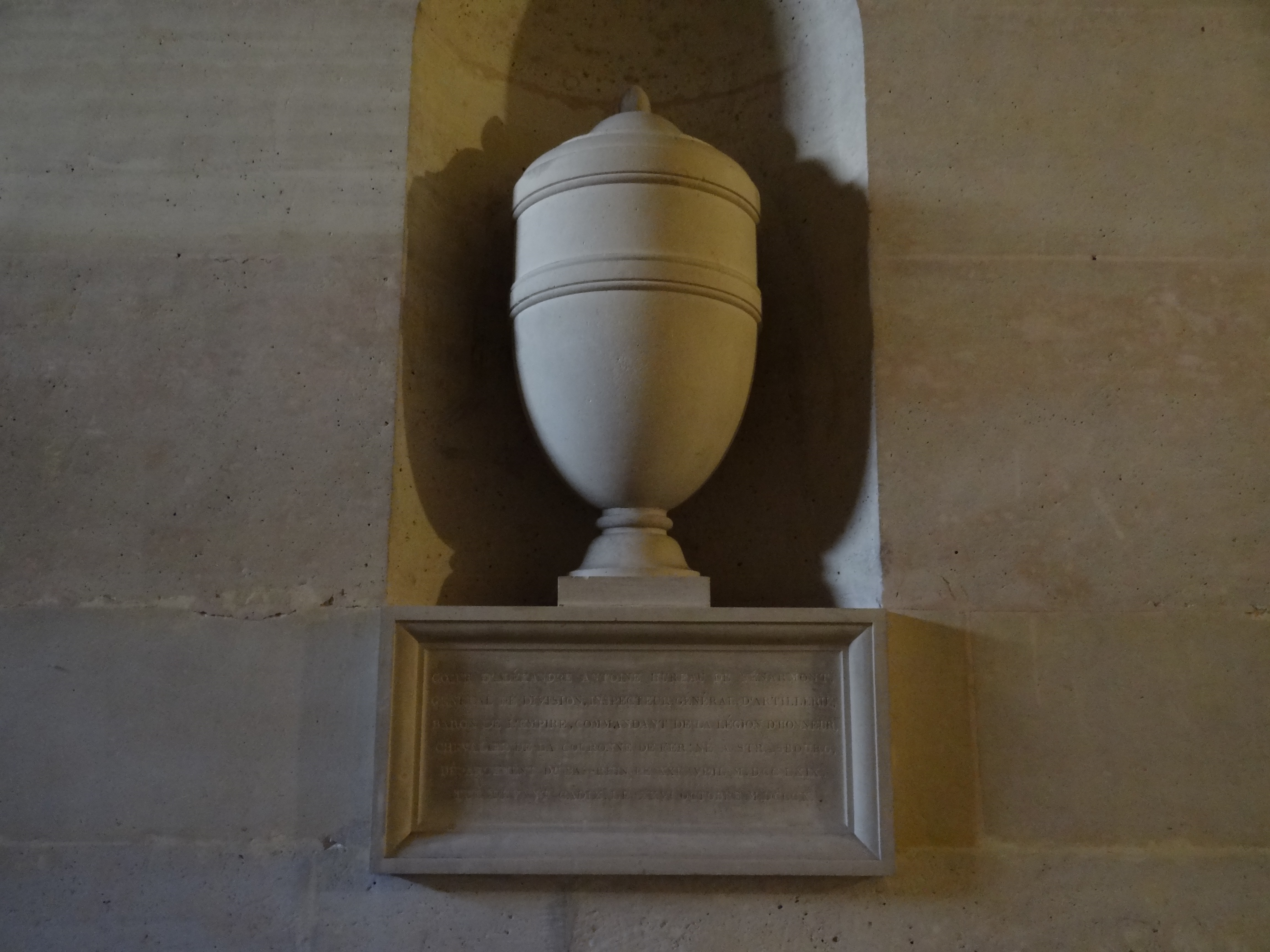
In the autumn of 1810 Sénarmont was employed in the siege operations directed against Cádiz. On 26 October 1810, while inspecting artillery positions on the lines of blockading batteries from Puerto de Santa María and visiting forward works on the Real Isla de León, he was struck and killed by a fragment from an enemy projectile in the redoubt known as Villate. Contemporary army orders, the communiqué distributed by the duc de Dalmatie to the army, and municipal burial registers record that his body was interred in the church of Santa Ana at Chiclana and that his heart was embalmed at the Emperor's order for conveyance to France. The imperial order of 17 January 1811 and subsequent ceremonies placed the urn containing his heart in the Panthéon on 5 June 1811; the speeches and burial register from that ceremony are preserved in the printed proceedings and in the memoir literature of the period.
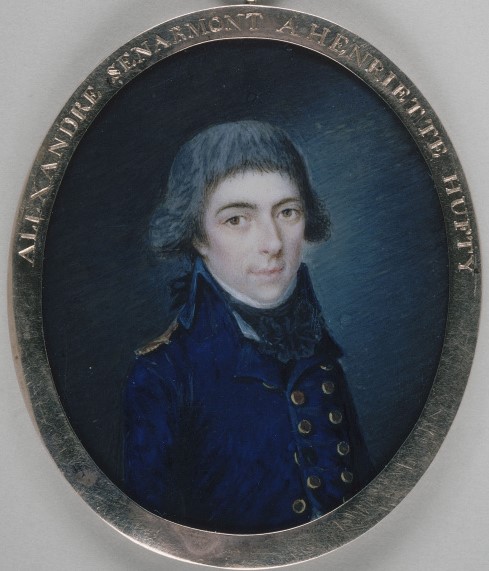
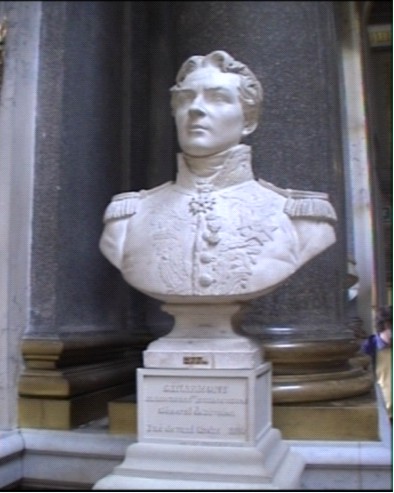
Throughout his career Sénarmont held successive regimental and staff commands in the corps d'artillerie: regimental command of the 5e and later the 6e régiment d'artillerie à pied, chef d'état-major appointments, and the post of commandant of the artillery of the Grande Armée and later of the 1er corps in Spain. His decorations, as entered in the official rolls, included the grades of the Légion d'honneur rising to commandeur (3 March 1807) and imperial patents creating him a baron of the Empire (2 July 1808). Contemporary printed commemorations, later provincial memorials and the sculptural portrait placed by Antoine-Laurent Dantan in the Galerie des Batailles at Versailles record his name and rank and memorialize his death during the Cadiz operations.
Family records and civil registers show that he married Marie Joséphe Henriette Rosalie Hufty on 21 November 1793 and left two children, Alexandre-Hippolyte (1794–1870) and Henriette-Désirée (1800–1874). Official genealogical notices and municipal property entries record that on 22 March 1806 he purchased by procuration a town house at Dreux. His commemorations after death—funeral notices, placement of his heart in the Panthéon, and the inscription of his name on the Arc de Triomphe—are recorded in the archives of honours and in the printed Fastes of the Légion d'honneur as well as in provincial civic memorials and in the catalogue of names inscribed under the Arc. The several contemporary memoirs, an official mémoire prepared by an artillery general from army papers and later nineteenth-century biographical dictionaries, preserve detailed accounts of his movements and of the batteries and formations he commanded at the principal actions of his career.
Sources
- Wikipedia (French): Alexandre-Antoine Hureau de Sénarmont
- Wikisource (1911 Encyclopædia Britannica): Senarmont, Alexandre Antoine Bureau de
- BnF Data: Alexandre-Antoine Hureau de Sénarmont
- Fastes de la Légion-d'honneur (Lievyns, Verdot, Bégat): entry for Sénarmont
- Mémoire sur le lieutenant-général d'artillerie baron Alexandre de Sénarmont (Marion, 1846) — bibliographic record / digitised copies
- Napoleon-Series: French Generals (research page listing Sénarmont)
- FrenchEmpire.net: Alexandre Antoine Hureau de Senarmont (biography)
- Base Léonore (Archives nationales): Léonore notice for Sénarmont (dossier reference cited in biographical records)
X rank in 1806; X (Arty. Res.) Friedland; XX rank in 12/08; XX 09-10 Spain - Talavera, Ocano, siege of Cadiz. (1769-1810)
Pictures