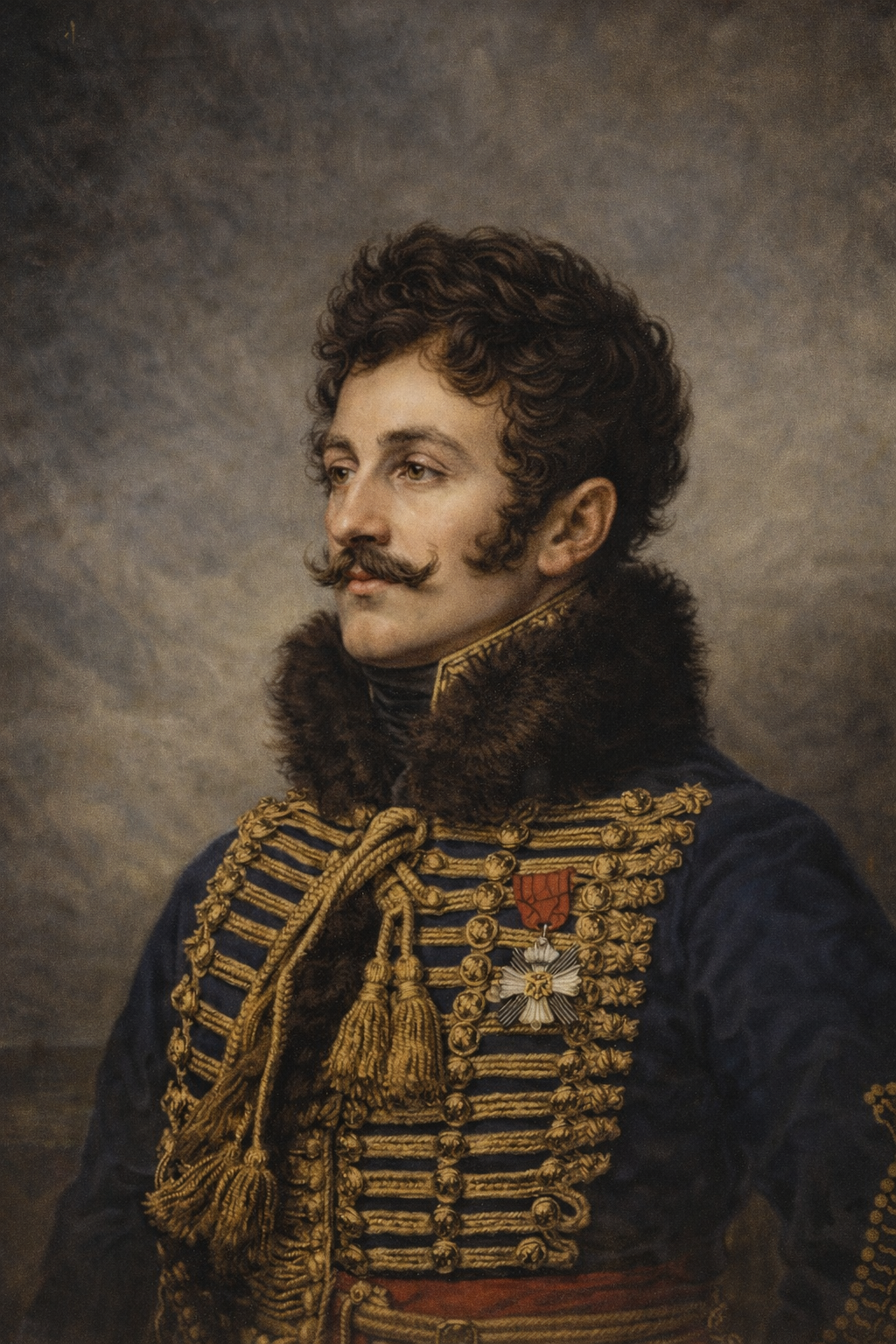
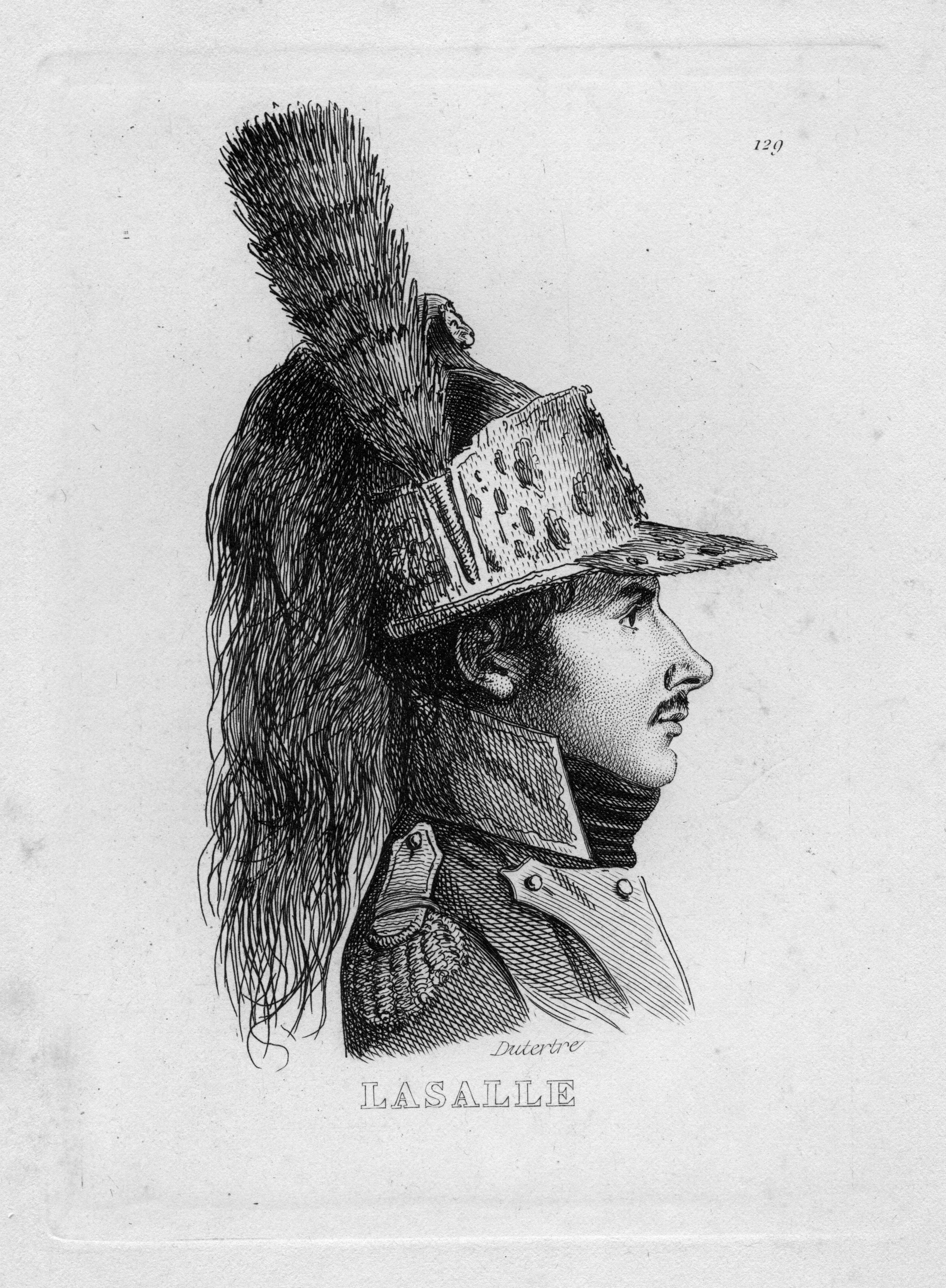
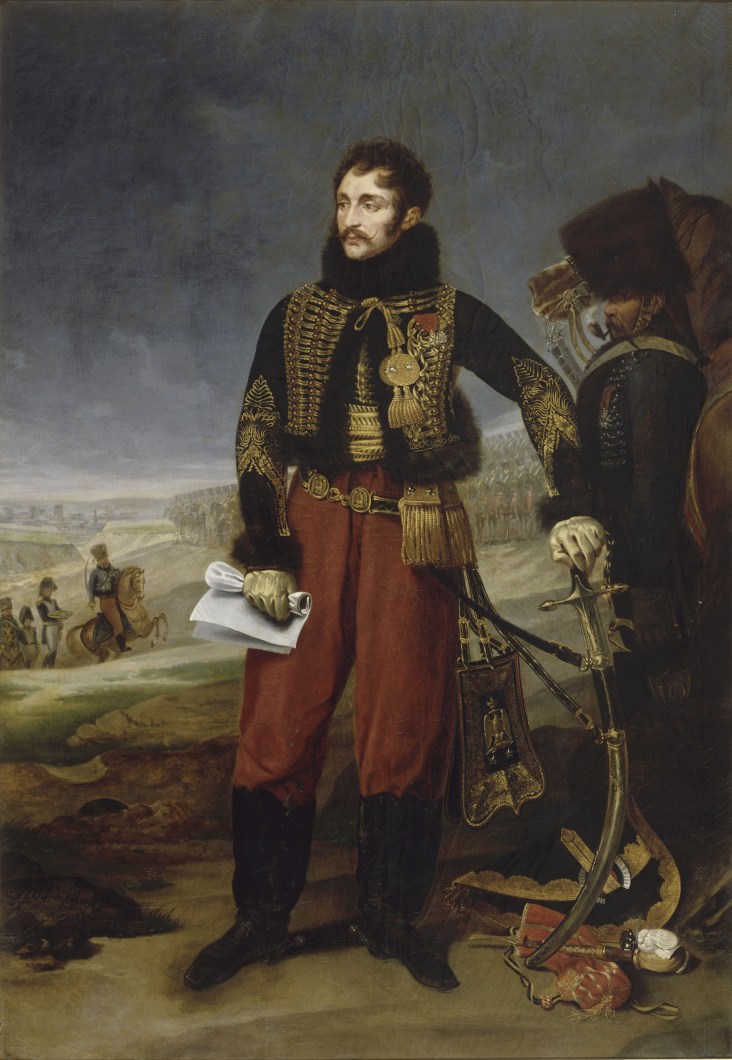
Antoine-Charles-Louis de Lasalle
Command Ratings
Commands & Units
- Commands the Light Cavalry Division of Cavalry Reserve at Eylau (1807, age 32)
- Commands the Fourth Light Cavalry Division of Cavalry Reserve at Heilsberg (1807, age 32)
- Commands the Division Lasalle of French Army at Medina de Rioseco (1808, age 33)
- Commands the 4th Cavalry Division of First Corps at Medellín (1809, age 34)
- Commands the Light Cavalry Division of IV Corps at Aspern-Essling (1809, age 34)
- Commands the Attached Light Cavalry Division of IV Corps at Wagram (1809, age 34) †
Antoine-Charles-Louis de Lasalle was born at Metz on 10 May 1775. He entered the army under the ancien régime as a cadet and held a junior commission before the Revolution. In 1791 he became a sous-lieutenant in the 24e Régiment de cavalerie. In 1792, amid political measures excluding many men of noble origin from commissioned command, he left his regiment and went to Paris, enrolling as a volunteer before returning to field service as a cavalry trooper.
His advancement was associated with staff and reconnaissance work under François Christophe Kellermann, first with frontier armies and then with the armée d’Italie. Serving as aide-de-camp, he regained commissioned rank and progressed through junior grades during the Italian campaigns of 1796–1797. He was promoted to capitaine in 1796 and to chef d’escadron during the same period. In 1798 he joined the expedition to Egypt with the armée d’Orient, serving in mounted operations around Alexandria and Cairo. During that campaign he received further promotion and returned to France with an established record as a light-cavalry officer.
Under the Consulate and early Empire he held regimental command as a colonel of hussars. In February 1805 he was promoted général de brigade and served with the Grande Armée in the 1805 campaign, operating in the cavalry reserve under Joachim Murat. After Austerlitz he received command of a light-cavalry brigade including the 5e and 7e régiments de hussards, a formation widely referred to in contemporary and later accounts as the “brigade infernale.” In the 1806 campaign against Prussia, his brigade took part in pursuit operations after Jena–Auerstedt. On 29 October 1806 he compelled the capitulation of the fortress of Stettin with a small cavalry force by presenting a demand for surrender under the impression of a larger French investment. He was promoted général de division in December 1806.
In 1807 he served in Poland during winter and spring operations and in the subsequent summer campaign, with actions that included Golymin and Heilsberg. In the same period he held responsibilities for organizing and training light cavalry elements, including work connected with the formation and instruction of the Polish light horse later associated with the Garde impériale. He was created comte de l’Empire and received the Italian Order of the Couronne de Fer.
From 1808 he served in Spain as a divisional cavalry commander. He operated with French forces during the early phases of the Peninsular War and took part in actions including Medina de Rioseco (July 1808) and operations around Burgos later that year. By decree in September 1808 he was named grand officier of the Légion d'honneur. In 1809 he served in Andalusia with Claude Victor-Perrin and fought at Medellín (March 1809), after which he was recalled to the Danube front for the war against Austria.
Lasalle reached the main theatre shortly before Aspern–Essling (May 1809), where he led repeated cavalry attacks during the battle. He remained with the army through the subsequent operations along the Danube and toward Raab, coordinating with the approach of Eugène de Beauharnais. On 6 July 1809, at Wagram, he was killed near Deutsch-Wagram while leading a cavalry charge in support of Étienne Macdonald. He was thirty-four.
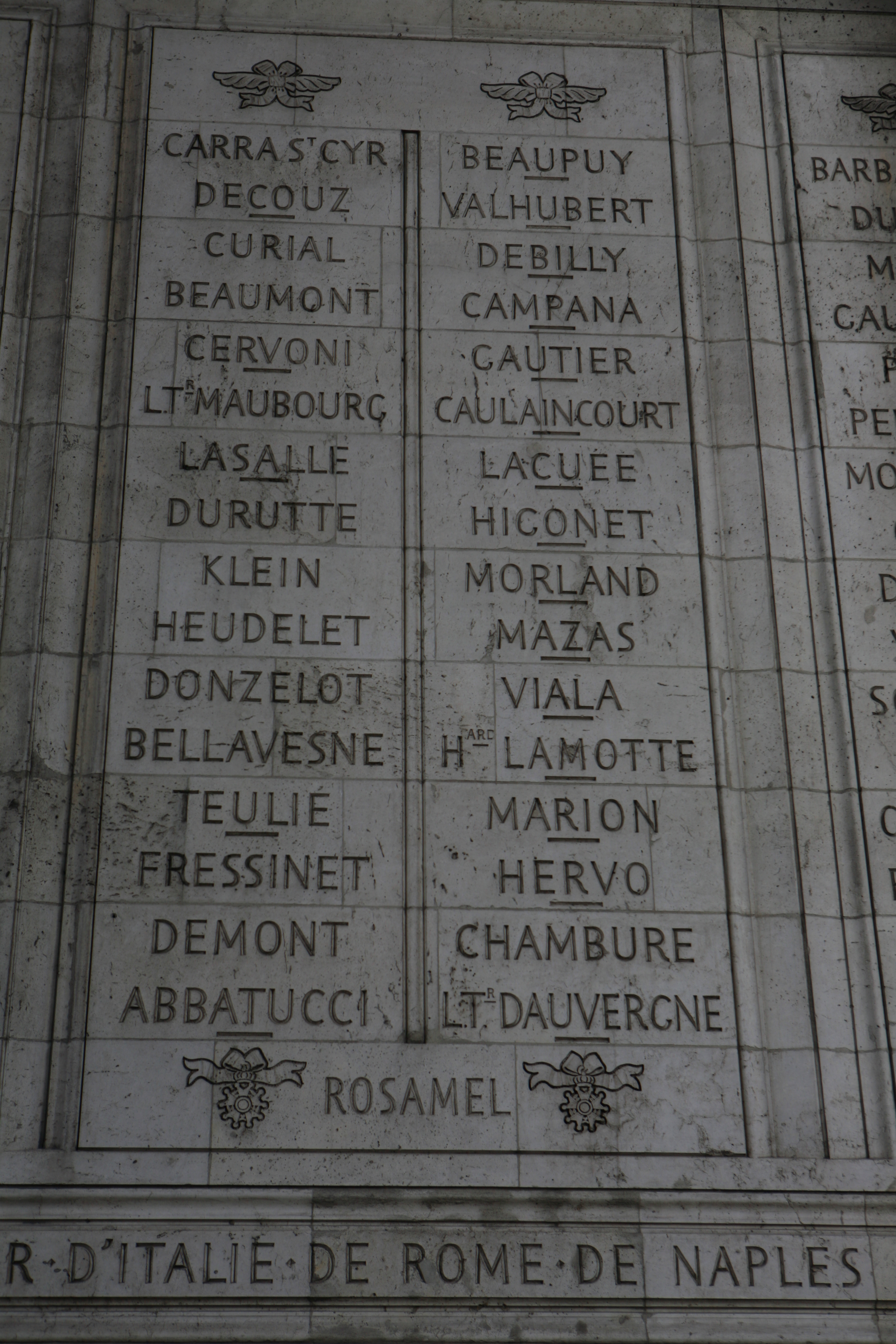
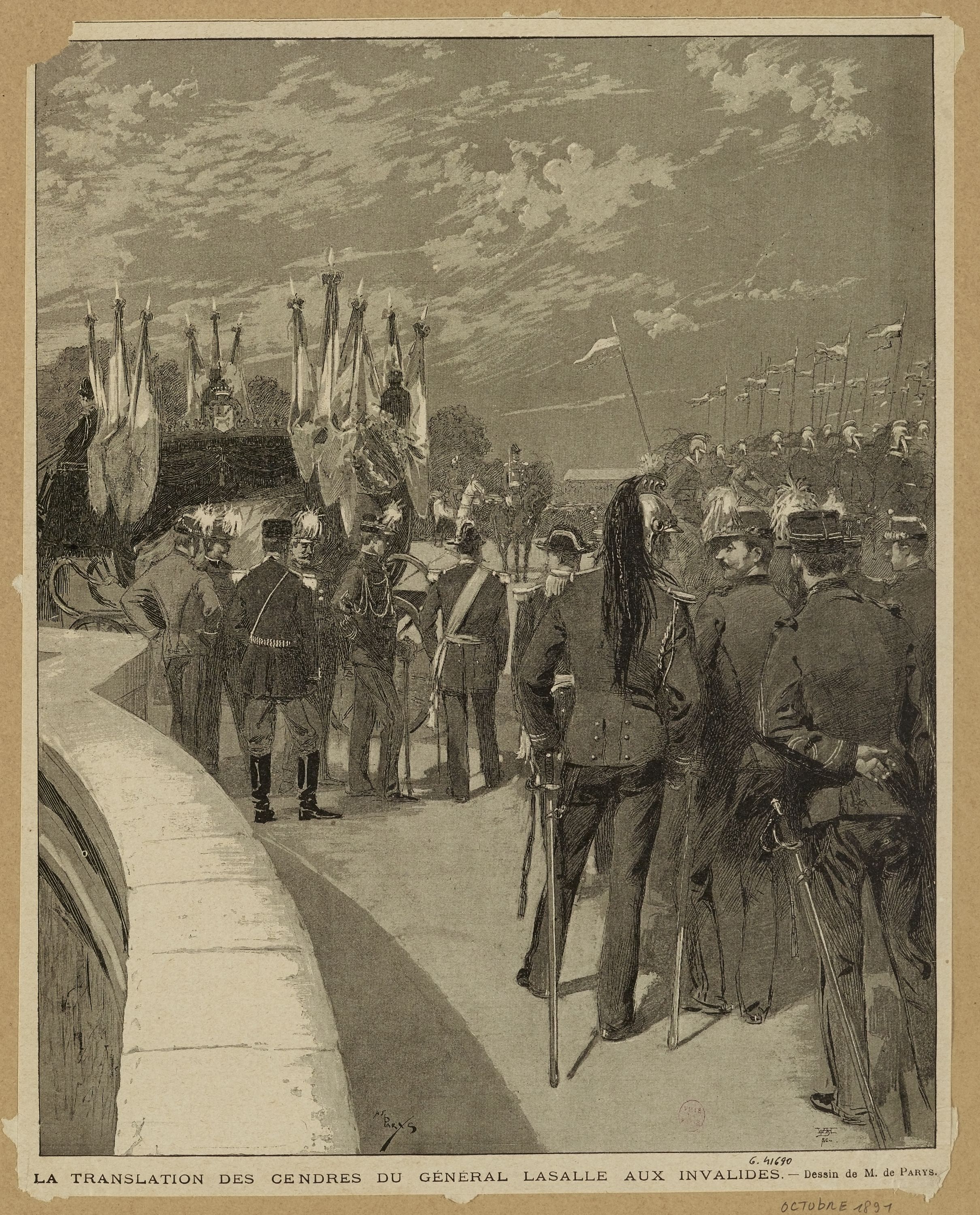
His name was later inscribed on the Arc de Triomphe. In 1891 his remains were repatriated and placed at Les Invalides. Memorials to him were also erected in Lorraine, including a statue at Lunéville.
Sources
- Fondation Napoléon (English): Lasalle, Charles
- Musée de l’Armée: Let’s reunite the Lasalle couple!
- BnF Data: Antoine Charles Louis de Lasalle
- British Museum: Antoine Charles Louis, Comte de Lasalle
- Wikipedia (French): Antoine Charles Louis de Lasalle
- Wikisource: 1911 Encyclopædia Britannica (Lasalle)
Com. into the infantry in 1786; transferred into the cavalry at the start of the revolution; served in Italy & Egypt; X rank on 2/1/05; XX rank on 12/30/06; XX 05-07 – WW, Stettin (tricked them into surrender!), Eylau, Heilsberg; XX 08-09 Spain – Medina del Rio Seco, L, Medellin; XX 09 - L, Wagram (KIA). (1775-1809)
Pictures