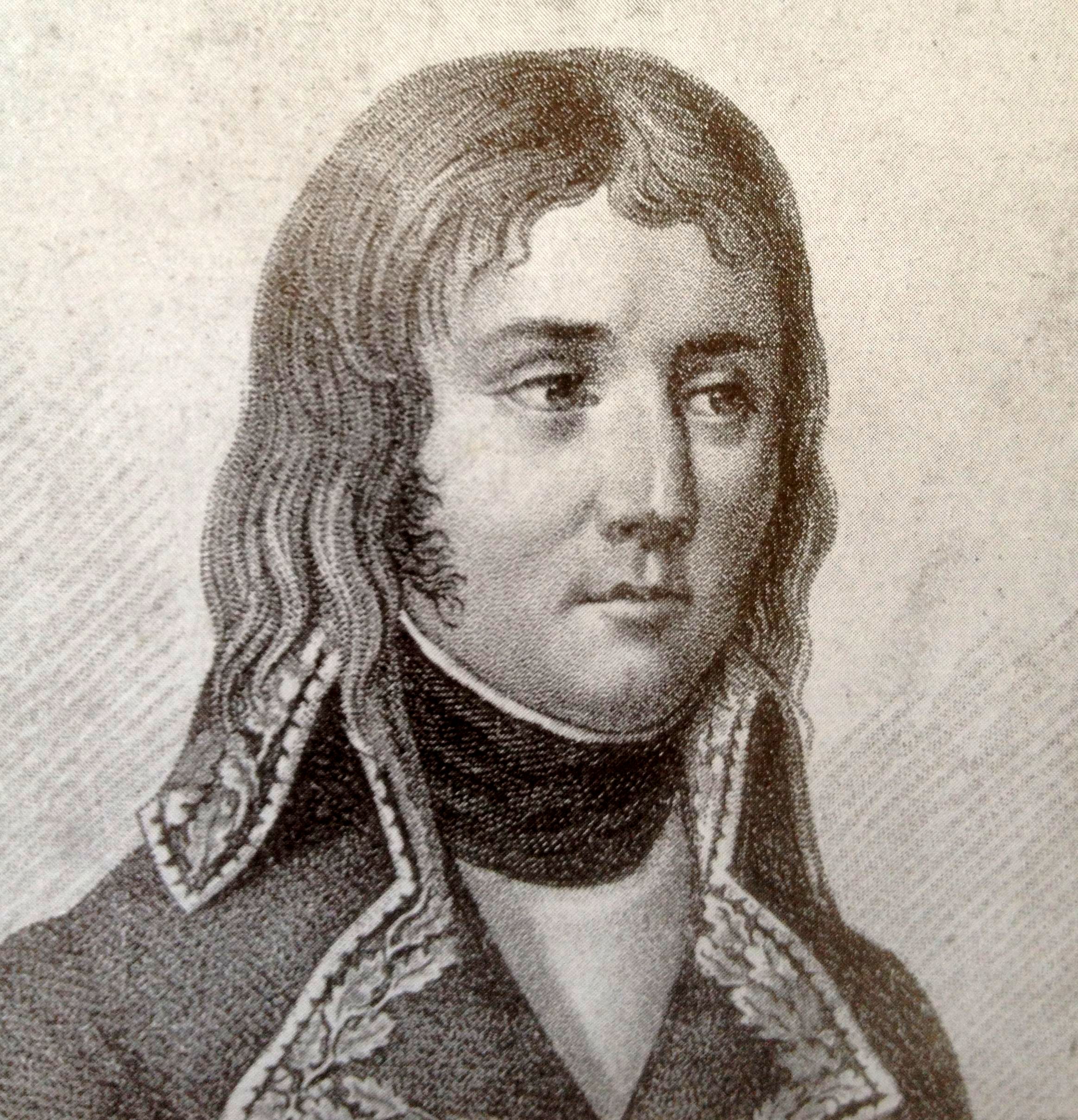
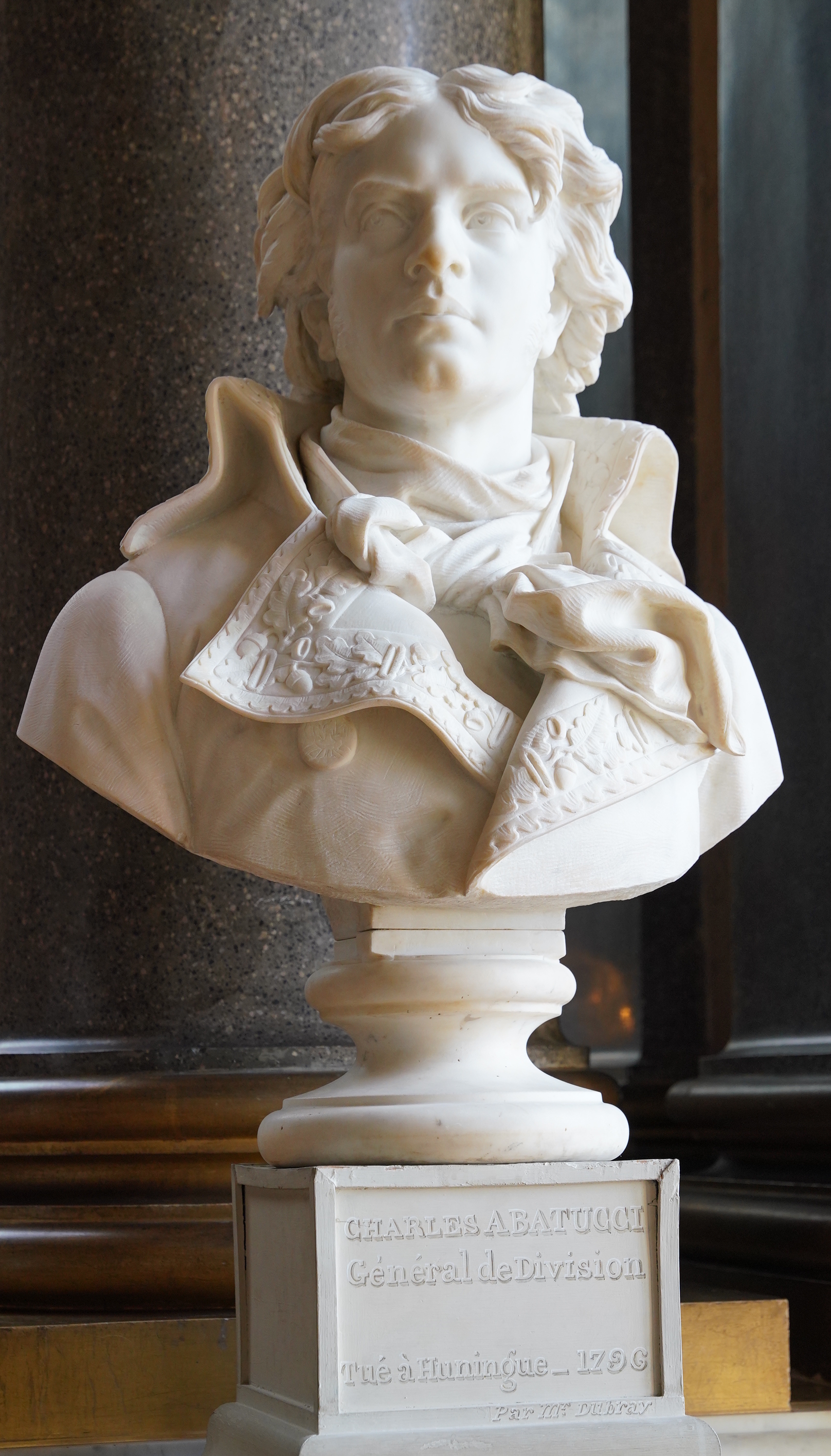
Jean-Charles Abbatucci
Command Ratings
Young general of division who famously rescued drowning soldiers at the Lech and was mortally wounded defending the bridgehead at Huningue.
Jean-Charles Abbatucci (often written Abatucci in contemporary and later sources) was born at Zicavo in Corsica on 15 November 1770. He was the son of Jacques-Pierre Abbatucci, an officer who later reached senior rank in French service. Abbatucci was educated for the artillery at the École militaire de Metz, and in 1787 he left the school to enter the army as an artillery subaltern. In the opening phase of the Revolutionary wars he served with artillery formations on the northern and northeastern frontiers. By the beginning of the 1792 campaign he was still only a captain of artillery, but his conduct in that year’s operations was regarded as sufficiently distinguished that he obtained rapid advancement, reaching lieutenant-colonel before the end of 1792. His rank was converted in early 1793 under the reorganization of grades, and in April 1793 he was assigned to a company of light artillery. In December 1793 he was noticed by Jean-Charles Pichegru, who took him onto his staff as aide de camp.
During 1794 and 1795 Abbatucci served with the Armée du Nord in the campaign in the Netherlands. In these operations he remained attached to higher command and staff employment, while also being identified with the developing arm of artillery à cheval. In mid-1794 he was promoted adjudant-général, chef de brigade (initially provisional and then confirmed), which placed him among the senior field officers employed in combined staff and troop-leading roles. When Pichegru was replaced in the Rhine theatre, Abbatucci was transferred to the Armée de Rhin-et-Moselle, where he served at the army’s advanced elements and in the preparations for major river operations.
In June 1796 the commander-in-chief, Jean Victor Moreau, selected Abbatucci to take a leading part in preparing the army’s passage of the Rhine at Kehl, alongside other senior staff officers. Abbatucci then played a direct role in the combat actions that secured the bridgehead. On 23–24 June 1796 he directed and led the operation commonly described as the battle or crossing of Kehl, in which French troops forced an amphibious passage of the Rhine in the face of Swabian and Austrian resistance, seized the fieldworks around Kehl, and established a permanent foothold on the east bank. This success placed him among the recognized officers of the opening phase of Moreau’s campaign in southern Germany.
Following the establishment of the bridgehead, Abbatucci continued with the army’s advance into the German states. He was promoted général de Brigade on 10 July 1796. In the course of the summer operations he was employed against émigré forces and detachments associated with the Army of Condé. Accounts of this period attribute to him several aggressive actions against those forces, including seizures of their local bases and rearguard combats during pursuit. He was also commemorated in later Huningue monuments with a relief representing an episode at the crossing of the Lech in Bavaria in August 1796, suggesting that he was present in the operational movements that carried Moreau’s army toward the Lech line.
In autumn 1796 Abbatucci served within the field army during the withdrawal and concentration that followed the strategic reversal of French fortunes in Germany. He was employed in Delaborde’s division and in October took command of a division when Delaborde temporarily relinquished it. In this capacity Abbatucci took part in the battle of Schliengen (24 October 1796), where Moreau’s army fought Archduke Charles’s forces in an effort to secure the retirement to the Rhine. Shortly after Schliengen, Abbatucci was ordered to assume responsibility for the defense of the bridgehead and fortress of Huningue on the Upper Rhine, a position of special importance because it covered Upper Alsace and supported Moreau’s retreat and re-crossing to France.
By late November 1796 Austrian forces under Karl Aloys zu Fürstenberg moved to isolate and reduce the Huningue bridgehead. The siege of Hüningen (Huningue) formally opened on 27 November 1796. Abbatucci, commanding the French defense in the bridgehead works, refused proposals to capitulate and maintained active resistance while the besiegers erected batteries and progressed their trenches. In the night of 30 November to 1 December 1796, during the early phase of the siege, Abbatucci led a major sortie against the Austrian lines. The action developed into close combat around the siege works; the Austrian assaults on the bridgehead that night were repulsed, but Abbatucci was mortally wounded during the fighting. He was carried back into Huningue and died there on 2 December 1796, aged twenty-six. Command of the defense passed to Georges Joseph Dufour, and the fortress continued to hold out into the new year before capitulating after a prolonged siege.
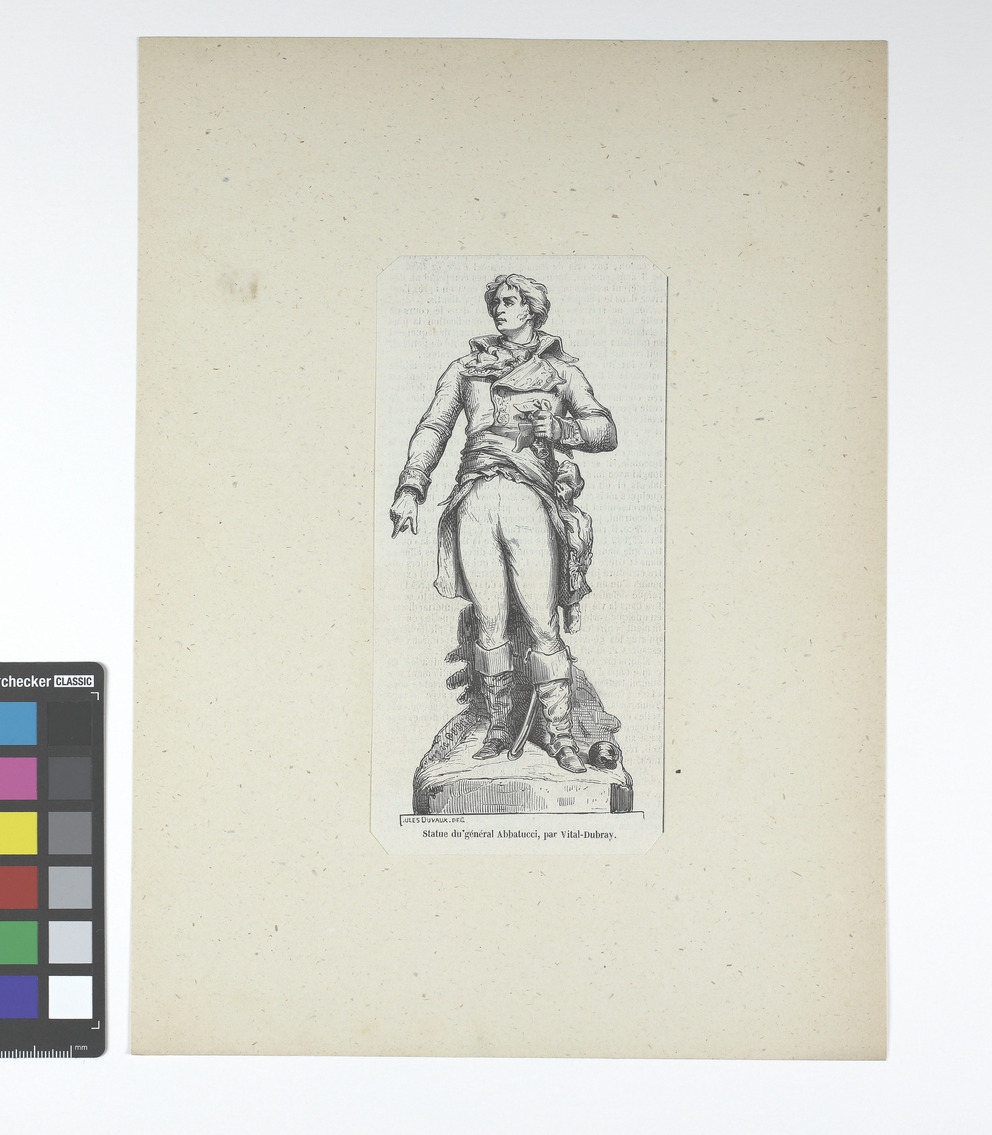
Abbatucci’s death in the defense of Huningue made his name a point of commemoration in the French army. A monument at Huningue was initiated by Moreau after the campaign, explicitly linking Abbatucci’s memory to the defense of the bridgehead and to the wounds received in the sortie of 30 November 1796. His name was later included among those engraved on the Arc de Triomphe in Paris. In Huningue local memorial traditions preserved the date and circumstances of his mortal wounding and death, and later reconstructions and relocations of the monument maintained his association with the sortie and the defense of the Upper Rhine crossing.
Sources
- Wikipedia (English): Jean Charles Abbatucci
- Wikipedia (French): Jean Charles Abbatucci
- Wikipedia (English): Battle of Kehl (1796)
- Wikipedia (English): Siege of Hüningen (1796–1797)
- FrenchEmpire.net: Jean-Charles Abbatucci (1770-1796)
- Wikisource (French): Charles Mullié, Biographie des célébrités militaires (ABBATUCCI)
- Ville de Huningue: Le monument Abbatucci
- Wikipedia (French): Noms gravés sous l'arc de triomphe de l'Étoile
XX 96 Rhine & Moselle – W; KIA @ siege of Huningen 2/1/97
Military Career
- 1789 Sous Lieutenant
- 1792 Capitaine
- 1792 Lieutenant
- 1793 Chef de Bataillon
- 1796 Général de Brigade
- 1796 Général de Division
Pictures