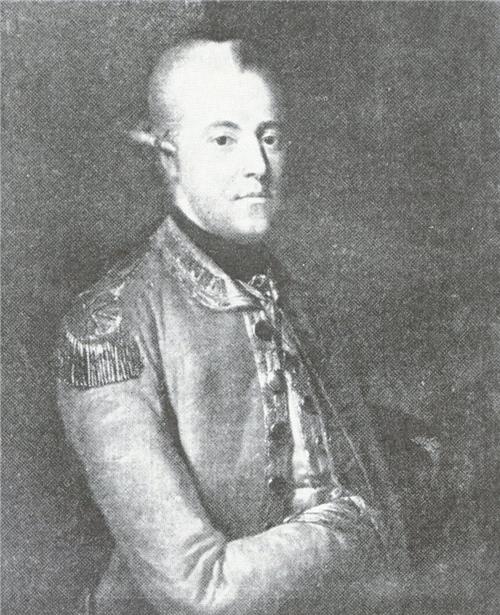
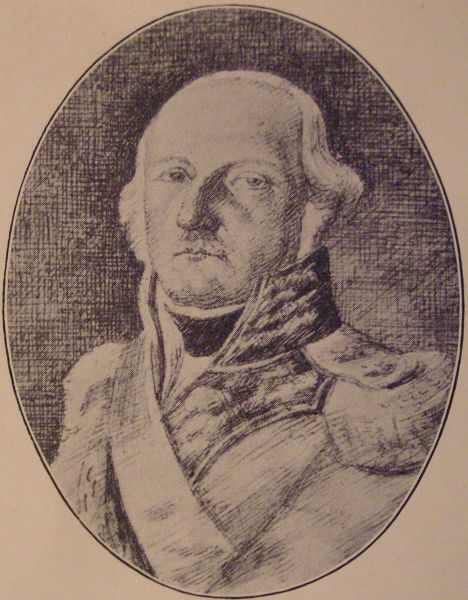
Joachim Castenschiold
Command Ratings
Lieutenant-general Joachim Melchior Holten von Castenschiold (29 November 1743 – 6 April 1817) was a Danish army officer and landowner associated with cavalry service and with the emergency defensive measures on Zealand during the British attack of 1807. He was born in Copenhagen and belonged to a recently ennobled landed family; his father, Johan Lorentz Castenschiold, had been a plantation owner and later a Danish landowner, and his mother was Jacoba von Holten. Castenschiold pursued a conventional aristocratic officer’s career in the mounted arm from adolescence, acquiring practical regimental experience before moving into court-connected appointments and high local command.
Castenschiold entered the Danish army in 1760 as a Cornet in a cuirassier regiment quartered in Schleswig. In the following year he purchased a company and received a rittmester’s commission, but the reorganization associated with Saint-Germain’s army reforms in 1763 required him to relinquish that company when the regiment was reshaped. When Saint-Germain first resigned, Castenschiold was promoted in 1766 to major in the regiment, now formed as the Sjællandske dragonregiment under major-general H. H. von Eickstedt. In the Struensee period he served with a detachment of this regiment in Copenhagen, performing mounted guard and city service in place of the horse guard that Struensee had abolished.
In 1772 Castenschiold became oberstløjtnant. In the aftermath of the coup against Johann Friedrich Struensee, he was tasked with escorting the imprisoned Queen Caroline Matilda; he took her as a prisoner to Kronborg with his dragoons. After this episode he was appointed major in the re-established hestegarde (the restored horse guard), and in the next year he was made generaladjudant. In 1774 he was promoted to Oberst and also received the court title of kammerherre. In the middle of the decade he was repeatedly present as an observer at Swedish “lystkampagnementer” in Scania, and in 1778 he served as generaladjudant to the governor in Copenhagen, Prince of Bevern, during manoeuvres held in the environs of Copenhagen.
Castenschiold combined this service with travel and foreign observation. In 1779 he obtained permission to follow the Prussian army during operations connected with the War of the Bavarian Succession, after which he travelled through parts of Bohemia and France, returning by the summer of 1781. That same year, on 14 December 1781, he married Elisabeth Behagen in Copenhagen.
With the governmental change of 1784 he received a direct royal appointment as commander of the mounted guard (Garden til hest). In conjunction with this he also received command over the Sjællandske regiment ryttere, reflecting his position in the senior cavalry structure. In 1787 he was promoted to generalmajor. His seniority brought him into doctrinal and administrative work: in 1790 he entered the commission chaired by Prince Carl of Hesse that was tasked with drafting new cavalry instructions, and in that year he was also made a knight of the Order of the Elephant (Hv.R.). In 1798 he resigned the command of the mounted guard while retaining command of the other regiment under him.
Castenschiold’s documented combat-adjacent activity during the confrontation with Britain in 1801 placed him in the defensive dispositions around Copenhagen. He was ordered in that year to detach two squadrons to observe the English fleet and, with the remainder of his regiment, to march to the city should the fleet pass through the Sound. During the naval action off Copenhagen on 2 April 1801 (the First Battle of Copenhagen), Castenschiold was stationed at the Kastrup battery.
In 1802 he was promoted to generalløjtnant. His most consequential operational responsibility came during the British assault on Denmark in 1807, when he was ordered to serve as the highest commanding officer on Zealand outside Copenhagen and to organize the Zealandic landeværn, with the intention that every able-bodied man should be called up. He undertook this mobilisation with energy, but the resulting force was improvised, poorly armed, untrained, and reluctant, and it was not comparable to a regular field force.
Castenschiold commanded the Danish militia force that confronted the British column operating during the siege of Copenhagen, and he was present and in command at the Battle of Køge on 29 August 1807, also known as Træskoslaget. The engagement ended in a British victory against his largely Zealandic militia. Castenschiold reported that battalions fell back without firing as the enemy advanced and that weapons and equipment were discarded during the rout. The collapse of the landeværn at Køge, and the controversy that followed, led to sharp criticism from several quarters. He was later prosecuted together with other military leaders in Copenhagen in connection with the events of 1807, but he was acquitted.
Despite the public recriminations associated with Køge, the crown prince maintained confidence in him. In the early part of 1809, when an operation was planned to cross over to Scania, Castenschiold was intended to have command of one of the four divisions designated for the transfer. The plan did not yield a recorded field engagement for him, and later that year, on 5 November 1809, he received his discharge with general’s character.
Parallel to his army career, Castenschiold was a substantial estate owner. In 1783 he purchased Borreby, an acquisition that remained within his family. He also owned Valbygaard for a period; Danish estate histories record him as purchaser from the Crown in 1774, and he later sold it to an elder brother before 1807. Castenschiold died at Borreby on 6 April 1817 and was buried at Magleby Church.
Sources
XX 07 (7200) -beaten by Wellesley @ Roskilde-Kioge (L)
Military Career
- 1760 Cornet
- 1761 Ritmester
- 1766 Major
- 1772 oberstløjtnant
- 1774 Oberst
- 1787 General-Major
- 1802 generalløjtnant
Pictures